
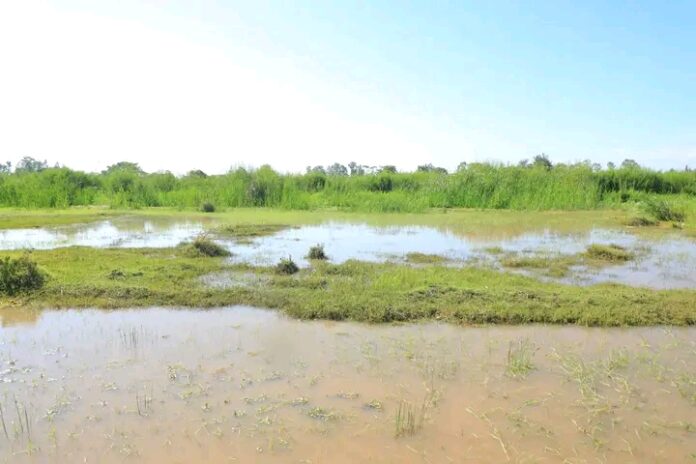
Locals from Migori County are facing a bleak future as the weatherman predicts El Niño rains that are likely to wreak havoc in flood-prone areas, leaving vulnerable communities severely exposed.
These mounting anxieties have hit a brick wall after Dalmas Odero, Chief Officer for Environment, Climate Change, and Disaster Management, repeatedly ignored inquiries from Kondelenews regarding local emergency plans and El Niño preparedness.
The Chief Officer’s persistent silence coincides with explosive revelations by North Kadem Ward MCA Samson Olima who accuses the executive of diverting Sh44.2 million worth of El Niño relief food to non-emergency church functions.
Addressing the press, the lawmaker claimed that food items purchased specifically to cushion flood-prone areas were improperly redirected to church camp meetings, leaving vulnerable communities at severe risk as climate experts warn of strong impending rainfall.
“We received information that the department purchased over 500 bags of maize, 900 bags of 25kg rice, 500 bags of 50kg sugar, 500 bundles of wheat flour, and cooking oil,” Olima stated. “What is shocking is that the emergency stores are now almost empty because the governor decided to distribute these food supplies as aid to church camp meetings, mostly SDA churches across the county.”
The legislator questioned the decision to deploy public emergency stockpiles for religious gatherings, noting that no disasters had occurred at those locations to justify the relief distribution.
“There is no emergency in those churches. While supporting churches is not wrong, the governor must do so from his own pocket, not through emergency funds meant for disaster-prone areas like North Kadem,” Olima added, calling on the Ethics and Anti-Corruption Commission (EACC) to urgently investigate the dockets involved.
Daily realities in Nyatike
As leadership in the department avoids public scrutiny, the residents of Nyatike Sub-County continue to live through the bitter weight of climate whiplash.
For decades, community members have been caught in a punishing pendulum between two extreme realities: when the skies withhold rain, the earth cracks into a barren wasteland; when the rains finally arrive, they bring raging torrents that swallow homes whole.
In this rural expanse of Migori County, climate change is not an abstract concept discussed in distant summit halls.
It is a daily struggle for survival where both droughts and deluges extract a devastating toll on human life, livestock, and livelihoods.
During the dry spells Nyatike turns into an unforgiving environment where vegetation dies and water sources vanish.
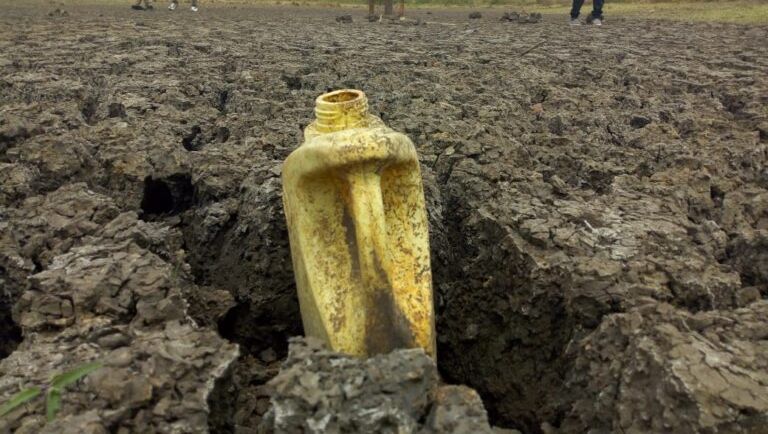
Women and children trek miles across sun-baked trails toward drying riverbeds, often returning empty-handed, while neglected government water points feature stagnant water shared with livestock, breeding waterborne diseases like typhoid, cholera, and bilharzia.
During the deluges on the other hand, heavy downpours transform nearby water systems into destructive forces.
Swollen by rainfall, River Kuja regularly bursts its banks, unleashing floodwaters that submerge entire villages like Nyora, Kabuto, and Angungo, while washing aquatic predators like hippos directly into human settlements.
Local uncertainty vs. national preparedness
The administrative silence and fiscal disputes come at a critical juncture.
Updated forecasts from the Kenya Meteorological Department indicate a high probability of heavy downpours during upcoming rains, bringing severe risk to known regional flood zones.
While national agencies, water utilities, and organizations like the UN Food and Agriculture Organization (FAO) and World Food Programme (WFP) activate anticipatory measures, procuring livestock vaccines, clearing drainage bottlenecks, and distributing flood-resistant seeds, the gap in communication at the county level threatens to leave local residents exposed.
Furthermore, while the National Government has been pushing aggressive climate action by targeting the planting of 15 billion trees by 2032 to restore degraded ecosystems, local coordination in Migori remains severely questioned.
In Migori town, previous rainfall cycles severely damaged the main bridge, driving public outrage over infrastructure repairs.
Local traders who suffered heavy losses during prior deluges are equally raising questions over Governor Ochillo Ayacko’s pledge to complete a modern market facility to cushion their businesses.
“When the floods destroyed our goods, the Governor brought disaster money and promised us that by September, the construction of the modern market would be complete,” said Martin, a local vendor.
“Up to now, we see no hope or progress toward completing this market as promised.”
Does the county leadership care?
The refusal of Mr Odero, Chief Officer to answer questions from the press or account for emergency preparedness leaves critical questions unanswered: What is the Migori County Government genuinely doing to combat climate change?
Is the county leadership invested in the welfare of citizens living in hardship zones like Nyatike?
When public officers in charge of environment, climate change, and disaster management go silent during a looming crisis, it speaks volumes to a frustrated electorate.
The administrative stonewalling leaves residents wondering whether the department has abandoned its mandate, operating under an attitude that once in office, citizens are left to fight for themselves.
To many affected locals, the official silence feels like a dismissive posture of “jopiny chendo”, viewing the public as merely stubborn for asking questions about their own survival.
Despite sitting just miles away from major water systems like River Kuja and Lake Victoria, Nyatike remains trapped in acute vulnerability.
Millions of shillings spent on infrastructure often end up wasted as government water points crumble from a lack of maintenance, leaving the community dependent on temporary relief whenever disaster strikes.
For the people of Nyatike and greater Migori County, breaking free from this cycle requires immediate accountability and a shift toward sustainable, long-term infrastructure, including functional irrigation schemes, heavy-duty flood mitigation barriers, maintained community boreholes, and proactive wildlife management. Without transparent leadership and dedicated disaster management, vulnerable communities remain stranded on the frontline.