
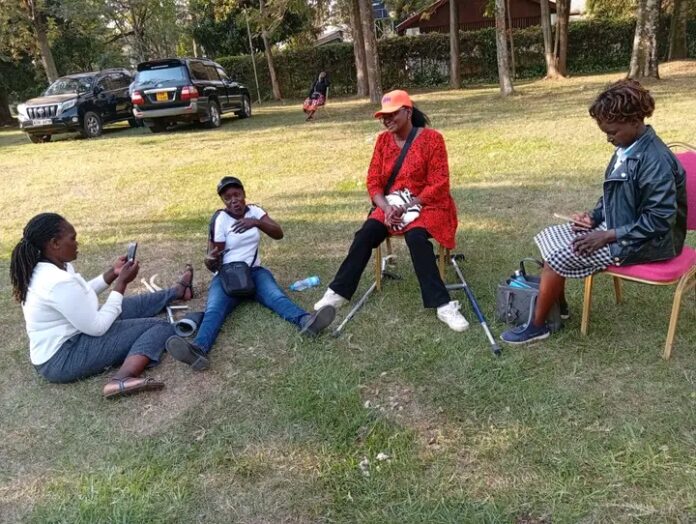
Leaders representing Persons Living with Disabilities (PWDs) in Suna West, Migori County, have issued a 14-day ultimatum to Governor Ochillo Ayacko, demanding an immediate face-to-face meeting to address systemic marginalization across the county.
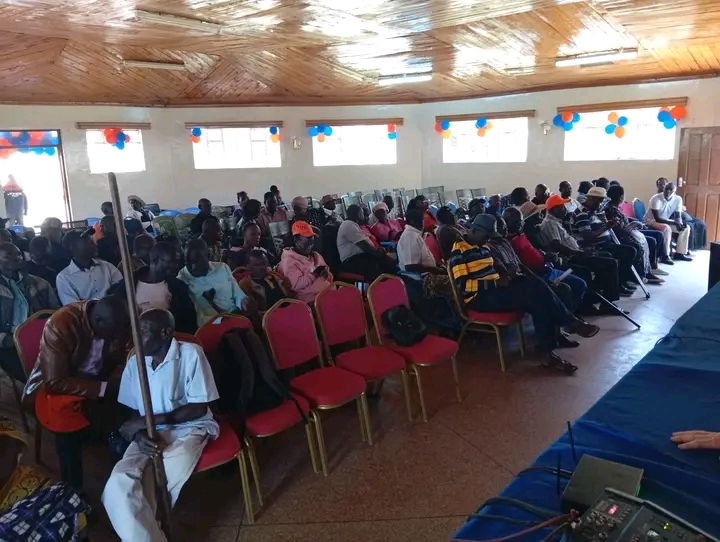
Speaking during a charged consultative meeting held at Maranatha Hall in Migori town, leaders from Suna West launched a scathing attack on senior county chief officers, accusing them of deliberately hiding from PWD delegations, stonewalling official appointment requests, and acting as aggressive gatekeepers to shield the executive leadership.
Suna West PWD leader Odhiambo Wasonga led the charge against the bureaucratic bottlenecks, insisting that executive leadership must answer to the community directly.
“We are giving Governor Ochillo Ayacko a strict two-week ultimatum to grant us an audience. We have tried through official channels, but his chief officers are constantly hiding from us and blocking our appointment requests,” Wasonga stated. “We will no longer tolerate being locked out by county workers who treat our issues as an afterthought.”
The community representatives expressed deep outrage that while political delegations, youth, and women’s groups regularly secure easy access to the governor’s office, PWDs are systematically turned away.
Suna West representative Osoko Nam Pundo lamented the stark disparity in resource distribution and county empowerment schemes.
“Local economic empowerment programs and administrative opportunities consistently prioritize youth and women groups, while completely side-lining persons with disabilities,” Nam Pundo noted.
“PWDs are active, registered voters who participate equally in democratic processes, making our continued neglect by local government both unjust and discriminatory.”
The leadership also addressed ongoing concerns regarding political co-optation and proxy representation.
Suna West advocate James Ochieng issued a stern warning against non-disabled individuals occupying slots reserved for the disability community.
“A person who is not disabled should never be allowed to represent the disabled community,” Ochieng asserted. “We need direct, genuine representation by people who understand our daily struggles, not proxies taking up spaces meant for us.”
Beyond the county executive, the advocacy network extended a direct appeal to President William Ruto, urging him to convene a dedicated national roundtable with PWD representatives.
Pointing out that state leadership frequently holds direct audiences with various professional and community organizations, leaders highlighted that PWDs continue to be overlooked at the national level.
Reinforcing these demands, over 200 delegates, county branch officers, and national figures gathered under the banner of the Orange Democratic Movement (ODM) Disability League.
Former Migori Women Representative, Nominated MP, and current Migori Senate seat aspirant Hon. Denittah Ghati delivered an extensive address calling on both levels of government to honor constitutional mandates on disability inclusion.
“We have discussed that we want to work together to strengthen our party,” Ghati stated during the briefing.
“We have called upon the county leadership to ensure that inclusivity is genuine and real in this county government especially when it comes to issues of employability and the 5% allocation for persons with disabilities of Migori.”
Hon. Ghati further challenged local lawmakers to back their public statements with actual funding for learners in the region.
“Members of Parliament must actively prioritize bursary allocations not just for learners living with disabilities, but also for children whose parents live with disabilities, as they face compounding financial constraints,” she added.
Turning her attention to the political environment as campaign activity picks up, Hon. Ghati highlighted the unique vulnerabilities facing PWDs and referenced local infrastructure barriers such as the damaged Migori Bridge.
“Persons with disabilities are here equally as voters and as candidates,” Ghati emphasized. “The security agencies of this country must provide enough security for persons with disabilities to do politics safely.”
ODM Disability League National President Nickson Kakiri echoed her sentiments, focusing on structural flaws within party political lists.
“We have had institutional failures where party lists get shortchanged,” Kakiri explained. “This is a national conversation to ensure we have correct representation. As a party, we are ready to support processes that guarantee our people are not left behind during pre-election pacts and nomination listings.”