
In Komasincha village in Migori County, gold does not sparkle like a promise; it weighs like a trap.
Across this remote village in Kuria West, prolonged dry spells have baked maize fields into dust, leaving granaries empty and families desperate.
With crops failing and hunger mounting, the distance between the classroom and the pit has collapsed.
Driven by basic survival insticts, children are abandoning their desks to scavenge for quick cash in hazardous artisanal gold mines.
The crisis is visible in the classrooms of Komasincha Primary School, where empty desks mark a daily tug-of-war between basic literacy and immediate survival.
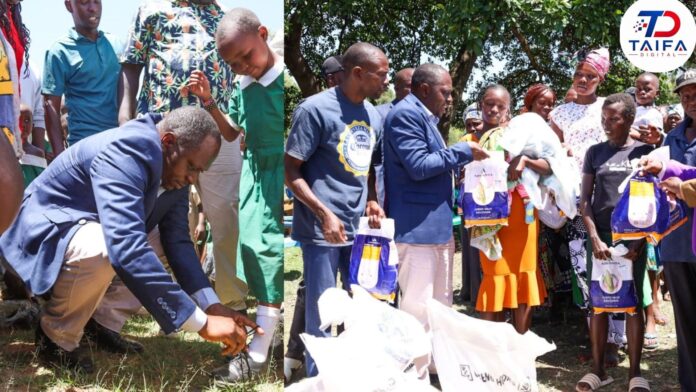
To break this cycle, Migori County Deputy Governor Joseph Mahiri visited Komasincha Primary School to launch an emergency twin intervention targeting both the symptoms of school truancy and the root cause of household poverty.
Certified seeds
Pupils were provided with sturdy school shoes and socks, while their parents received packets of certified maize seeds for the upcoming planting season.
“Education remains critical to our children’s future, but we acknowledge the severe economic hardships facing families,” the Deputy County chief said during the drive.
“Komasincha is heavily impacted by informal mining, which lures children away from their studies. This distribution of shoes aims to restore our pupils’ confidence, while the certified seeds give parents the tool they need to recover from the drought.”
For the school administration, the county’s gesture addresses a daily struggle against student dropout rates.
“Mining activities in the surrounding area have become our single biggest challenge to keeping learners in class,” said Headteacher Simon Mang’enyi.
“Children leave school to earn small daily wages in the mines. Having the Deputy Governor step in to provide shoes gives these pupils direct motivation to stay, while sending a message that their education matters.”
Younger children affected
Even the youngest learners felt the immediate impact. Catherine Robi, an Early Childhood Development (ECD) teacher at Komasincha, noted that many pupils routinely attended class barefoot or in cheap plastic flip-flops locally known as yebo-yebo.
“Seeing them put on proper shoes and socks brings back excitement for school. And for their parents, getting certified seed means they can return to their land with hope.”
For parents, the seed distribution addresses the core pressure pushing children into child labor.
“The drought took everything from our fields, and families have endured deep hardship,” said Mary Nyang’i Matatiro, a parent and Komasincha resident.
“These seeds are a lifeline to rebuild our livelihoods.”
Fellow parent Lydia Nyaboke Machera added that the agricultural support directly alleviates household stress, giving families a chance to feed themselves without sending their young children into hazardous pits.
While new shoes boost pupil morale and certified seeds offer a path toward harvest, local leaders emphasize that long-term success requires sustained enforcement against illegal child labor in the mines, alongside continuous agricultural backing to ensure Komasincha’s classrooms remain full.