
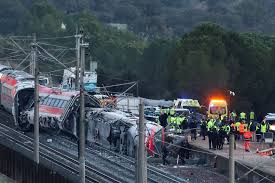
Spain is currently in a state of deep shock and mourning following its worst rail disaster in over a decade.
In the quiet evening of Sunday, January 18, 2026, the silence near the town of Adamuz in Córdoba was shattered by a high-speed collision that has claimed at least 41 lives.
For a country that takes immense pride in its cutting-edge rail network, the accident feels particularly surreal, a sentiment echoed by the nation’s leadership.
Here is a simplified look at what happened and where the investigation stands today.
The tragedy unfolded when a northbound Iryo train (a private high-speed service) traveling from Málaga to Madrid derailed on a straight stretch of track.
For reasons still under investigation, its rear carriages jumped the rails and crossed into the path of an oncoming Renfe Alvia train heading south.
Survivors described the impact as feeling like an “earthquake.”
The force was so violent that the lead carriages of the Renfe train were thrown down a four-meter embankment. Most of those who lost their lives were in these front carriages.
Investigators are currently baffled by the location of the crash. It didn’t happen on a sharp curve or a complex junction; it happened on a straight, flat line that had been fully renovated just seven months prior, in May 2025.
The fallout has been immediate. Prime Minister Pedro Sánchez canceled his trip to the World Economic Forum in Davos, vowing total transparency in the investigation.
King Felipe VI and Queen Letizia are visiting the site today to offer support to the survivors and the families of the victims.
As three days of national mourning begin, flags fly at half-mast across Spain. Meanwhile, in the hospitals of Córdoba, 12 people remain in intensive care, fighting for their lives.