
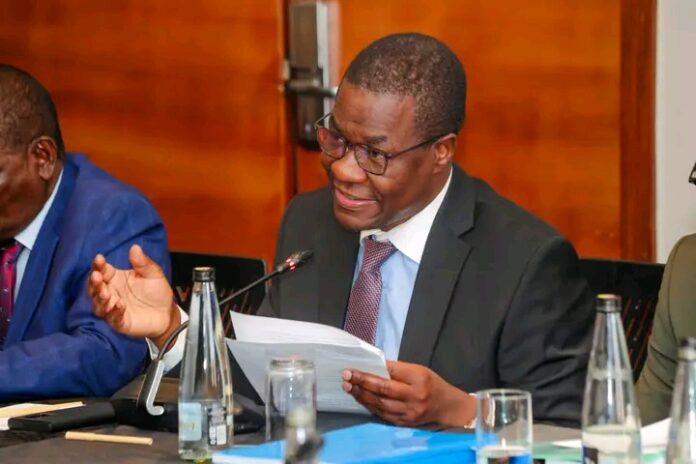
BY JAMES KILONZO: Cabinet Secretary of Energy and Petroleum Opiyo Wandayi cut through the haze of skepticism surrounding Kenya’s long-awaited petroleum journey when he appeared before the select committess in the Senate.
During this joint session on the Field Development Plan and Production Sharing Contracts for the South Lokichar Basin in Turkana County, Wandayi reignited national hope by recommitting the government to a development path defined by transparency, accountability, and commercial viability.
In a nation weary from decades of delays in harnessing its oil discoveries, this moment stands as a clarion call: Kenya’s black gold must serve its people first, especially the resilient communities who have borne the brunt of exploration promises unfulfilled.
Wandayi’s submissions illustrated a model bridging the gap between bureaucratic ambition and grassroots reality.
Imagine the oil fields of Turkana not as isolated enclaves of foreign profit but as engines of shared prosperity, where contracts are dissected in the light of day and benefits flow directly to those whose lands have been the cradle of this wealth.
This approach echoes the lessons from nations that stumbled, opaque deals breeding resentment and inequality, while charting a course toward models of disciplined resource management, adapted to Kenya’s vibrant democratic fabric.
By placing accountability at the forefront, Wandayi signals that the government views petroleum not merely as a commodity but as a covenant with its citizens, one that demands rigorous parliamentary scrutiny to ensure no corner is cut.
Wandayi’s vision exhibits unyielding focus on host communities, those pastoralists and families in Turkana who have watched seismic trucks rumble across their horizons for years without seeing tangible upliftment.
His reaffirmation underscores a profound shift: petroleum development must be commercially sound only insofar as it uplifts those it touches most directly.
Picture schools rising from the dust, clinics stocked with medicine, and roads linking remote villages to markets, all fueled by revenues that bypass elite capture.
This is no abstract ideal; it is a practical imperative. In Turkana, where arid beauty masks deep vulnerabilities, equitable sharing means training locals for skilled jobs in drilling and maintenance, fostering agro-pastoral innovations resilient to oil’s environmental footprint, and establishing community trusts that empower women and youth as decision-makers.
Wandayi’s words before the committees were a pledge to rewrite the narrative of resource curses into one of communal renaissance, ensuring that the promise of oil translates into dignity for the very people who steward the land.
Yet, this commitment arrives at a juncture pregnant with both opportunity and peril for Kenya’s energy sector.
The South Lokichar Basin represents more than a technical blueprint; it is a litmus test for whether our governance institutions can deliver on the constitutional promise of devolved benefits. Wandayi rightly highlighted the need for commercial viability, recognizing that without investor confidence tempered by ironclad transparency, projects falter.
Skeptics might point to past hiccups, permitting delays, fiscal disputes, global market volatilities—but Wandayi’s appearance flips the script, positioning Parliament as the vigilant guardian.
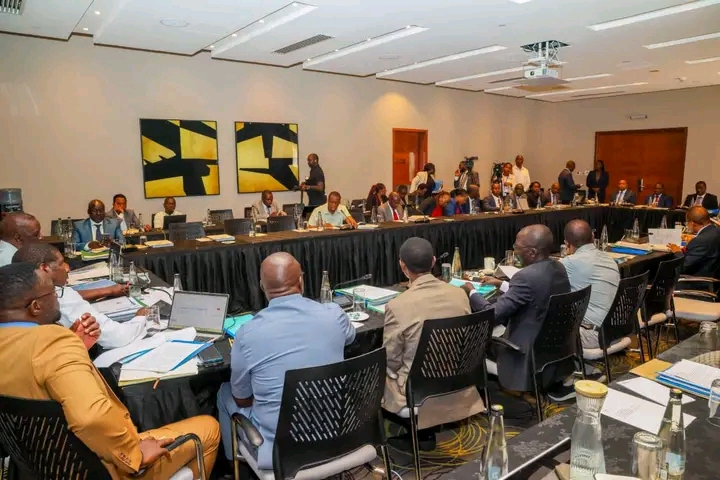
The joint committees, in their probing questions, exemplified this synergy, holding the executive to account while forging a bipartisan consensus on safeguards like local content mandates and environmental protocols.
This collaborative spirit is Kenya’s secret weapon, transforming potential flashpoints into milestones of progress.
Critics, however, will demand more than rhetoric. They ask how transparency will be enforced beyond committee rooms.
Wandayi’s framework must evolve into binding mechanisms, public dashboards tracking contract milestones, independent audits streamed live, and civil society embedded in oversight boards.
For host communities, maximum benefit translates to immediate actions: scholarships for Turkana youth in petroleum engineering, micro-enterprises supplying rigs with local goods, and restorative justice for lands scarred by exploration.
Petroleum funds
Nationally, it means channeling petroleum windfalls into a sovereign fund that cushions economic shocks and seeds green energy transitions, aligning with Kenya’s broader economic transformation agenda.
Wandayi’s testimony lays the groundwork, but true accountability blooms in implementation, where every barrel extracted justifies its weight in lifted lives.
As Kenya stands on this cusp, Opiyo Wandayi’s voice emerges as a beacon of resolve. His reaffirmation before the joint committees is not just a procedural formality but a manifesto for an equitable oil era, one where transparency dissolves doubts, accountability builds bridges, and commercial prudence serves the common good.
For the people of Turkana and the nation at large, this is the dawn they have awaited: a future where petroleum’s promise is not squandered but shared, fostering unity from the arid north to bustling urban centers.
Let Parliament’s oversight be unrelenting, the executive’s delivery swift, and Kenya’s story one of triumph over extraction’s pitfalls. In Wandayi’s words, we glimpse not just oil rigs on the horizon, but a horizon of possibility for every Kenyan.


