By KASSIM MWALIMU ADINASI: For 15-year-old Sharon Achieng, life has always existed in two layers of darkness.
The first was formed at birth, born blind shortly before the death of her mother, her entry into the world was marked by both a literal absence of light and a profound absence of joy.
Today, in Bar Olengo village, Siaya County, a second layer of darkness looms; this one is not biological, but systemic, rooted in crushing poverty and an educational framework that is slowly leaving her behind.
Navigating life alongside her illiterate grandmother, Leonida Owino 79, has been a grueling journey.
Sharon only began her education at age 12, already years behind her peers, her school, St. Oda School for the Visually Impaired, sits several kilometers from their rural home.
Even when she can make the trip to school, the cost of learning materials remains a recurring nightmare.
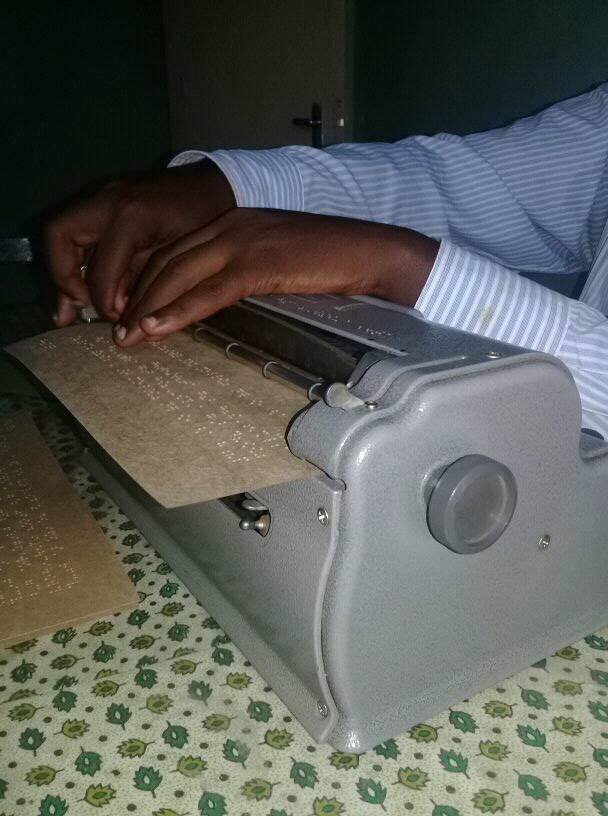
In the evenings, inside a tiny house lit by a dim solar lamp, Sharon runs her fingers over Braille alphabets, struggling to master a language almost no one else in her village understands.
“This term, she has not gone to school,” laments Leonida, “The funds I expected to use for her uniform and supplies were redirected to her medication. I sold millet from the last season for Sh6,800, but she fell ill, and the hospital bills swallowed it all.”
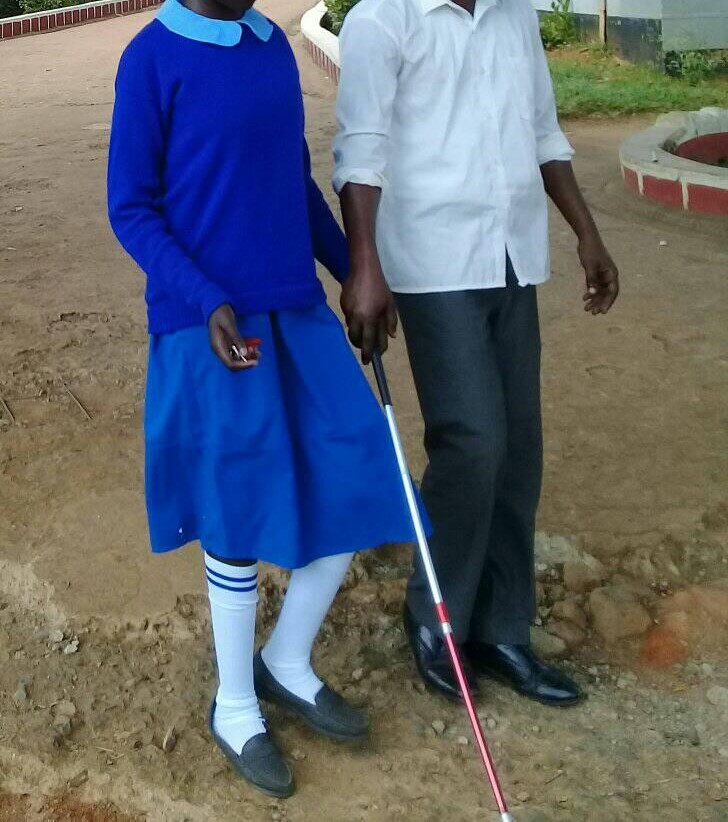
When she first reported to school, Sharon was issued a Braille machine for holiday studies. It has since broken down, making independent learning nearly impossible, however, despite this hardle, her resolve is unshaken.
“I want to continue learning. I want to be a teacher,” Sharon says with quiet conviction. To her, the answer to life’s riddles is found within the four walls of a classroom, the very walls poverty is currently preventing her from entering.
As Sharon’s agemates join senior secondary school, the realization that her own education is stalling eats away at her mental health.
According to her grandmother, the local administration has shown no interest in her plight.
“Not even a Nyumba Kumi elder has asked why she is not in school,” Leonida says.
“None cares about learners with special needs in these parts of the country.”
Policy vs reality on ground
The State Department for Social Protection and Senior Citizen Affairs outlined in its 2023–2027 strategic plan that all learners with disabilities would be integrated into schools with full access to materials by 2027.
Yet, with only a year to go and the nation entering a politically charged atmosphere, the fate of Sharon, and thousands like her, hangs in the balance.
The previous administration under President Uhuru Kenyatta disbursed Sh57,974 per learner in special secondary schools (compared to Sh53,612 for regular learners) and allocated Sh100 million for the Secondary Education Quality Improvement Project (SEQIP).
Currently, the State Department requires Sh32.125 billion to implement significant changes in special needs education.
The scale of the challenge is massive, according to the 2019 census, approximately 900,000 Kenyans live with disabilities; 470,000 of whom are under age 25. While the Ministry of Education reports 294,208 learners with special needs in primary and secondary schools, they are served by only 3,430 special schools nationwide.
The wide “canyons” of CBE
For students like 17-year-old Vincent Omondi at Nina School for the Hearing Impaired, the dream is to become a mechanical engineer.
He appreciates the Competency-Based Education (CBE) curriculum for its focus on self-employment, but the lack of resources is eroding his ambition.
“The curriculum is good, but the learning materials are too few,” Vincent explains through sign language.
While the CBE emphasizes talent exploration and innovation, special interest schools are being left with “wide canyons” to fill, teacher Carolyne Stempler, Head of Institution at Kibos School for Learners with Visual Impairment, notes that the financial hurdles are staggering.
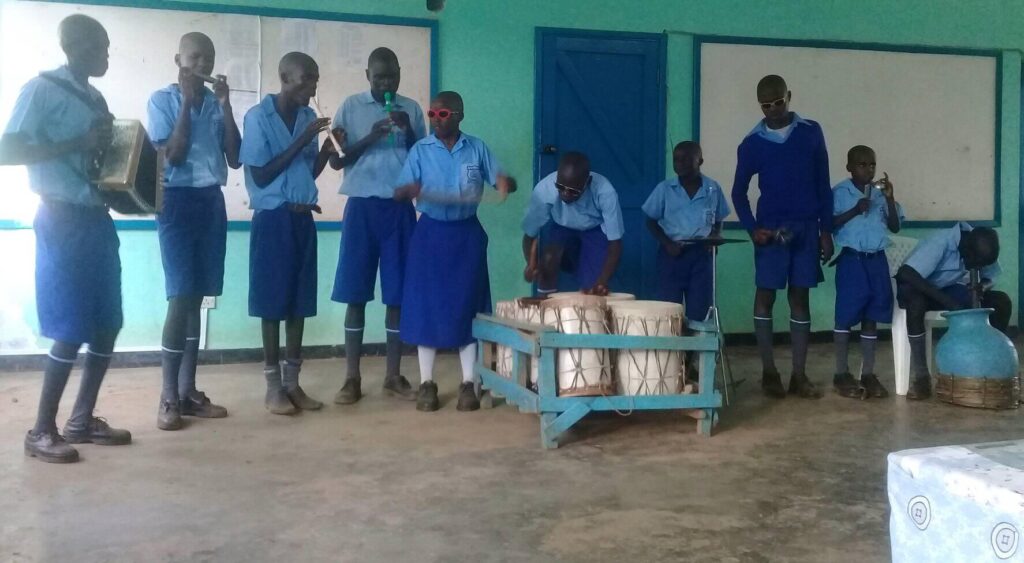
“CBE is anchored on a learner’s ability to decode what they see,” Ms Stempler explains, “For our learners, everything must be converted to Braille. A book that costs Sh800 for a regular student costs Sh10,000 once converted. How many rural parents can afford that?”
Beyond finances, a cultural stigma persists. Ms Stempler laments that some parents treat special schools as “dumping grounds,” sometimes refusing to pick up their children during holidays until local chiefs intervene.
Christopher Awuondo, a 77 year-old retired educationist, believes the CBE implementation was hurried.
“The curriculum ought to have been implemented in phases,” he notes, “The gaps in special schools require serious intervention to ensure we are developing creators and innovators, not just widening the divide.”
In response to Sharon’s case, Siaya County Education Director Francis Shikanda faulted institutions for failing to track absent learners.
“Once a learner is registered, the institution has an obligation to follow up,” Shikanda stated “This case will be sorted immediately.”
He further emphasized the urgent need for civic education in rural areas to combat the stigma surrounding disability.
Sharon’s grandmother believes that without immediate intervention, the “second layer of darkness” is threatening to become a permanent fixture of her grandchild’s life.