
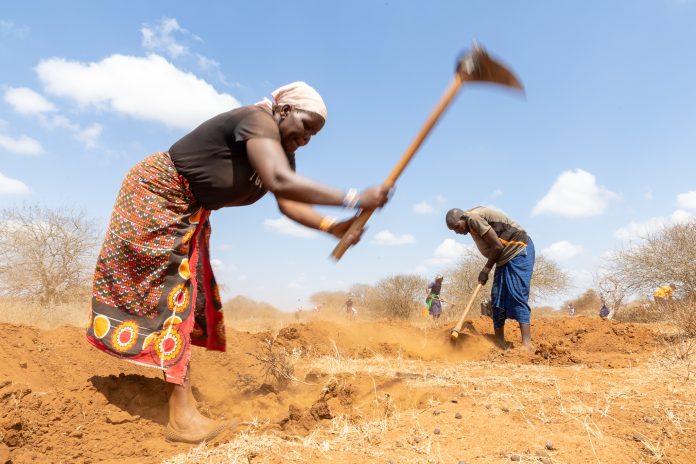
On Mbirikani ranch, hundreds of villagers are racing the weather to turn a flood threat into fresh pasture.
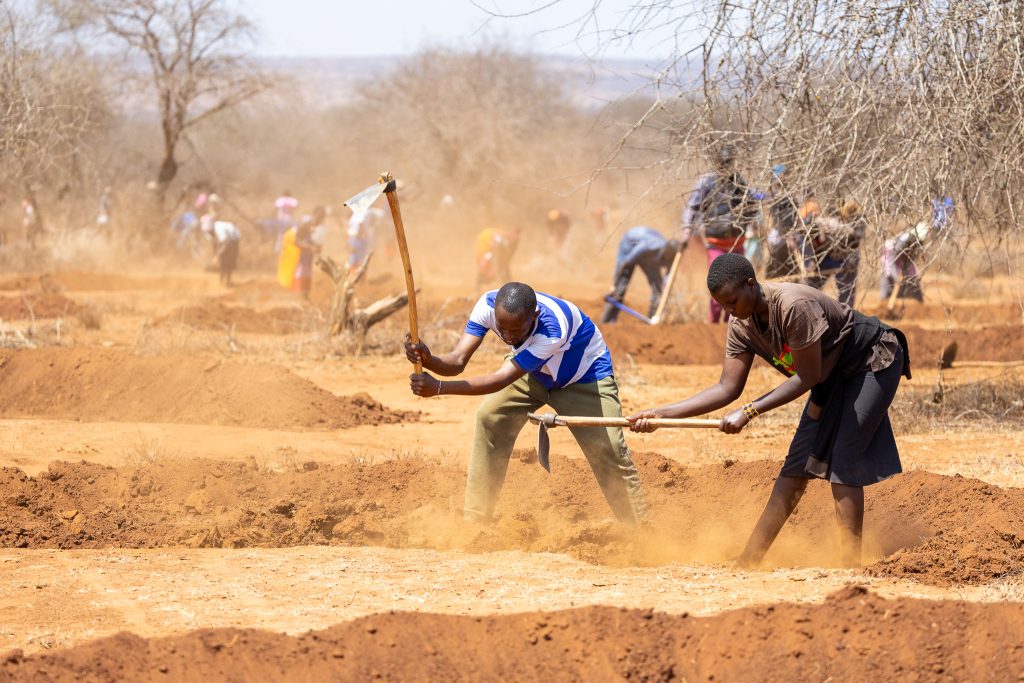
On the dry, sun-baked ground of Mbirikani ranch in Kajiado, more than 600 Maasai are digging against the clock.
Their target is 50,000 miniature earth dams, and they want them finished before the El Niño rains arrive.
Pastoralists usually welcome the end of a dry spell, however, after years of drought and degradation, much of the land here is bare and hardened.
When heavy rain hits ground like that, it doesn’t soak in.
It runs off, taking what topsoil is left and carving gullies as it goes.
A half-moon that holds the water
The answer is the bund, a semi-circular earth bank shaped like a wide crescent.
Each one is dug where rainwater naturally flows and acts as a small dam, roughly 2.5 metres by 5 metres.
It slows the runoff, keeps soil in place and lets water settle and sink slowly into the subsoil.
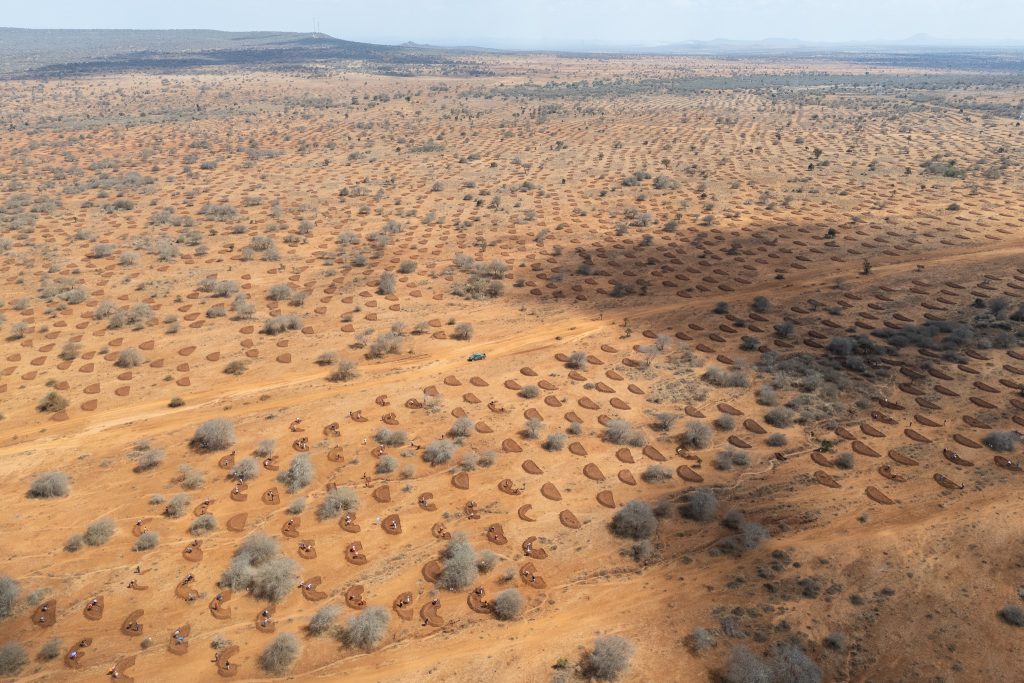
Workers then scatter indigenous grass seeds around each bund, so the grasses can take root and spread into the surrounding land.
“If rain falls on compacted, bare earth, that life-giving moisture is lost in minutes,” says Ernest Lenkoina, Rangelands Restoration Manager at Big Life Foundation, which is leading the effort from its base in Mbirikani.
“We’re preparing the land now so that when the rains come, we can make the most of every drop.”
The work is under way at four active sites, where crews dig more than 1,000 bunds a day. Big Life is implementing the project with Justdiggit Foundation and the TWENDE project.
The project is also a source of income; more than KSh9 million is being paid to 657 casual workers hired from local villages.
Many are Maasai women, including widows and others who lost their livestock in recent droughts.
Women are central to the seed supply too.
Eight community grass seed banks, coordinated by Big Life and run by women’s groups across group ranches in Kajiado, provide the seeds sown around the bunds.
The groups earn from seed sales, hay baling and integrated beekeeping.
Building on five years of work
This push builds on a five-year restoration programme by Big Life and partners including Conservation International and Justdiggit.
Funders include Apple Inc and the TWENDE Project, among others.
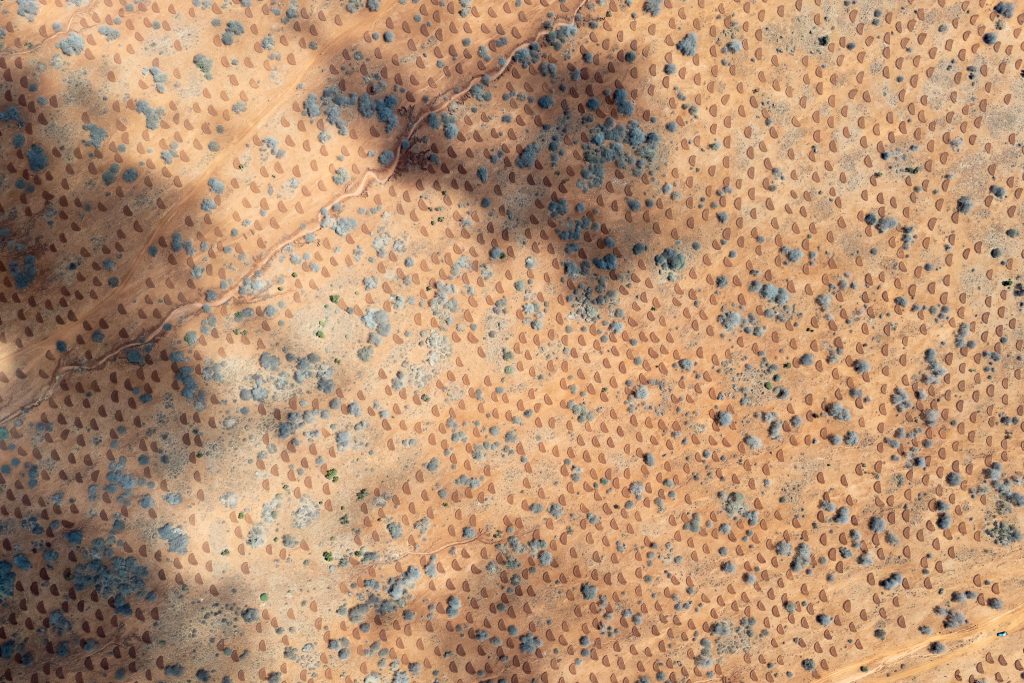
So far it has built more than 278,000 bunds across 2,300 acres, about the size of Nairobi’s Karura Forest.
With natural regeneration and controlled grazing added in, the rangelands Big Life has helped restore now cover more than 17,500 acres.
Earlier sites are already showing results.
In Ilchalai, Loosikitok and Olngosua, pasture yields have rebounded significantly.
The grass there stays greener for longer and feeds livestock and wildlife through the dry months, while untreated areas collapsed.
New grass needs time to mature and drop its own seed.
To protect it, communities have agreed on strict temporary grazing rules; community land management committees and dedicated rangeland scouts monitor the restoration zones and keep livestock off recovering plots until the grasses are firmly established.
The initiative goes beyond
The Greater Amboseli ecosystem supports Maasai pastoralists alongside elephants and other wildlife.
Its semi-arid grasslands face growing pressure from recurring droughts, changing land use and degradation.
Healthy pasture matters to herders and to conservation alike; better grazing at home also helps keep wild animals out of neighbouring farms and supports peaceful coexistence.
Caroline Kerichu, Southern Landscape Manager at Justdiggit Foundation, says nature can regenerate if given the chance.
“Our role is to create the right conditions… and let nature do what it does best.”


