
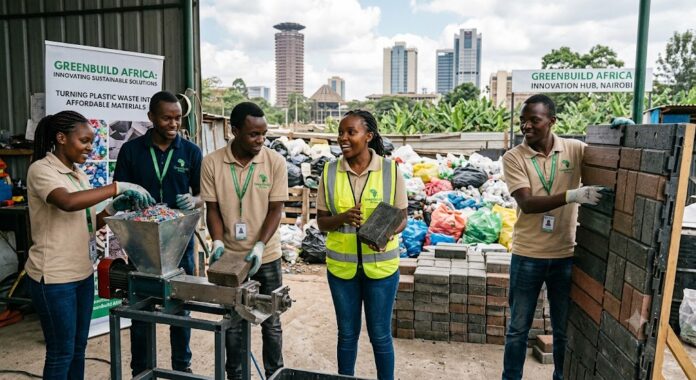
BY ESTHER MWANGI: A group of university students in Nairobi has captured international attention after launching an innovative project that transforms plastic waste into low-cost construction materials, offering a practical solution to both environmental pollution and the rising cost of housing.
The initiative, known as GreenBuild Africa, was founded by five engineering and environmental science students who were deeply concerned by the growing menace of plastic waste in Kenya’s urban centers.
Utilizing a locally designed recycling process, the team converts discarded plastic into durable paving blocks and lightweight building panels.
According to the project’s founders, the idea was born during a community clean-up exercise in Nairobi’s informal settlements, where piles of plastic waste had clogged drainage systems and severely polluted nearby rivers.
“We realized that the waste problem could also become an economic opportunity,” project leader Miriam Wanjiku explained during a media briefing on Thursday.
“Instead of viewing plastic as useless garbage, we decided to turn it into something valuable that communities can actually use.”
The project has rapidly gained popularity on social media, with videos demonstrating the recycling process attracting thousands of views within days.
Environmental activists and housing experts alike have praised the innovation for addressing two major societal challenges at once: waste management and affordable housing.
Officials from the Ministry of Environment have also expressed strong interest in supporting the initiative.
Speaking during a youth innovation summit in Nairobi, government representatives described the project as a prime example of how young people are driving sustainable development through creativity and technology.
Environmental experts note that Kenya produces thousands of tons of plastic waste annually, a significant portion of which ends up in landfills, waterways, and public spaces.
Projects like GreenBuild Africa could drastically reduce this pollution footprint while simultaneously creating green employment opportunities for young people.
Residents in several Nairobi neighborhoods have already begun using the recycled paving blocks for pathways and small-scale construction projects. Contractors involved in the pilot phase report that the materials are not only cost-effective but also highly resistant to water damage.
“We have tested the blocks during heavy rains, and they remain incredibly strong,” said Peter Mwangi, a contractor who has worked closely with the student innovators for the past three months. “The demand is growing because people want cheaper, durable, and environmentally friendly alternatives.”
Moving forward, the students hope to scale up production and partner with county governments, private investors, and environmental organizations to increase their impact across the country.
Ms Esther Mwangi is a Student at Mount Kenya University