
Kenya Power has entered into a five-year partnership with US-based Kaddas Enterprises to launch a wildlife protection initiative aimed at eliminating animal electrocutions across the national electricity grid.
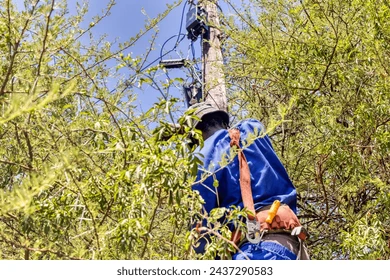
Managed by the utility’s Institute of Energy Studies and Research (IESR), the project involves retrofitting specialized, wildlife-friendly insulation covers onto sections of power lines identified as high-risk electrocution hotspots.
The initiative officially commenced at the Soysambu Conservancy, located approximately 130 kilometers northwest of Nairobi.
Soysambu serves as a vital habitat for majestic hunting raptors, including the Augur Buzzard and the Martial Eagle, which frequently use the utility structures for perching.
The initial phase of the project focuses heavily on the Lanet-Naivasha Interconnector, a critical line that has historically suffered frequent, wildlife-related disruptions involving both birds of prey and larger animals, such as giraffes.
Beyond environmental conservation, the initiative addresses a massive operational headache for the utility firm. Company statistics reveal that wildlife contact alone accounts for 30 percent of all grid interruptions, while combined wildlife and human interference are responsible for roughly half of the country’s power outages.
By shielding these live wires, Kenya Power aims to drastically improve power reliability for its consumers while substantially reducing animal fatalities.
Company leadership has hailed the partnership as a major step forward for corporate and environmental synergy.
Eng Henry Pwani, the Head of Research at IESR, highlighted the project as a true win-win scenario, noting that safeguarding Kenya’s tourism-driving wildlife heritage goes hand-in-hand with securing the reliable energy needed for national economic growth.
Wesley Kerich, Kenya Power’s Nakuru County Business Manager, added that the Lanet-Naivasha pilot will provide the critical data and technical lessons necessary to guide a standardized, nationwide rollout across all remaining electrocution hotspots in the country.