
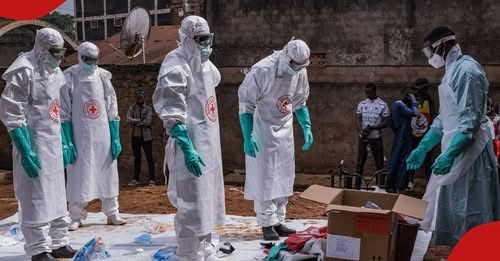
Ebola outbreak in the eastern region of the Democratic Republic of the Congo (DRC) has reached a grim milestone, with global confirmed cases officially crossing the 1,000 mark.
The escalating health crisis has prompted warnings from United Nations agencies, who revealed on Monday that nearly three million children and adolescents are now at extreme risk in the affected territories.
Concurrently, emergency health interventions are being aggressively scaled up to treat prisoners held in facilities located near the epicenter of the current outbreak.
The virus is taking a disproportionately heavy toll on the youngest segment of the population.
According to data released by the UN Children’s Fund (UNICEF), children account for 15 percent of all confirmed Ebola cases and more than 25 percent of the deaths recorded since the outbreak began in April.
Alarmingly, medical data indicates that infected children are almost twice as likely to die from the hemorrhagic fever as adults.
UNICEF Chief Catherine Russell highlighted the unique structural dangers that minors face during this epidemic, explaining that children are especially vulnerable because they depend entirely on caregivers and cannot realistically isolate themselves from a sick parent or sibling the way an adult can.
To mitigate this threat and better protect youth, Russell emphasized the critical need for sustained humanitarian access and robust resources to successfully reach every affected community.
The social fabric of the region is already fracturing under the weight of the disease.
In Ituri, the recognized origin and epicenter of the current outbreak, more than 130 children have already lost one or both parents to the virus.
Russell noted that UNICEF frontline teams on the ground have encountered numerous children trying to process the sudden loss of their mothers and fathers, all while navigating a terrifying public health threat that is heavily surrounded by local rumors and rampant online misinformation.
Compounding the crisis are severe operational roadblocks that continue to hamper the international medical response.
While health officials have managed to improve localized testing capacity recently, critical containment measures—including active disease surveillance and comprehensive contact tracing, remain heavily constrained.
These lifesaving efforts are routinely disrupted by widespread insecurity and restricted physical access across a restive region long scarred by violent clashes between government forces and various armed groups.