
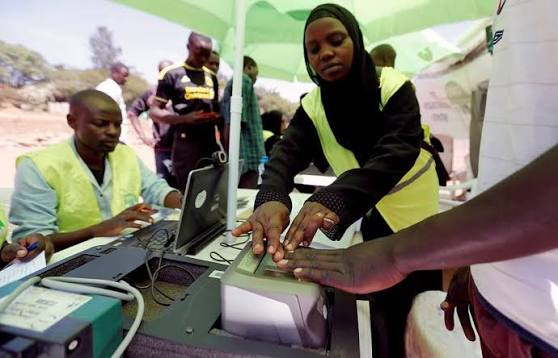
A coalition of state and local leaders across Migori County has launched a massive, multi-sectoral mobilization campaign in a bid to kill the voter apathy.
Bringing together national and county governments, education officials, the Independent Electoral and Boundaries Commission (IEBC), and grassroots community actors, the coordinated drive aims to register tens of thousands of new voters ahead of the 2027 general election.
The urgent intervention comes amid deep-seated concerns over political disillusionment among Kenya’s youth, coupled with prolonged bureaucratic delays in the processing and issuance of National Identity Cards (IDs) , the mandatory prerequisite for voter registration under Kenyan law.
Bridging the vote deficit
In Awendo Constituency, a highly organized multi-sectoral coalition has been formed to aggressively bridge a steep registration deficit. Speaking during a regional strategy forum, the Awendo Constituency Representative revealed that the team is targeting 21,000 newly registered voters.
This represents a drastic scaling up from previous, sluggish enrollment initiatives; during the IEBC’s last enhanced voter registration window, the constituency netted a meager 6,000 new entries.
“We believe those numbers are within our community,” the representative pointed out.
“That’s why we have called in the boda boda (motorcycle taxi) sector, community health promoters, community policing representatives, and village elders to help us map out and reach our targeted constituency.”
The grassroots-heavy strategy relies on National Government Administration Officers (NGAO) and village elders identifying unregistered individuals directly within villages.
Once mapped, mobile teams consisting of IEBC registrars and officers from the National Registrar of Persons will deploy directly to these remote locations to process applications on the spot.
The representative acknowledged that past mobilization efforts were hobbled by partisan political propaganda, specifically from dominant regional parties like the Orange Democratic Movement (ODM).
The current non-partisan alliance plans to actively dismantle this misinformation through robust, ground-level civic education.
Statistical realities
Lazarus Mogoi, the IEBC coordinator for Awendo Constituency, provided a stark statistical breakdown highlighting the historical baseline and the steep hill the commission has to climb.
According to Mogoi, the constituency managed to register only 4,824 voters during its official enhanced continuous voter registration period. Subsequent off-season continuous enrollment efforts netted roughly 1,000 additional citizens, leaving a massive deficit of approximately 15,000 eligible but unregistered residents.
To put the scale of this mobilization challenge into perspective, local organizers in Awendo are aiming for an ambitious overall target of 20,000 to 21,000 newly registered voters. Historically, momentum has been slow to build; the previous enhanced registration phase managed to secure just 4,824 voters, while off-season continuous collection efforts brought in only about 1,000 more.
This leaves a massive current deficit of approximately 15,000 eligible but unregistered residents, the exact target population the new multi-agency coalition is now trying to capture through its aggressive grassroots mop-up drive.
Mogoi pointed out a critical operational vulnerability. Citizens rarely visit stationary IEBC offices voluntarily unless seeking voter transfers or correction of personal particulars.
To overcome this, the commission has shifted to an aggressive field-delivery model. Crucially, the IEBC is repairing an administrative fracture,local chiefs frequently distribute newly printed national IDs to youth without ensuring that those individuals are simultaneously registered as voters. The new collaborative pipeline links ID issuance directly to immediate voter registration.
Schools to act as registration points
Education officials have simultaneously opened a vital front in the campaign, earmarking local secondary schools as the most efficient environments to capture eligible youth.
Justus Wasike, the Awendo Sub-County Director of Education, revealed a partnership with the Sub-County Registrar of Persons, to ensure eligible students obtain their national IDs before graduating.
Wasike estimated that there are at least 200 students primarily in Form 3 and Form 4 who have reached the legal age of 18 and are ripe for registration.
“We want to encourage most of them to become active so they are aware of what is expected of them as future citizens or adults when they are through with their school,” Osei noted, confirming that data matrices are being compiled for direct submission to the IEBC.
Ochieng’ Barasa, Chair of the Awendo Sub-County Kenya Secondary Schools Heads Association (KESSHA), pledged the total cooperation of school heads across the region’s 40 secondary academic institutions.
Barasa noted that integrating registration drives into the school calendar, particularly while national examinations are underway and student attendance is guaranteed, maximizes administrative efficiency.
“Assuming the registrar comes and registers, say, 10 students per school, they end up registering about 400 across the sub-county,” Barasa calculated.
Suna West
Concurrently, a parallel voter and civic sensitization drive kicked off in neighboring Suna West Constituency. Hosted at the Migori Teachers Training College (TTC), the high-level forum convened 356 delegates spanning religious organizations, business communities, boda boda youth representatives, political party officials, persons living with disabilities (PWDs), and administrative chiefs.
Suna West Member of Parliament Hon. Peter Masara and IEBC Registration Officer Kennedy Okoth emphasized that civic registration is the baseline for both local economic development and proportional political representation.
Okoth reported that the Continuous Voter Registration (CVR) process is picking up momentum through decentralized deployments.
“Every ward currently has two mobile clerks moving from place to place to reach residents,” Okoth stated. “We had a target of registering about 7,700 voters under the current CVR, and as of yesterday, we were only 92 people shy of hitting that target.”
MP Peter Masara delivered a blunt message to attendees, linking legal documentation directly to socioeconomic survival. He explained that a national ID card is a vital economic lever used by the state for demographic planning and capital allocation.
Masara detailed the multi-sector benefits tied to the document which includes;Macro-Government planning, Social and Medical Security, Social Health Authority Registration and Financial Empowerment like NYOTA program
The lawmaker decried the historical trend of political “theatrics,” where aspirants pull massive crowds to campaign rallies, only for a fraction of those attendees to possess valid voter cards.
“We don’t want a situation where a politician meets a thousand people, but out of them, only a hundred are registered voters,” Masara warned. “For the purpose of the 2027 general elections, every single vote counts. If we want good leadership, we must mobilize our people to register.”
The Migori stakeholders concluded the convention with a binding resolution. Grassroots leaders will immediately execute an exhaustive census of all unregistered individuals within their administrative units.
Residents lacking national identity cards were directed to report to local Huduma Centers (one-stop state service bureaus), while those already holding IDs were instructed to register immediately with mobile IEBC clerks stationed across rural wards.