
Content note: this story includes accounts of sexual violence.
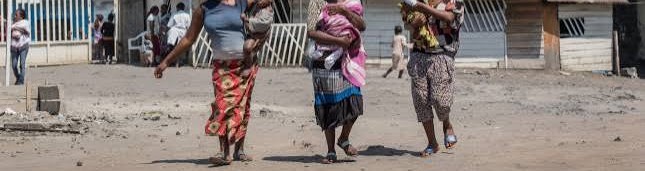
Zuhura* is 29, a mother of four, and six months pregnant with her fifth child. She lives in makeshift shelters in Nairobi.
Life on the streets has been brutal: she has been pushed into sex work and sexually assaulted, and each tragedy has led to the next.
Zuhura came to Nairobi from Kilifi County in 2017, aged 20 and pregnant with her first child.
Her schooling had ended at Form Two, when she was 17 and her parents separated, and her mother died a year later.
The relatives who took her in saw no value in educating a girl.
In many rural communities across Kenya, a girl’s education still carries less weight than her brother’s.
“I dropped out of school at Form Two. My uncle promised to see me through secondary school, but that changed just a few months after my mother’s burial,” she says.
In Nairobi she had no shelter, no skills and no one to turn to. She found work as a waiter at a local pub, earning Sh250 a day. A colleague soon asked if she wanted to make extra cash.
“Msichana, na hii urembo yote unateseka Nairobi? (Why are you suffering in Nairobi when you are this beautiful?)” she recalls the colleague saying.
By then she had given birth to a baby girl, whom she left at a daycare in Mukuru kwa Njenga, where she lived, while she worked.
“Within no time, I had abandoned working as a waiter. I was deep into sex work. At first I got a few thousand shillings. The money did not change my life, but I continued for years.”
Violence with no recourse
Her second pregnancy disrupted her work, she says she always tried to insist on condoms, to protect herself from infection and pregnancy, but some clients refused.
The most dangerous moments came when clients invited her to their homes.
“As a woman who wants money to feed my child, if invited I would go. One time I thought my client would have sex, pay and let me go. When I got there, I found two other men. They did all the ills to me, then paid Sh700 and threatened to kill me,” she says, tears streaming down her cheeks.
“Some of these things still happen. Even if you report to the police, who will listen to a sex worker? A sex worker has no rights. That is why some of them are killed and the case does not go beyond a police incident report.”
Unable to pay rent, and with two children by then, she ended up begging on the streets. Nights brought a different danger.
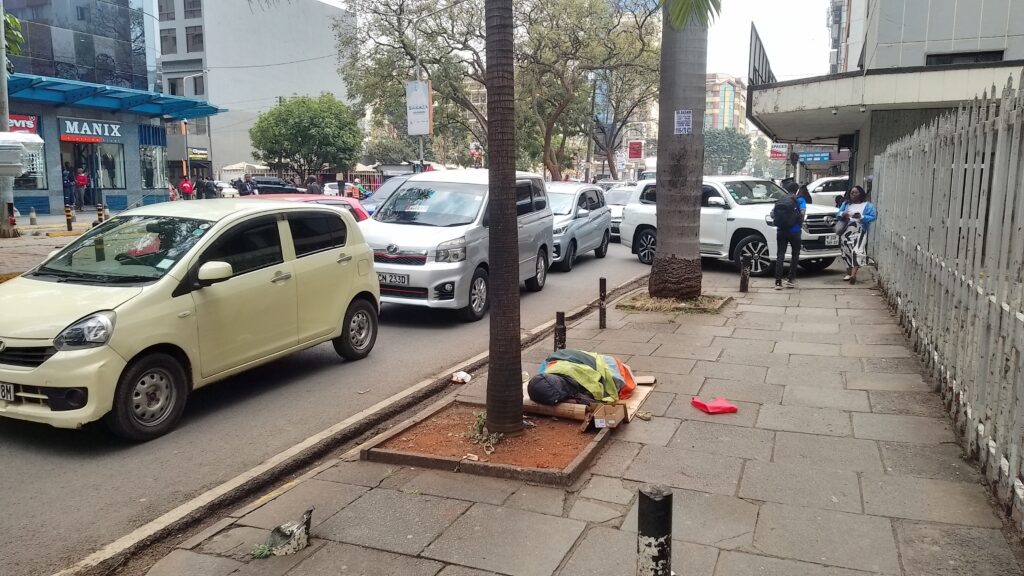
“With my two children, I had to resort to begging. At night, wherever I slept under the bridges, I was at the mercy of other street dwellers. They demand sex for my protection, or else I face the same ills.”
Rain brings no relief. “Sometimes the rains pound heavily for hours, and the shops with verandas where I can shelter with my children are out of bounds. The night guards often demand sex in order to let us stay.”
“Will I buy contraceptives or food?”
Many people ask why she keeps getting pregnant when she cannot provide for the children she has. Her answer is about access and power.
“The only contraceptive I can easily get is the oral pill, which I have to buy. Without money, I go without it. The other option is the female condom, which is not readily available. I got it once, years back, at Sh480.”
Male condoms depend on the man’s cooperation. “Sometimes you think he has it on, only for him to pull it off just before penetration. Now tell me, my income is what passers-by give me when I beg. Will I buy contraceptives or food for my children?”
Health facilities have not helped. She lost her identity card and other documents, so she cannot register for or pay into medical cover.
“Anytime I visit the facilities seeking medication or contraceptives, no one is ready to listen or offer the services.”
The same story in Mombasa
Atieno*, 22, is a single mother of three living on the streets of Mombasa. Her story echoes Zuhura’s.
She left school at Form Two and went to Mombasa in 2018. Her mother sold mnazi (palm wine), and Atieno says the trade exposed her to sexual abuse by the men who frequented their home.
“They would come, drink and begin touching me. My mother did nothing. In fact, she told me to tolerate them because they were loyal customers. At 14 I got pregnant, and the same mother sent me out. That is how I ended up in Mombasa with a child.”
Today, the only contraception she can reliably get is the male condoms distributed in public spaces.
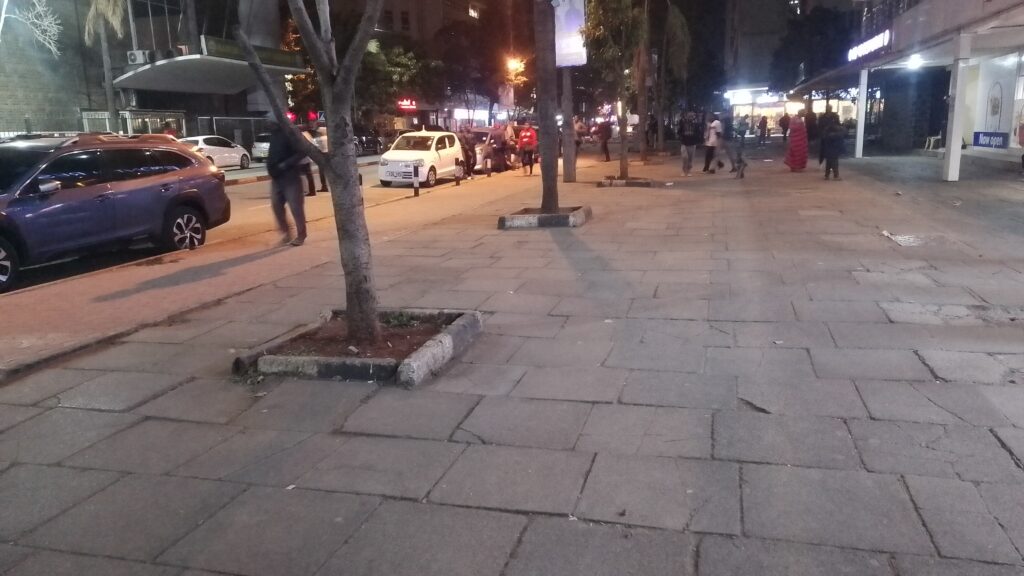
A dispenser on Mama Ngina Street used to provide them, but it is gone. Men, she says, often refuse to use them.
She tried an implant once, but removed it after two months. “I bled without stopping. I got scared.”
Empty shelves, rising risks
Difficulty accessing contraceptives in both public and private facilities threatens to push up unplanned pregnancies in Kenya and across Africa.
Winnie Njeri, a midwife in Mukuru kwa Njenga, says the shortage is already pushing girls toward unsafe abortions.
“Contraceptives are missing from our shelves. Since June, at our public facility in Mukuru kwa Njenga, we have had many young girls deliver. When we ask why they were not using contraceptives, the reason is either that men don’t want to use condoms or that the girls cannot access other methods.”
Street mothers face an even steeper barrier, she says. “I often meet most of them when they are due, with no antenatal records showing how far along they are. It is true that most facilities turn them away when they seek services, and remember, they are very sexually active.”
Dr Ishmael Abbas, a Nairobi-based medical expert, told Taifa Health Desk that counties have no framework for providing contraceptive services to street families.
“Whenever we meet these women on the streets with many children, all we do is castigate them for not planning their families. Most county governments have no framework for issuing sexual and reproductive health information. This has affected sexually active adolescents. They end up with unplanned pregnancies, and some seek abortion services from quacks who just want to make money.”

He warns that the picture could worsen as aid funding shrinks.
“The problem is not only with street families. The future is bleak because the shelves are empty and the budget allocated for contraceptives is inadequate. As we speak, the demand is overwhelming.”
Two weeks ago, MSI Reproductive Choices Kenya called on the government and donors to increase funding for contraceptive supplies amid concerns over reduced global funding.
The organisation warned that existing supplies, which have helped cushion women and girls from the impact of funding cuts, are running out, potentially leaving millions without access to contraception.