
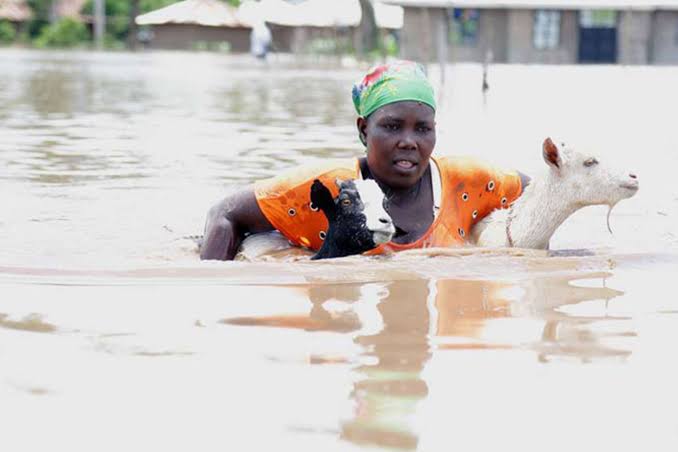
Nora and Laura are twin sisters who are turning eight this year. They attend Sidundo Primary School in Siaya West Sub-County, Siaya County.
Theirs is a unique case: they were conceived at a camp where their parents had been evacuated after floods wreaked havoc on their village and forced them out.
Besides submerged houses, property worth millions was destroyed across the village.
The parents were still courting and had planned to marry three years later, in 2021.
Being sexually active, and living in the camp, they did not anticipate what came next. Two months later, Lorine Awino, 30, discovered she had conceived, and tests confirmed she was pregnant.
“My husband, then my boyfriend, had just been employed as a teacher in a nearby school. I had completed a beauty course and was helping my neighbour in her shop in Uranga,” says Awino.
“You know, we were sexually active and had planned to have a wedding before settling down. Things happened, and here are our two girls,” she adds, laughing.
Both families were affected by the floods, which lasted close to a month.
The couple lived a few kilometres apart: Awino stayed with her family in Ruambwa, while her boyfriend lived in Sidundo.
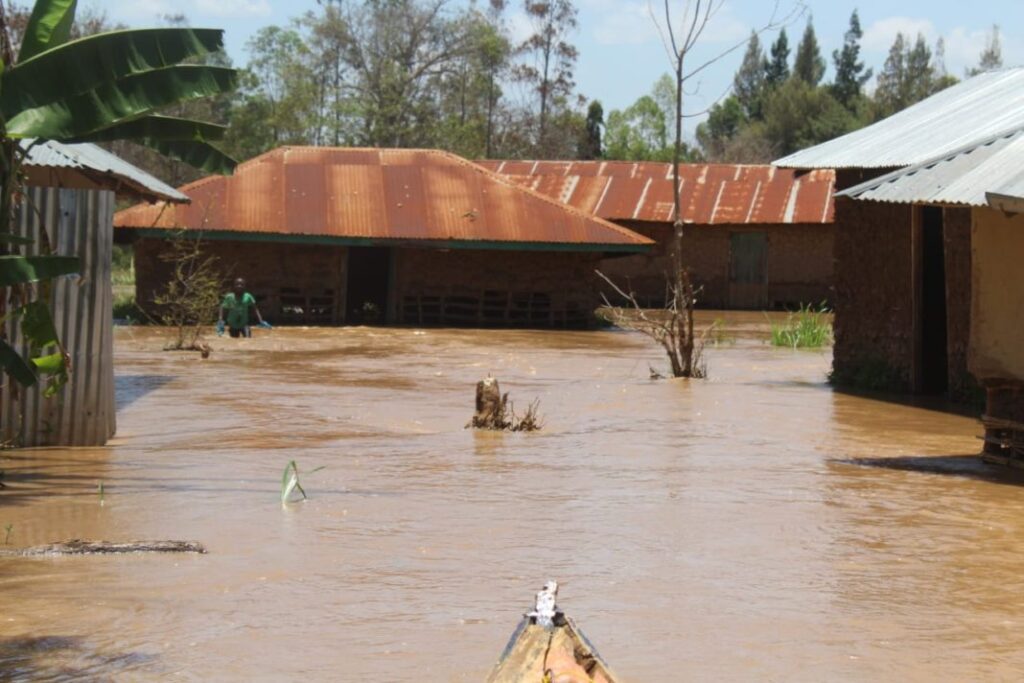
When the floods came, they were relocated to Mahero Secondary School, where they slept in classrooms and cooked in the open air.
Awino points out that the camps lacked many things, and contraceptives were among the essentials that were missing.
“In those classrooms, people create their own rooms where they meet their spouses, so there is a need for contraceptives, especially condoms, both male and female,” she adds.
Nyatike floods
Kilometres away, in Nyora Village, Nyatike Sub-County, Wycliffe Ongesa, 33, and his girlfriend Vctoria Akinyi had a child conceived in the camp where they sheltered in 2020. The prolonged rains had caused River Kuja to burst its banks, and the villages of Nyora and Kabuto were among the worst affected.
“When you talk of providing flood victims with contraceptives like condoms, many ask whether people are being intimate in the camps. The truth is, they are. Floods are like any other catastrophe; they do not kill the urge for sex,” says Ongesa.
He adds, “Even teenagers who are sexually active often engage in sex while in the camps. Instead of pointing fingers and vilifying them, let us provide these essential services to them.”
Floods expose girls to Sexual Gender Based Violence
A study conducted by UNICEF-Kenya in December 2025 on the impact of floods in Kenya found that, besides disrupting school attendance, floods expose teenage girls to early pregnancies.
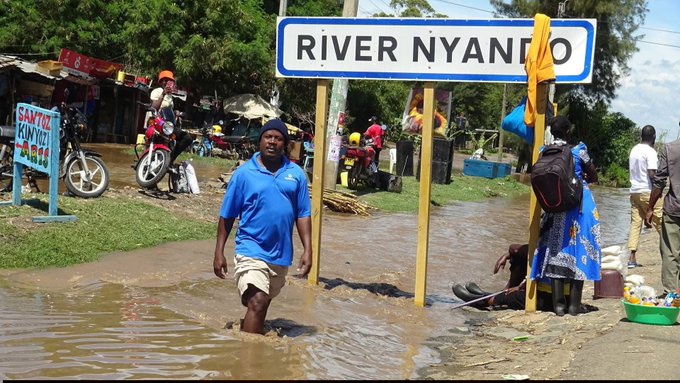
As the country prepares for the El Niño rains, Sexual and Reproductive Health advocates are asking whether contraceptives will be available in the camps where displaced people will be sheltered. The aim is, first, to curb an influx of unplanned pregnancies among the affected, and second, to stop the spread of sexually transmitted infections (STIs).
June Atieno, 39, a Community Health Promoter (CHP) in Siaya, says the shortage of contraceptives currently being experienced in Kenya will expose many young girls to early pregnancies.
“Let’s be real here: teenagers are sexually active. We must be proactive and put measures in place. It is not a matter of telling them; they already know, and some even know more than their parents. Let us make contraceptives available to them if possible,” says Atieno.
“It is not a matter of morality. Let us save them from early pregnancy as well as STIs.”
According to the Kenya Meteorological Department, the rains are likely to affect lowland areas, mostly where rivers meet the lake.