
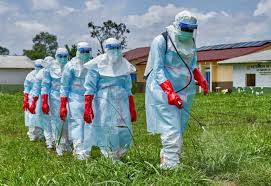
The Ministry of Health has placed 25 counties on high alert, classifying them as either high or very high risk for potential Ebola exposure.
The aggressive preparedness measures come as Kenya steps up defenses against a deadly outbreak expanding across neighboring Uganda and the Democratic Republic of Congo.
While Public Health and Professional Standards Principal Secretary Mary Muthoni confirmed that no positive cases have been reported within Kenya’s borders, the government is taking no chances.
Speaking during a strategic meeting at Afya House on Tuesday June 2, 2026, PS Muthoni revealed that authorities remain on high alert across all 26 official points of entry, with surveillance heavily focused on travelers arriving from ten neighboring countries currently under the government’s radar.
The Ministry’s risk assessment maps out the country based on border proximity, major transit hubs, and high volumes of cross-border movement.
Heavily trafficked border and transit zones including Nairobi, Mombasa, Uasin Gishu, Busia, Kisumu, Bungoma, Trans Nzoia, Siaya, West Pokot, Turkana, Homa Bay, and Migori, have been designated as very high-risk areas.
Meanwhile, 13 other counties, including Vihiga, Kakamega, Nakuru, Kericho, Nandi, Kiambu, Machakos, Kilifi, Makueni, Taita Taveta, Isiolo, Elgeyo Marakwet, and Garissa, have been classified under the high-risk category.
To prevent a breach at these locations, the government is executing a rapid-response strategy alongside stringent new transit rules. Surveillance and screening have been heavily enhanced at all border points and airports.
Specialized workforce
To manage any eventuality, emergency operation centres have been fully activated across 26 counties, backed by a specialized workforce of over 1,000 health officers who have been trained and deployed for immediate response.
The scale of the border operation is already massive.
Health officials screened 13,548 travelers in a single 24-hour window, pushing Kenya’s cumulative screening total to approximately 67,000 individuals.
To tighten the dragnet, the government is considering the implementation of a mandatory 21-day quarantine for all travelers arriving from high-risk countries before they are permitted entry into Kenya.
Moving forward, inbound travelers must also present certified exit surveillance reports from their countries of origin, alongside detailed screening data that must be shared directly with regional airlines and bus companies.
In the meantime, health authorities are urging Kenyans to avoid unnecessary travel to the affected countries until the situation stabilizes.
These strict domestic measures reflect growing concern over the speed and severity of the regional crisis.
According to the Africa Centres for Disease Control and Prevention, the Ebola outbreak in the DRC has recorded more than 1,000 suspected cases and nearly 250 deaths since it was declared on May 15.
With Uganda also registering several infections and confirming one death, regional health authorities are racing against time to keep the virus from spilling further across East Africa.