

BY BONIFACE KURIA: The long-awaited countdown to the 2026 FIFA World Cup has officially shifted from years of anticipation to immediate action.
Joint hosts the United States, Canada, and Mexico are putting the final operational touches on football’s largest-ever tournament.
With the opening whistle just days away, the huge scale of the task is finally reality: 48 teams, 104 matches, 16 host cities, and an expected global audience of billions.
Running from June 11 to July 19, 2026, this tournament marks the first time the World Cup is being staged across three nations simultaneously.
The newly expanded 48-team format means more countries will feature on the world stage than ever before.
For the African continent, this expansion has permanently altered the landscape, increasing CAF’s direct slots to nine and providing a significantly clearer path to the global stage for emerging footballing nations.
Ultra-Modern venues
The physical backbone of the tournament is its state-of-the-art venues, where final stadium upgrades have crossed the finish line.
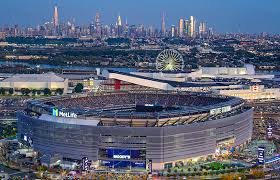
In the United States, MetLife Stadium in New Jersey (rebranded as New York New Jersey Stadium for the event), which will host the final on July 19, has been fitted with a cutting-edge hybrid pitch system to meet FIFA’s stringent playing standards.
Concurrently, AT&T Stadium in Arlington and SoFi Stadium in Los Angeles have finalized major retrofits, including temporary seating adjustments to maximize capacity and expanded media zones to accommodate an unprecedented surge in global press coverage.
Canada’s two venues are equally primed; BC Place in Vancouver has completed massive roof modifications to optimize natural light for the pitch, while Toronto Stadium (BMO Field) successfully expanded its blueprint to fulfill FIFA’s operational needs.
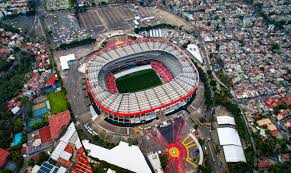
In Mexico, the historic Estadio Azteca in Mexico City has just emerged from a historic third major renovation.
When it hosts the opening match, it will secure its legacy as the first stadium to stage matches at three different World Cups, adding 2026 to its legendary 1970 and 1986 portfolio.
Logistics and Safety
Beyond the stadiums, host cities have completed exhaustive transit network simulations to move teams, officials, and fans between training bases, airports, and match venues.
The geographic distances involved are entirely unprecedented; some squads are slated to travel over 3,000 kilometers between group-stage fixtures.
To mitigate the logistical strain, dedicated charter flight corridors and streamlined fan travel networks have been fully deployed.
Security infrastructure is operating under peak coordination; federal, state, and local agencies across all three host nations are integrated with FIFA’s security division to manage crowd control, cybersecurity, and counter-terrorism measures.
This tournament will lean heavily on next-generation technology: the Video Assistant Referee (VAR) system features enhanced semi-automated offside detection, and all 16 venues are plugged into FIFA’s Connected Stadium system to monitor crowd flow and optimize real-time emergency responses.
Climate, Carbon, and Cross-Border Challenges
While the 48-team model promises the most inclusive tournament in history, it presents distinct competitive and environmental challenges. Academically, the widening of the field introduces queries regarding group-stage competitive balance.
To maintain high stakes, FIFA structured the tournament into 12 groups of four, with the top two and the eight best third-placed teams advancing to a grueling new 32-team knockout round, adding an extra match to the schedule and severely testing squad depth.
Furthermore, traveling squads must grapple with vast climate shifts, transitioning rapidly from the crushing humidity of Miami to the punishing altitude of Mexico City.
Financially, the tournament is projected to generate over $5 billion in economic activity; tourism boards across North America are preparing for their busiest summer in over a decade, with Mexico actively leveraging the event to promote cultural tourism trails alongside match tickets.
FIFA has also committed to aggressive sustainability targets, implementing carbon offset programs for team travel and strict environmental guidelines within the concourses.
When the opening match kicks off at Estadio Azteca, it will inaugurate a bold new era for international football, one that is bigger, broader, and more logistically demanding than anything the sporting world has ever seen.
Mr Boniface Kuria is pursuing Journalism Degree Course at Mount Kenya University





Great content