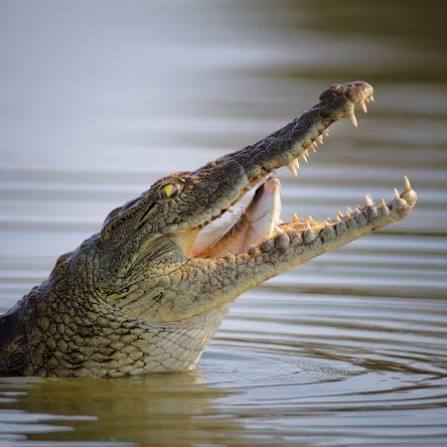
The relentless expansion of Lake Baringo has done more than just submerge homes, roads, and schools in Kampi ya Samaki, it has forced humans and dangerous wildlife into a high-stakes collision course.
As rising waters shrink available land on the western shores, communities and crocodiles find themselves sharing an increasingly crowded habitat, turning everyday life into a daily test of survival.
The Kenya Wildlife Service (KWS) Veterinary and Capture Unit has launched a targeted rescue and relocation programme for the crocodiles that posed threats to the local community.
Instead of a zero-sum game, the initiative aims to strike a delicate balance between human safety and wildlife conservation.
Under the intervention, problem crocodiles are safely captured and transferred to KWS-managed parks and reserves where local populations are low or non-existent.
This strategy achieves a dual purpose: it shields the vulnerable communities of Kampi ya Samaki from dangerous encounters while simultaneously supporting the reintroduction and repopulation of the species in safer, more suitable wilderness habitats.
KWS has emphasized that crocodiles remain a vital pillar of the local ecosystem, making preservation just as critical as community protection.
For the people of Kampi ya Samaki, who are already grappling with the daily disruption of transport, education, and economic activities, the relocation offers a much-needed layer of security as they adapt to their evolving environment.