
For decades, tobacco was a major source of livelihood for farmers in parts of Migori County.
The crop, though profitable, came with hidden costs; health risks, environmental degradation, soil depletion, and the destruction of trees used to cure tobacco leaves.
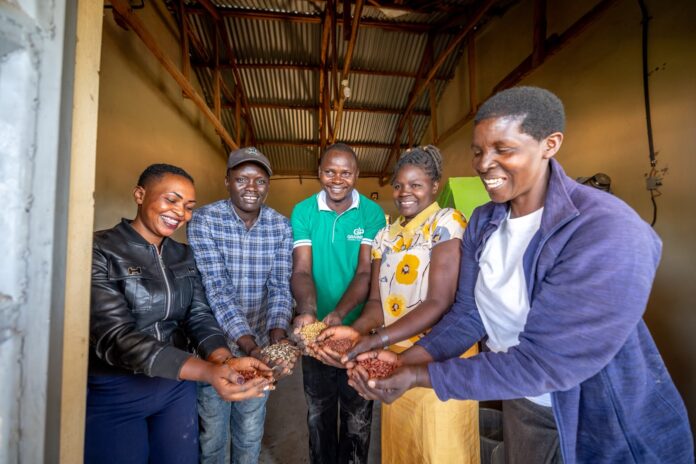
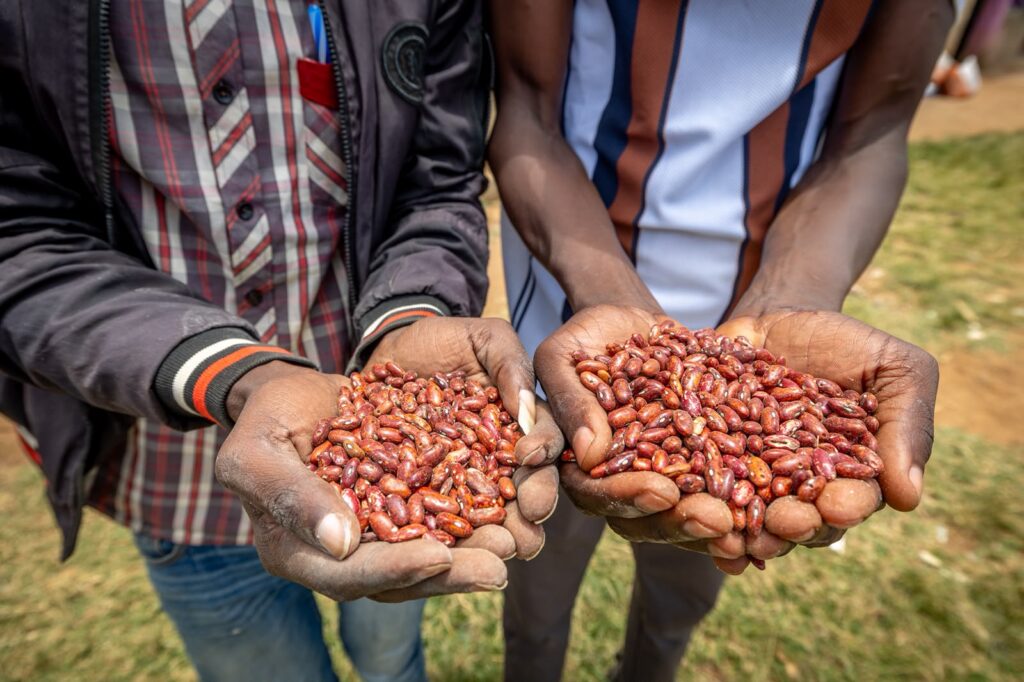
Today, farmers who once depended on tobacco are gradually turning to alternative crops such as sunflower, sorghum, soya beans, Nyota beans, groundnuts, and avocado.
The transition is supported through the World Health Organization (WHO)-supported Tobacco-Free Farms programme, which was introduced in Migori in 2021.
The initiative is designed to help tobacco farmers move into alternative livelihoods while linking them to agricultural support, inputs, extension services, and markets.
Migori is now becoming a learning ground for other tobacco-growing areas.
A team from Embu County recently traveled to the county for benchmarking after the Tobacco-Free Farms initiative was introduced there in 2026.
For the farmers making the switch, however, abandoning tobacco is only part of the journey.
They now need support to make alternative farming profitable and sustainable.
Mechanised farming
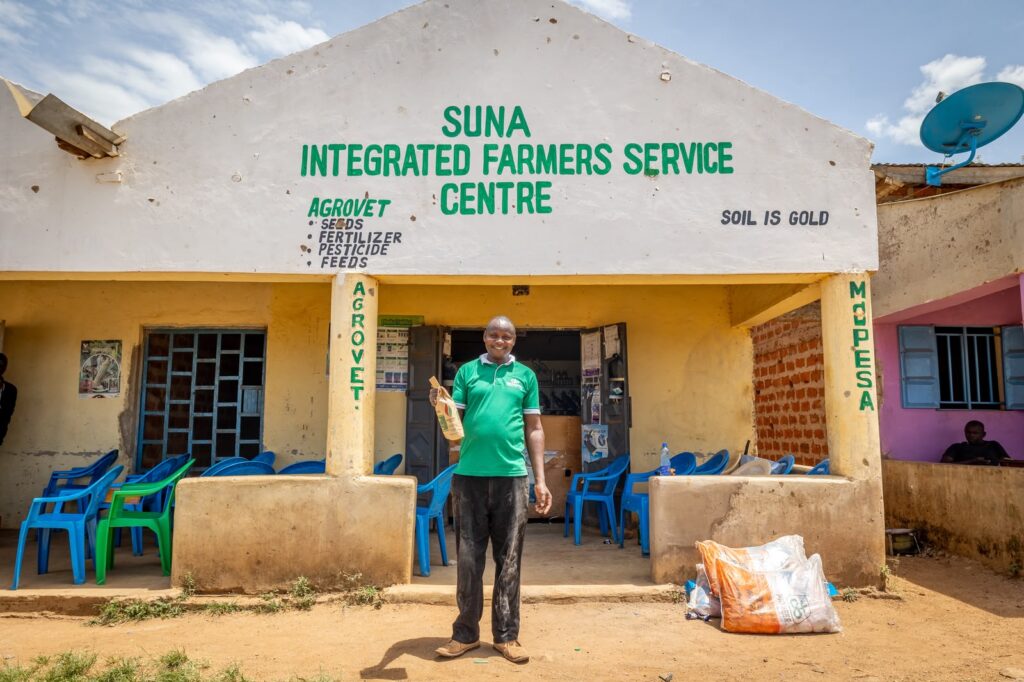
At the Suna West Farmer Service Centre, farmers are already organising themselves to produce, process, and market agricultural products collectively.
Mary, a member of the Farmer Service Centre, says the group was formed in 2019 because individual farmers lacked sufficient bargaining power when selling their produce.
“We decided to come together as a team so that we could sell together as a team. Selling as a team gives us better bargaining power,” she says.
The group currently has 25 members and hopes to grow to 30.
It aggregates maize and other crops, processes chicken feed, sells eggs and mature chickens, and operates an incubator for farmers who need chicks.
Despite these activities, farmers still face a major challenge: accessing mechanised farm preparation.
“Our main challenge currently is getting a tractor,” Mary says adding that at the moment, farmers rely on an ox-drawn ripper to prepare their land, paying about Sh1,500 per acre.
“Farmers need tractor services to plough their farms. Right now, we use a ripper drawn by oxen, charging KES 1,500 per acre,” she says.
The group is therefore seeking a tractor through resource mobilisation or a loan.
For farmers leaving tobacco, access to machinery is especially important.
Changing crops means preparing land for new production, and without affordable ploughing services, some farmers risk remaining trapped in low-productivity farming.
The health concerns
The decision to leave tobacco is also driven by deep health concerns.
Benson Thuo, a farmer from Embu County who has grown tobacco since 1995, says his experience with the crop exposed him to recurring health problems, particularly during curing.
“As a tobacco farmer, the effects I have experienced are diseases,” he says.
“Sometimes, especially during curing, a person coughs. You feel like you have a cold.”
He also recalls spending long periods outside while tobacco was being cured.
“Sometimes you sleep outside while curing tobacco. You feel cold,” he says.
The health concerns are not limited to farmers who smoke.
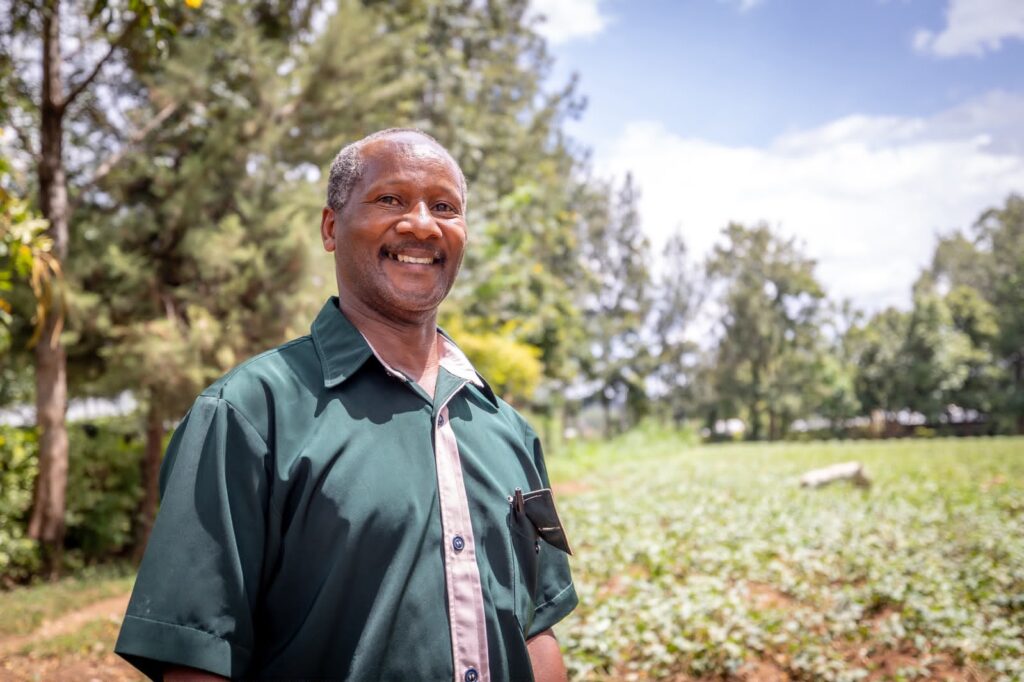
Stephen Mbogo, from Embu County’s Department of Health, says tobacco farming itself exposes farmers to severe occupational risks.
“As people who have studied medicine, we know tobacco is one of the substances that brings many health problems to the human body,” he says.
The WHO identifies tobacco farming as a source of direct occupational exposure, including exposure to nicotine through handling wet tobacco leaves, toxic pesticides, and tobacco dust.
Farmers can easily develop green tobacco sickness when nicotine is absorbed through the skin.
For Mbogo, the health costs have completely changed how he views tobacco farming.
He notes that when a farmer becomes sick, money earned from farming can quickly be spent on treatment.
“You go to the hospital and spend whatever money you had collected,” he says.
Tobacco as a threat to environment
The environmental consequences of tobacco farming are another pressing reason why farmers and officials want the crop phased out.
Tobacco requires massive amounts of wood for curing, and farmers in Migori have historically cut down native trees to fuel tobacco curing barns.
Mbogo says tobacco cultivation has directly contributed to environmental destruction in the region.
“It destroys the environment. It consumes all the trees,” he says adding that, “When it consumes the trees, you know it destroys the environment leaving behind a desert like environment.”
Migori has experienced serious pressure on its forest resources.
County figures and reports have highlighted critically low forest cover, with some recent county reporting putting it at a stark two per cent.
A study on tobacco farming in Migori also linked tobacco production with severe forest-cover changes, soil erosion, and deterioration of soil quality.
The WHO identifies deforestation for tobacco cultivation and, particularly, the heavy use of wood for tobacco curing as significant environmental concerns associated with the crop worldwide.
The loss of trees carries consequences far beyond tobacco production: trees help protect soil from erosion, retain vital soil moisture, and support local biodiversity.
Destruction of soil
Farmers are now being actively encouraged to move towards crops that can support food security while protecting their land.
Repeated tobacco production, coupled with land-use changes and loss of vegetation, contributes heavily to soil degradation.
Thuo says the contrast between tobacco and the alternative crops he has seen in Migori is becoming increasingly clear.
“This farming is quick and brings money,” he says.
“And when we come to health, it helps the body. It is not like tobacco.”
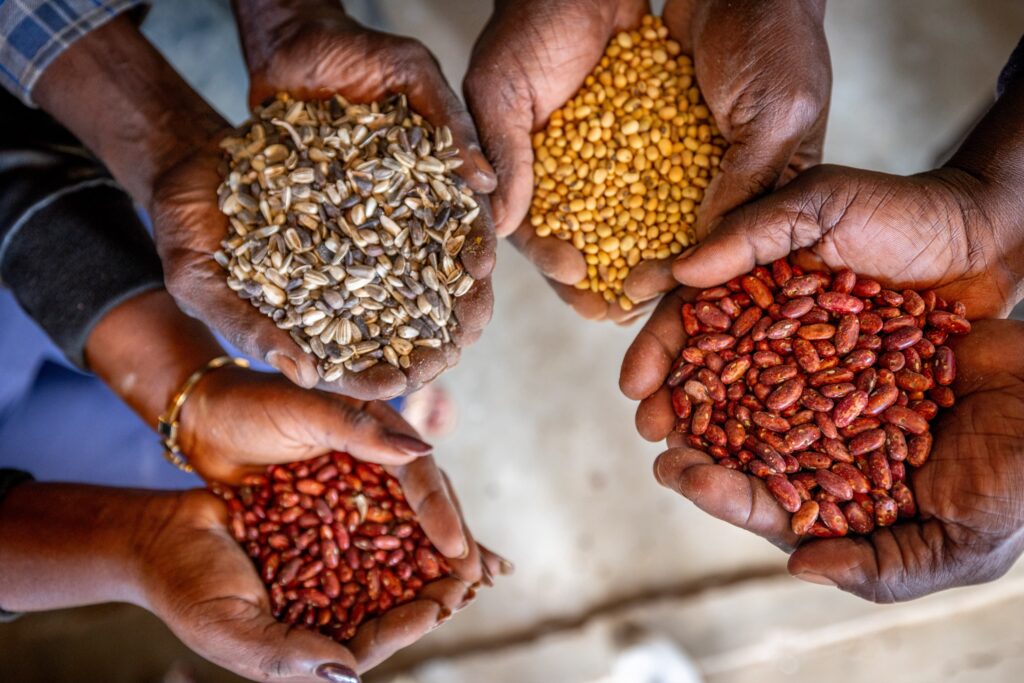
He points to crops such as soya, sunflower, and avocado as practical examples of alternatives that provide both food and continuous income. “These are good crops to grow,” he says.
Sunflower and avocado best options
Thuo is particularly interested in combining sunflower and avocado cultivation.
He sees sunflower as a reliable short-term crop capable of generating cash within a few months, while avocado offers a sustainable, long-term investment.
“The farming I would really like to start is sunflower and avocado,” he says.
“If you combine the two, they can bring profit. Avocado takes a long time, but sunflower takes a short time.”
He estimates that sunflower can be harvested within about three months.
“Sunflower is three months. You finish with it, then you plant again during the rainy season,” he says.
The combination, he believes, provides farmers with both immediate cash flow and long-term financial stability.
Beatrice Giti travelled from Embu County to Migori to learn directly from farmers who have already left tobacco behind.
She previously grew tobacco herself, but says comprehensive training on the crop’s health effects changed her mind completely.
“I stopped tobacco because of the training I received and the effects I learned about: the burning, the smoke, and even when harvesting, you can get diseases through the skin,” she says.
She subsequently transitioned into alternative farming.
“I started farming beans and sunflower,” she says. Giti notes that she has already begun making a profit from these alternative crops.
“I am getting a profit,” she says.
“Even if it is not big, you know the price of tobacco was Sh400 per kilo.”
However, she emphasises that raw income must be measured alongside the heavy expenses and health consequences of tobacco production.
“When you compare the expenses and the profit, you see that you get a small profit considering the amount of work you do before you reach the point of selling,” she says.
For her, alternative crops offer a far healthier and more sustainable path forward.
“Even if the profit is small, it does not have many harmful effects,” she says.
Farmers organizations
The success of Migori’s transition relies heavily on structured farmer organisations.
Joseph Oluoch, a member of the Farmer Service Centre network, explains that farmers receive inputs on credit where they cannot afford to pay upfront.
“We supply seeds and fertilisers, train them on proper land preparation, planting, top-dressing, harvesting, and post-harvest handling,” he says.
After harvesting, farmers aggregate their produce at ward-level aggregation centres.
“Buyers purchase directly from these centres, and farmers receive their payments via M-Pesa while we deduct a small commission for operations,” Oluoch explains.
This structured approach directly addresses one of the biggest bottlenecks farmers face when leaving tobacco: securing a reliable and transparent market.
Oluoch notes that Suna West was previously heavily dependent on tobacco.
“Now farmers are adopting sorghum, French beans, soya, and sunflower,” he says.
Diversification
Suna West Ward Agriculture Officer Zachary Oredo says the county government is actively working with partners to guide diversification. “We support farmers in alternative crop production such as sorghum, soya, sunflower, and groundnuts,” he says.
The core objective, he explains, is moving farmers away from high-risk tobacco toward crops that feature shorter production cycles and quicker returns.
“Our goal is to help farmers diversify from tobacco into short-cycle, high-value crops that generate quick income compared to tobacco,” Oredo says.
The Farmer Service Centres provide essential central points where farmers access inputs and aggregate produce for bulk buyers.
“We establish central points where farmers can easily access inputs and aggregate their produce for market access,” he says.
Quality control is also being strictly enforced.
“The market is very competitive, so we ensure quality control right from field production to harvesting and post-harvest handling,” Oredo says, noting that produce failing to meet required standards is turned away before reaching buyers.
Youths and agriculture
The agricultural transition is not limited to former tobacco growers; it is also targeting the next generation.
Oredo emphasises that young people can leverage agriculture as a commercial enterprise.
“We encourage youth to join agriculture,” he says adding that, “Instead of searching for non-existent formal jobs, youth can utilise land to earn a living through farming activities.”
At the Farmer Service Centres, agriculture is increasingly structured as a full business ecosystem covering production, processing, input supply, livestock, aggregation, and marketing.
Migori’s progressive track record is attracting agricultural teams from counties like Embu, where tobacco production has long been part of the local economy.
Stephen Mbogo, from the Non-Communicable Diseases section of the Embu County Department of Health, was part of the delegation visiting Migori.
He explained that the Tobacco-Free Farms programme began in Migori earlier and is now being expanded across the country.
“The Tobacco-Free Farming project was introduced in Migori in 2021, and it has started going to several counties. Embu is the recent county where the project has been brought this year,” he says.
The primary goal of the benchmarking trip was to observe how Migori engaged its farming communities and facilitated their transition away from tobacco.
“We have come here for benchmarking so that we can understand what Migori has been doing with its farmers,” Mbogo says.
“We want to learn from what they have done so that we can go and teach our people in Embu.”
Mbogo further lay emphasis that farmers in Embu are generally open to abandoning tobacco, provided they are assured of viable alternative markets.
“This is not coercion. It is a conversation we are having with farmers,” he says.
He acknowledges that tobacco farmers are primarily driven by economic survival, “When you first go to farmers, many of those who grow tobacco see it as a form of livelihood. They are looking for something that can put a shilling on the table.”
The single most critical factor, he adds, is guaranteed market access.
“Many are saying they are willing to shift to alternatives as long as they know where they can get a market for the food they are being told to grow as an alternative,” Mbogo says.
“Apart from growing these things, we want to find a market for the farmers. When they grow these things, they should not find themselves with the produce and have no idea where to take it.”
Mbogo believes Embu farmers can gain immense confidence by learning from Migori’s early adopters while hoping that those who successfully transition will become peer advocates within their communities.
“We want our farmers to be our foot soldiers on the ground,” he says.
A farmer who successfully shifts crops can effectively persuade others through personal experience.
“A farmer can switch and talk to another farmer and tell them, ‘I found another way we can farm. We can grow Nyota beans, sunflower, or Hass avocado, and we know there is a market within Embu and outside Embu,'” he says.
This peer-to-peer advocacy could prove crucial in breaking decades of reliance on tobacco contracts.
Transitioning
According to Thuo, one critical intervention stands out above all others: reliable water access.
He urges the government to assist farmers with irrigation infrastructure so they can cultivate crops consistently throughout the year.
“The government should find a way of helping farmers with water, everything else will come because there is other work we can do. Even feeding cattle, you can do it because if you have water, you can leave tobacco completely and forget about it.”
The overarching challenge now lies in turning these community ambitions into nationwide reality.
Migori’s farmers have shown that shifting away from tobacco is achievable. Farmer Service Centres are aggregating produce, agricultural officers are delivering extension services, and health officials are raising awareness of tobacco’s systemic risks.
Yet the transition remains vulnerable if farmers cannot secure tractors, irrigation equipment, affordable inputs, seasonal finance, and reliable off-take markets. Migori’s ongoing journey offers both a clear blueprint and a stark warning. Farmers are ready to leave tobacco behind, but sustained support is necessary to keep them away from it.
Role of the county government
For Migori County’s Department of Agriculture, weaning farmers off tobacco has required patience, particularly because the crop was once deeply entrenched in the local economy.
Migori County Executive Committee Member for Agriculture, Livestock, Veterinary Services, Fisheries, and Blue Economy, Lucas Mosenda, notes that the county actively encourages diversification into crops that build food security and restore degraded environments.
Mosenda has acknowledged that some farmers were initially hesitant to abandon tobacco despite knowing its risks.
“The resistance among some farmers to drop tobacco farming has been so severe, but we are out to try to convince them to slowly see the sense and finally leave the crop altogether in the near future,” Mosenda noted.
The challenge is underscored by Migori’s historical output.
The county produced over 70 per cent of Kenya’s tobacco from the 1970s through the late 1990s.
While over 10,000 farmers have since transitioned to alternative cash crops, a persistent segment continued tobacco cultivation.
The county’s strategy focuses on promoting climate-smart practices alongside alternative crops.
In 2023, Mosenda highlighted that introducing high-iron Nyota beans directly reduced the environmental footprint associated with tobacco clearing.
“If we embrace agroecology, we will be able to introduce smart farming that will lead to agribusiness in order to solve food insecurity and achieve Vision 2030 goals of safer, more nutritious, and healthier food production,” Mosenda said.
The financial returns from these alternatives offer compelling evidence.
In 2021, the county reported that 330 former tobacco farmers cultivated 370 acres of alternative beans, harvesting 200 tonnes worth approximately Sh13 million.
Mosenda also links diversification directly to environmental rehabilitation, specifically reducing soil, water, and air contamination caused by intensive pesticide application in tobacco fields.
The county’s vision reaches beyond beans.
Farmers are encouraged to explore sunflower, sorghum, soya, and avocado tailored to local micro-climates.
Emphasising international commercial potential, Mosenda stated in 2026, “We are looking at crop diversification so that farmers from Migori can tap into export opportunities and improve their incomes.”
The transition taking place across Kenya reflects a global health and environmental push.
The World Health Organization (WHO) estimates that tobacco kills more than 8 million people annually, including approximately 1.3 million non-smokers exposed to second-hand smoke.
WHO further reports that roughly 1.3 billion people worldwide use tobacco products, with nearly 80 per cent living in low- and middle-income countries.
Beyond the human health crisis, tobacco cultivation occupies millions of hectares of arable land globally, driving deforestation, soil depletion, and agricultural land degradation.
For farming communities in Migori and Embu, stepping away from tobacco is far more than changing crops; it is an active step toward protecting their health, restoring their land, and building resilient local economies.