
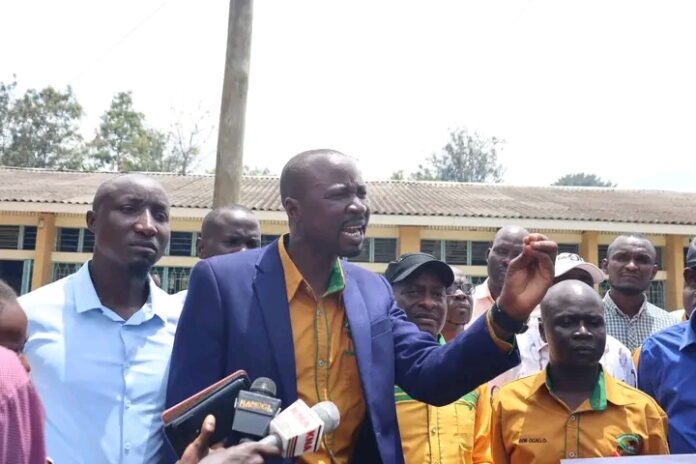
A public participation forum organized by Parliament’s Committee on Education and the Ministry of Education in Migori County has exposed the underbelly of sharp division between Kenya’s major teachers’ unions over the governance and administrative structure of Junior Secondary Schools (JSS).
At the center of the fierce debate is whether Junior Secondary Schools should operate as autonomous entities under separate leadership or remain part of a unified “comprehensive school” structure under a single primary school headteacher.
KUPPET’s stance
Representatives from the Kenya Union of Post-Primary Education Teachers (KUPPET) and JSS teachers strongly advocated for complete independence for Junior Secondary Schools, arguing that the current administrative arrangement creates institutional friction and stagnation.
Collins Gaurian, a JSS teacher serving under the Teachers Service Commission (TSC) in Suna West, told the committee that teachers in the cadre are deeply dissatisfied with how their schools are managed.
“We are not happy with issues to do with the governance of our institutions,” Gaurian said.
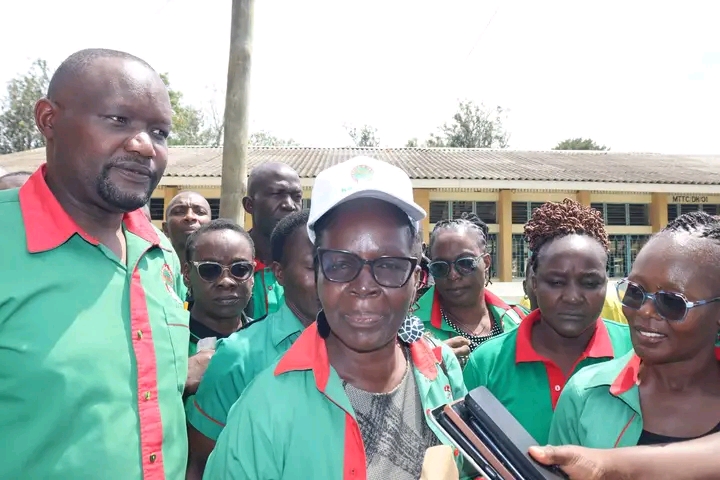
“The Basic Education Act clearly states the levels of institutions primary, secondary, and higher institutions of learning. Having an institution of primary still governing Junior Secondary School brings more conflicting issues.”
Gaurian urged the government to grant JSS full administrative authority, warning that failure to establish separate leadership structures would undermine educational goals and leave JSS teachers stagnating without opportunities for leadership career progression.
Supporting these calls, KUPPET Migori County Secretary Henry Otunga rejected the term “comprehensive school” as proposed in draft education legislation, describing it as confusing and legally flawed.
“The law is very clear that we have public primary, public junior, and public senior,” Otunga stated adding that, “This word ‘comprehensive’ is confusing. We have asked the committee to consider deleting the word ‘comprehensive’ and replace it with those three distinct levels. If they are so in love with the word ‘comprehensive,’ then the better version is autonomy for Junior Secondary School!”
Otunga argued that independent leadership at each level would bring structural clarity, accountability, and improved educational quality. Other KUPPET officials, including Assistant Treasurer Paul Ogallo and Junior Teachers Secretary Bolif Odhiambo, reiterated that JSS needs its own direct capitation funding and management to ensure proper utilization of resources.
Unions reject anti-strike clause and CEB militarization
In addition to structural governance issues, union leaders vehemently opposed two controversial clauses in the proposed legislative amendments.
KUPPET leaders strongly rejected a proposed clause that would bar teachers managing, invigilating, or marking national examinations from going on strike.
Otunga and Ogallo criticized the Kenya National Examinations Council (KNEC) for routinely delaying payments to examination personnel while attempting to strip teachers of their constitutional right to industrial action, declaring that teachers will refuse to administer or mark exams unless paid upfront under a binding agreement.
Furthermore, KUPPET rejected the proposal to appoint County Commissioners as Chairs of County Education Boards (CEBs), with Otunga arguing that County Commissioners are police-trained administrators whose security mindset is ill-suited for managing academic institutions, insisting that CEBs must instead be led by trained educationists.
KNUT and KEPSHA fight to retain comprehensive structure
In stark contrast, officials from the Kenya National Union of Teachers (KNUT) and the Kenya Primary Schools Head Teachers Association (KEPSHA) firmly opposed the split, calling for the “comprehensive school” model to be retained under a unified management structure.
Tom Muo, Vice Chair of KEPSHA Migori County, said that primary and junior secondary sections should remain combined under one head of institution.
KNUT officials echoed this stance, emphasizing cost efficiency and administrative harmony.
The Executive Secretary for KNUT Kuria West stated that operating a comprehensive school with one head teacher and one deputy avoids redundant overhead costs and operational confusion.
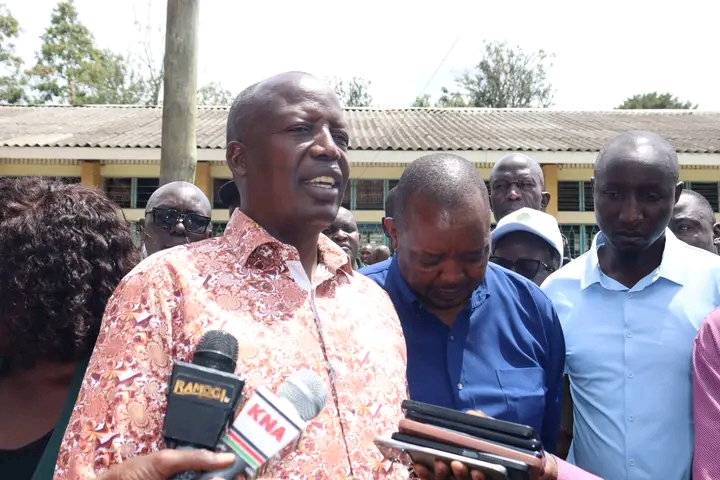
“In a comprehensive school, we have pre-unit, Grade 1 to 6, and junior school,” the official noted.
“A comprehensive school will reduce unnecessary costs, unnecessary confusion, and even the funding model will be in one account managed by one management.”
KNUT representatives also raised concerns over union membership poaching, accusing rival union officials of forcibly transferring primary headteachers and JSS teachers into KUPPET rolls without consent. Roselyne Achieng Wandigi, Executive Secretary for KNUT Migori, criticized these membership shifts as procedural violations, demanding that teachers be allowed to join unions of their choice freely.
Tertiary Education and TTC Reforms
Representatives from Teacher Training Colleges (TTCs), including Migori TTC lecturer Omondi Oluoch Peter, urged Parliament to transfer college lecturers from the TSC to the Public Service Commission (PSC), pointing out that diploma-offering TTCs fall under tertiary rather than basic education. Lecturers also appealed for TTC students to receive direct government higher education funding and loans similar to TVET and university students.
MPs vow to reflect the people’s wishes
Addressing the participants, Julius Melly, Chairman of the Parliamentary Education Committee, praised the high turnout and detailed submissions made by Migori residents, teachers, and union leaders.
“As the Education Committee, we will go with the wishes of Kenyans. We are not going to go with any side,” Melly assured the forum, emphasizing that the best interests of the learner remain central to the legislative process.
The committee is concluding its nationwide public participation drive before returning to Parliament to consider amendments to the proposed Education Bills.