
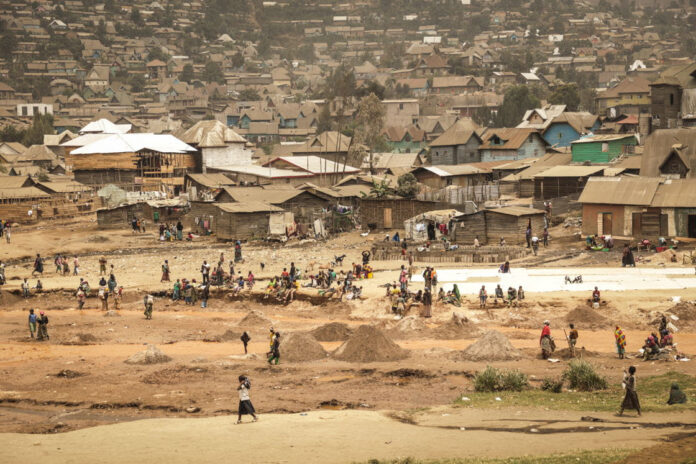
BY MSF: As families flee violence across eastern Democratic Republic of Congo, many lose access to farmland, income, food, clean water and health care in a single blow.
At the same time, insecurity along key transport routes is disrupting supplies and driving up prices, while cuts to international aid — particularly for food security and health programmes, are deepening an already severe malnutrition crisis.
Providing care to malnourished children remains a core part of Médecins Sans Frontières’ (MSF) response in North Kivu.
In 2025 alone, 53,000 children were treated for malnutrition at MSF-supported health facilities across the DRC.
Between January and August 2026, nearly 33,000 patients had already been treated in North Kivu province alone.
“I was suffering from the cold; the rainwater was falling on us,” says Therese, who used to hide with her children in the forest when fighting intensified back in her home area.
Therese, 20, now lives in Musonge, Walikale Territory, after fleeing Mpofi, an area near Masisi that has been heavily affected by fighting.
She lives alone with her two children after her husband was killed in late 2025.
Her daughter, Biella, has been sick since birth, her legs, arms and body began to swell, and she is now being treated for severe acute malnutrition by MSF’s team at Walikale General Referral Hospital.
Walikale is among the areas of North Kivu facing the most severe food insecurity.
In November 2025, a WFP-UNICEF analysis found a global acute malnutrition rate of 46 percent in the area, classifying the situation as an emergency.
MSF also supports five other outpatient facilities in the region.
Losing farmland, losing everything
Across eastern DRC, displacement caused by conflict often means losing homes, land and livelihoods all at once.
People may end up in collective shelters, sleeping out in the open, or hiding in forests, where access to safe drinking water, sanitation, food and healthcare becomes even harder.
Others stay with host families, placing additional pressure on communities already struggling to meet their own needs.
“Life in Bunyakiri was difficult, but it was more stable,” says Jawadi, 32, who fled South Kivu with her family and brought her 14-month-old son to the same hospital in Walikale for malnutrition treatment.
“I had access to my fields and could produce food. Here, it has become very difficult to find food.”
According to the United Nations, nearly 5 million of the 6.1 million people displaced inside DRC are in North Kivu, South Kivu and Ituri provinces.
Like many in the region, Therese and Jawadi once depended on farming to feed their families and earn an income. But travelling to fields has become dangerous, with attacks, including killings and sexual violence, keeping people away from their farmland.
In some places, armed groups also demand informal payments from farmers seeking to access and cultivate their land, adding yet another barrier.
“This means families lose both food and income and are forced to rely more heavily on markets, where prices are rising and food supplies are increasingly limited,” says Dr Fabien Kabongo, MSF’s deputy medical coordinator in North Kivu.
Millions facing food insecurity
Insecurity is also making it harder to move essential goods, including food and medicine.
In many parts of North Kivu, roads are often muddy, damaged or impassable, and violence along transport routes makes deliveries unpredictable.
“Air transport through humanitarian flights is an option in very hard-to-reach areas, but it is expensive and logistically complicated,” says Dr Fabien.
“This can affect the availability of supplies and delay medical and humanitarian interventions when they are most needed.”
Even away from active frontlines, access to key sources of food and income remains fragile.
Smallholder farmers are finding it increasingly difficult to access cultivable land, as wealthier producers take control of land and use advanced tools for mass production, weakening local production.
Others have turned to mining instead, including gold, diamonds and cobalt.
“I don’t earn enough to feed my family properly,” says Chantal Hakishimana, a mother of seven also caring for her granddaughter, who is receiving treatment for malnutrition at Kachehembe Referral Health Centre.
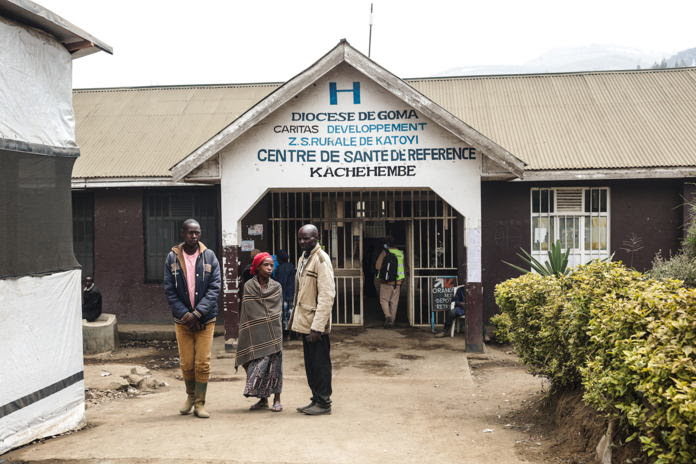
“I work in the fields. If I find a place where I can plant beans, I plant them, but currently all the cultivable land is being used for cattle grazing, so there is not much land left for cultivation.”
According to the Integrated Food Security Phase Classification, more than 26 million people in DRC faced crisis or emergency levels of food insecurity in 2025, including nearly 4 million in North Kivu.
Children bear the heaviest Burden
For decades, MSF has supported local health facilities to treat children with malnutrition in the health zones with the highest caseloads, including Mweso, Walikale, Kibirizi, Masisi and Bambo.
Support includes intensive therapeutic nutrition units for children with severe acute malnutrition in hospitals, as well as outpatient malnutrition care at local health facilities.
After an MSF assessment in March 2026 found that nearly one in four children screened in Katoyi had acute malnutrition, teams launched an emergency response there.
A crisis colliding with collapsing funding
The crisis is unfolding as humanitarian funding is being sharply cut.
The DRC has been heavily affected by reductions in international aid, with food security interventions particularly underfunded.
According to UNICEF, only 4.3 percent of the 2025 funding requirements for food security interventions was covered.
In some areas of North Kivu, MSF is either the only international medical humanitarian organisation providing care, or one of the few responding consistently.
“In health centers that are not supported by MSF, we see limited availability of essential medicines, with pharmacy shelves sometimes nearly empty,” says Dr Fabien.
“In some facilities, there is limited availability of ready-to-use therapeutic food, and, in some cases, these supplies are unavailable altogether.”
Limited services can mean families delay seeking care until a child’s condition becomes critical, a particularly dangerous reality for children with malnutrition, whose weakened immune systems leave them more vulnerable to infections such as malaria, measles and tuberculosis.
“MSF cannot replace the wider humanitarian response alone,” says Dr Fabien.
“Sustained funding is urgently needed to ensure that children affected by malnutrition can access the food, screening and treatment services they need to survive.”