
Médecins Sans Frontières (MSF) has embarked on a coordinated effort with Kenya’s Ministry of Health and other partners to follow the situation closely, after the Ministry announced the country’s first confirmed Ebola case and the patient’s subsequent death in Nairobi.
The news is sobering, but it did not arrive without warning.
Since the regional outbreak began in the Democratic Republic of Congo and Uganda, the international medical humanitarian organisation has been actively supporting Kenya’s Ebola preparedness in several locations.
In June 2026, MSF opened an Ebola simulation and training centre in Kajiado County, near Nairobi.
The facility replicates an Ebola treatment centre, allowing health workers to practise in realistic conditions before facing the real thing. Trainees learn how to use personal protective equipment (PPE) safely, apply infection prevention and control measures, and carry out emergency response procedures.
So far, 355 professionals have trained there, including 84 Kenyan healthcare workers.
The rest include MSF staff preparing to deploy to the DRC, Ministry of Health personnel and partner organisations.
The effort has not been limited to the capital in the coastal city of Mombasa, inJuly, the county Department of Health, with MSF support, established an Ebola training centre at Port Reitz Sub-County Hospital to strengthen readiness for a potential outbreak.
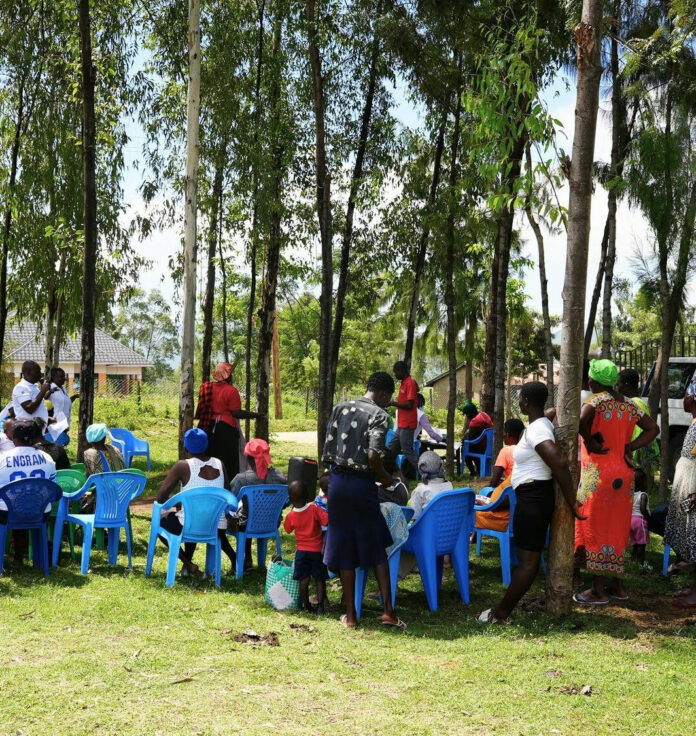
Again in the borer county of Busia, Kenya-Uganda border, MSF teams have been supporting Ministry of Health staff with preparedness activities, including isolating and managing suspected cases and implementing infection prevention and control measures.
These locations reflect the obvious risks: movement across borders and through major transit points.
Lessons from Congo
MSF brings extensive experience to this response.
In the DRC, where its teams are still working, the organisation reports more than 8,200 infections and 4,000 deaths in this outbreak. Beyond patient care, MSF teams support infection prevention and control and invest heavily in community engagement.
That is the key lesson MSF draws from the DRC: strong community engagement and trusted sources of information are essential.
They address fear and misinformation, build trust and make an effective public health response possible.
Where fear and rumours spread, people may avoid health facilities, hide symptoms or distrust responders, and containment becomes far harder.
A single confirmed case does not mean an uncontrolled outbreak, and Kenya has spent months training people for precisely this situation. But the coming weeks will test those preparations, along with the quality of public communication. For readers, the practical steps are simple: rely on official sources, such as the Ministry of Health and county health departments, for updates, bee wary of unverified messages on WhatsApp and social media, and report suspected symptoms to health authorities rather than relying on rumours or home remedies.