
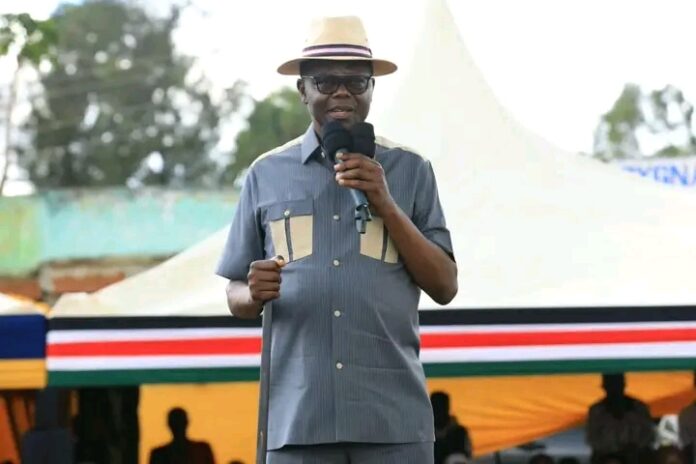
Migori Governor Ochilo Ayacko has launched attack on Uriri MP Mark Nyamita, whom he branded “Othuogo,” accusing the lawmaker of sabotaging development projects, inciting residents against one another, and allegedly pretending to champion community interests while pursuing his own political ambitions.
Ayacko accused the legislator of abandoning his responsibility to promote development and instead engaging in what he described as divisive politics aimed at discrediting the county government and positioning himself for the 2027 gubernatorial contest.
Speaking during an empowerment programme for bodaboda operators in Awendo, the governor portrayed Nyamita as a politician allegedly giving contradictory accounts of development projects depending on the community he is addressing.
He claimed the MP was telling Awendo residents that the county government had failed to deliver development while allegedly telling Nyatike residents that Ayacko was blocking the construction of a Level Five hospital in their constituency.
The governor argued that the alleged double messaging risked turning communities against one another over projects that should be guided by public needs rather than political competition.
“He tells the people of Awendo that the county government is not working, then goes to Nyatike and tells residents that I have refused to take development there,” Ayacko said.
The governor accused “Othuogo” of exploiting regional differences to create suspicion among residents, questioning why an elected leader would allegedly encourage competing communities to view one another as obstacles to development.
Ayacko’s remarks placed the Uriri lawmaker at the centre of an escalating political dispute over healthcare infrastructure, industrial development, and the distribution of public investments across Migori County.
Ayacko Accuses Nyamita of Playing Communities Against Each Other
In his strongest accusations, Ayacko claimed “Othuogo” was using the proposed Nyatike industrial park and the planned development of the Getonganya potato factory to fuel resentment between residents of the Kuria region and Nyatike.
The governor alleged that the MP was telling Kuria residents that equipment associated with the Getonganya potato factory had been taken to Nyatike for the proposed industrial park, a claim Ayacko dismissed as misleading.
He argued that development projects should not be turned into political weapons or presented as a contest in which one community must lose for another to benefit.
According to Ayacko, the alleged political narrative pushed by “Othuogo” was creating unnecessary divisions among communities whose economic interests should be complementary.
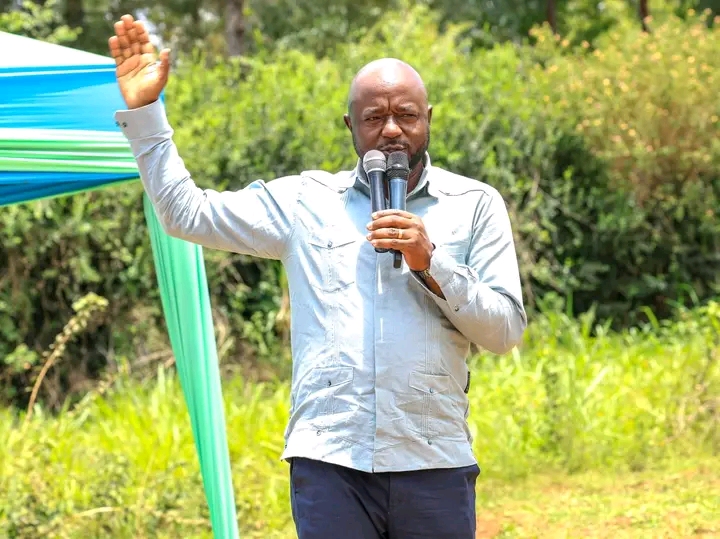
The governor maintained that the industrial park was part of broader efforts to expand economic opportunities, attract investment, and create jobs, insisting that its location in Nyatike did not amount to denying other regions their share of development.
Ayacko accused political opponents of distorting information about the project to discredit his administration and stir resentment among residents.His criticism portrayed Nyamita’s alleged approach as one in which development initiatives become instruments of political confrontation rather than opportunities for cooperation.
Level Five Hospital Dispute Exposes Political Fault Lines
The proposed Level Five hospital emerged as another major point of contention, with Ayacko accusing “Othuogo” of allegedly changing his position depending on whether he was addressing residents of Awendo or Nyatike.
The governor defended his administration’s healthcare plans, arguing that the distribution of facilities must be informed by population needs, geographical location, accessibility, and the capacity to provide specialised medical services.
Ayacko said Migori’s healthcare system comprises facilities at different levels, including dispensaries, health centres, Level Four hospitals, and referral facilities, adding that planned upgrades were intended to strengthen services across the county.
He maintained that healthcare investments should be planned according to the needs of different populations rather than determined by political pressure or competition between constituencies.
Why Ayacko Says Awendo Deserves a Level Five Hospital
Defending Awendo’s bid for a Level Five hospital, Ayacko cited its strategic location within the sugar belt and its potential to serve residents from neighbouring counties like Narok who require specialised treatment.The governor argued that establishing a higher-level facility in Awendo would bring specialised medical services closer to residents who might otherwise have to travel to larger referral hospitals in other towns.
He said geographical accessibility and the number of people a facility could serve should be central considerations when deciding where to establish major healthcare infrastructure.He identified Awendo, Suna East, Kuria East, Kuria West, and areas around Lake Victoria among the regions requiring strategic healthcare investments to improve service delivery.
He also referred to discussions involving President William Ruto and the Italian government over support for hospital development, saying the initiative was expected to contribute to the expansion of specialised healthcare services.
On Nyatike, the governor maintained that the constituency’s geographical position and healthcare needs should inform the level of services provided, saying the area would benefit from strengthened Level Four healthcare services.
He accused “Othuogo” of allegedly presenting the hospital plans as evidence that the county government was neglecting Nyatike while simultaneously discrediting its development record in Awendo.Ayacko insisted that the two areas should not be pitted against each other, arguing that equitable healthcare planning requires different facilities to serve different populations according to their needs.
Ayacko Drags Masara Into the Development Row
Ayacko also criticised Suna West MP Peter Masara, accusing him of undermining county development initiatives and contributing to the political tensions surrounding his administration.Although the governor’s most detailed allegations focused on “Othuogo,” he maintained that both lawmakers were contributing to a political climate that threatened to overshadow development priorities.
He challenged leaders aspiring to become governor to demonstrate their commitment to public service through tangible development in their current positions rather than concentrate on political contests at the expense of their responsibilities.
The governor questioned whether the two MPs were giving sufficient attention to their legislative duties while engaging in political activities aimed at challenging his administration.Ayacko’s criticism came amid growing political contestation over the county’s development agenda and succession politics ahead of the 2027 General Election.
The governor also drew comparisons between Migori and neighbouring Homa Bay County, questioning why political disagreements in Migori continued to dominate discussions about development.
Ayacko argued that persistent wrangles among local leaders risked undermining the county’s image and distracting elected officials from the responsibility of improving residents’ livelihoods.
He called for greater cooperation among leaders and urged them to work with the national government and development partners instead of allowing political rivalry to derail public projects.
The governor suggested that Migori could make greater progress if its leaders put aside their differences and focused on shared development priorities.He maintained that political disagreements should not become a reason to frustrate projects or create divisions between communities.
Ayacko’s comparison underscored his broader criticism of what he portrayed as a political culture in Migori in which disputes between leaders threaten to overshadow discussions about healthcare, infrastructure, industrialisation, and employment.
He urged residents to scrutinise their elected leaders and assess them according to their development records, legislative responsibilities, and contribution to public service delivery.He warned that political narratives built around regional differences could undermine cooperation and weaken efforts to attract investment into the county.
The governor maintained that disagreements over development should be resolved through consultations, clear explanations, and evidence rather than accusations that pit one constituency against another.