By Sana Sadiq, Mental Health Activity Manager, MSF Somalia
“A headache that does not go away.” “A tight chest.” “Stomach pain that no test can explain.” “Nights without sleep, tiredness, and a worry that will not stop.”
These are the complaints my team and I hear most often at the hospitals Médecins Sans Frontières (MSF) supports in Baidoa and Galkayo in Somalia.
Very few people walk in saying they feel worried, upset, or sad; they come because their body hurts, and often they have been suffering alone, with no one around them able to see the pain.
It is only when we sit down and talk that we find what lies underneath: persistent stress, constant worry, and low mood.
People in Baidoa and Mudug have lived through repeated shocks for years: conflict, displacement, drought, and floods.
This year has also brought malnutrition and outbreaks of measles, acute watery diarrhoea, and diphtheria. Each brings loss, hopelessness, and uncertainty, and adds to the weight people carry.
The World Health Organization (WHO) estimates that nearly one in three Somalis lives with a mental health condition.
In 2020, it counted only three psychiatrists for a population of about 15 million.
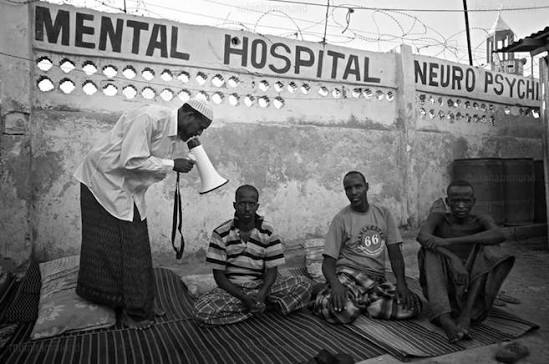
For many people, reaching the care is the hardest step. People with mental health conditions face heavy stigma and discrimination.
Many people do not see psychological issues as a health concern at all; in Mudug for example, they are often understood as a neurological problem.
Some believe that a person with a mental health condition is dangerous or will never recover. So, families look for other kinds of help first, and by the time someone reaches a hospital, they may have been struggling for a long time.
Our care is free, but transport is not, and many families cannot afford it.
MSF works in collaboration with the Ministry of Health at Bay Regional Hospital in Baidoa, and at Mudug Regional Hospital and Galkayo Hospital in Galkayo.
Our teams offer individual, family, and group counselling, including group sessions for women recovering from obstetric fistula, psychiatric consultations and medication, follow-up sessions, counselling by phone, psychoeducation and psychological first aid, all free of charge and confidential.
We cannot wait for specialists who are not there.
Through the WHO Mental Health Gap Action Programme, known as mhGAP, we have trained doctors from several hospital departments to recognise, diagnose, and treat mental health conditions, including with psychiatric medication when it is needed.
They work alongside our mental health counsellors and together they review regularly complex cases of patients. It means someone with a serious mental health condition, such as severe depression or psychosis, can be treated in Baidoa or Galkayo, rather than being sent elsewhere for care that most families cannot reach.
In Galkayo, mhGAP-trained doctors held 140 consultations in the first six months of this year.
We also actively look for the people who need our support.
Team members regularly visit the emergency room, the paediatric and malnutrition wards, and tuberculosis, obstetric fistula, and reproductive health services.
Health promoters and community health workers talk about mental health problems and care in the hospital and in the community, so that people learn that what they are feeling has a name and can be treated.
More people are coming.
Between January and June 2026, our teams held 5,267 individual and family mental health consultations in Baidoa and Galkayo and supported 2,378 patients.
Leaving aside consultations by mhGAP-trained doctors, which we only started recording this year, this is 45 per cent more than in the same period of 2025.
Part of this rise reflects greater need after a difficult year. Part of it reflects trust: other organisations that cannot offer psychiatric care now refer patients to us, and people who have started to feel better encourage others to come and seek care.
But our services are not enough. Outside the hospitals we support, there are few places in Baidoa or Galkayo where someone can see a psychiatrist, and those that exist often charge fees.
Mental health care needs to be treated as a core health service in Somalia, like care for physical illness: part of the services people already use, with trained mental health staff, a reliable supply of psychiatric medication and services close to where people live.
This is a shared responsibility for health authorities, donors, and humanitarian organisations.
Every week, people come to our hospitals with a headache or a sleepless night and find someone who will ask what lies underneath.
The task now is to make sure mental health support is always there/available when they do.
Dinner waiting at home
Mahad* was 18 when his uncle brought him to Bay Regional Hospital in Baidoa in August 2026. He was barely sleeping.
He was restless, irritable and full of an energy he could not control, talking without pause and walking long distances without knowing where he was going.
It was the second time a severe mental health condition had taken hold of him.
The first time was in 2023, the last year he went to school.
Mahad lives with his family in Baidoa, where they are part of the host community. Before he started having psychological issues, he worked for himself in a shop. The condition kept him away from work for a long time.
“My condition was such that I used to just wander off, walking without knowing where I was going,” he says.
“My family would be waiting for me at home at night with dinner prepared, and I would suddenly find myself in another village, or another town altogether.”
The walking left him in pain and exhausted and his family worried constantly about where he was. People around him had a name for him.
“My family and other people used to call me the madman, and I didn’t like it,” he says.
Some severe mental health conditions come in episodes. During an episode, a person may sleep very little, feel unusually energetic, talk fast and without stopping, become irritable or agitated, and lose control over what they do and where they go.
Without treatment, episodes can return. Treatment combines medication, which calms the symptoms and helps restore sleep, with counselling, support from the family and regular follow-up.
In Mahad’s case, the condition had come back three years after the first episode, and his family had tried other kinds of help before bringing him to hospital.
MSF mental health counsellors assessed him and started him on medication alongside counselling. His family took part in his care and learned about his condition, and he came back for four follow-up sessions.
“Doctors welcomed me here, and then I was given medication, which benefited me greatly,” he says.
Mahad now sleeps well. He is calmer, he talks more easily with the people around him, and he has gone back to his job in the shop.
“I was sick for quite some time, but since I started receiving treatment at this hospital, I am getting better,” he says.
MSF works in collaboration with the Ministry of Health at Bay Regional Hospital in Baidoa, where mental health teams offer individual, family and group counselling, psychiatric consultations and medication, follow-up sessions, including by phone, and psychoeducation, all confidential and free of charge.
Doctors from several hospital departments have been trained through the World Health Organization’s mhGAP programme to diagnose and treat mental health conditions, so that people with severe conditions can be treated in the hospital without being referred elsewhere. Between January and June 2026, MSF teams held 5,267 mental health consultations in Baidoa and Mudug.
* Name has been changed to protect privacy.
Voices only she could hear
Fatuma’s* brother brought her to Bay Regional Hospital in Baidoa in December 2025.
For years, she had been living with psychosis. She heard voices that no one else could hear, and she felt that someone was following her and listening to her.
She had been given medicine once before, at a hospital in Mogadishu. It had not helped.
Fatuma lives in her own home in Baidoa.
The condition took her sleep and her appetite and left her agitated and her moods unstable. Few people in her community knew what she was going through.
“People used to speak inside my head. I would hear things on my own that the people with me could not hear,” she says. “It had a massive impact on me, and for a period of three years, I could not sleep.”
Her family did not see it as a health concern.
“My family did not believe that I was suffering from a real illness, or that it could be treated medically,” she says.
Psychosis is a mental health condition in which a person loses touch with parts of reality.
The most common signs are hallucinations, such as hearing voices that others cannot hear, and fixed beliefs that are not true, such as being watched or followed.
It often comes with fear, agitation and sleeplessness, and makes everyday life very hard to manage. Psychosis can be treated with medication, together with counselling and regular follow-up, and support from family helps people stay on treatment.
In Fatuma’s case, the medicine she received in Mogadishu had not worked, and the voices continued.
She was started on medication and counselling, and her brother took part in her care. Over 11 follow-up sessions, the team kept track of her symptoms, her treatment and how she was managing day to day.
“My brother brought me here, after which I was provided with medication as well as counselling related to rest, life improvement and similar guidance,” she says.
She describes how she coped with the voices. “Not listening to the things I hear inside my head, trying to ignore them, and believing that I will get better,” she says.
The voices eased. She became calmer, her appetite came back and she was able to manage her daily life on her own again.
“It changed many things in my life and brought me hope that I would recover, whereas at first I had given up all hope,” she says. “I made progress and got married once I felt healthy again.”
MSF works in collaboration with the Ministry of Health at Bay Regional Hospital in Baidoa, where mental health teams offer individual, family and group counselling, psychiatric consultations and medication, follow-up sessions, including by phone, and psychoeducation, all confidential and free of charge. Doctors from several hospital departments have been trained through the World Health Organization’s mhGAP programme to recognise and treat mental health conditions, so that people with severe conditions can be treated in the hospital without being referred elsewhere. Between January and June 2026, MSF teams held 5,267 mental health consultations in Baidoa and Mudug.
* Name has been changed to protect privacy.