
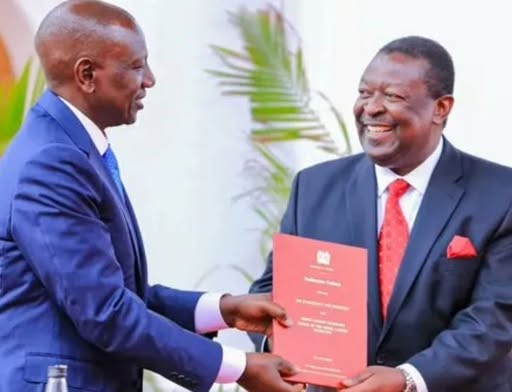
The political landscape of Kenya has been jolted by a landmark High Court ruling that effectively reverses one of the most significant party mergers in recent history.
In a decisive judgment, the High Court sitting in Nairobi has reinstated the Amani National Congress (ANC), the party long synonymous with Prime Cabinet Secretary Musalia Mudavadi, voiding its dissolution, its merger with the United Democratic Alliance (UDA), and the subsequent transfer of its assets.
The court’s intervention centers on the procedural integrity of the party’s exit strategy.
The bench found that the Special National Delegates Congress (NDC), which ostensibly voted to dissolve the party, was illegal and conducted in breach of the law.
By declaring the NDC’s resolutions null and void, the court has essentially hit “undo” on a process that many believed was a settled chapter in the Kenya Kwanza administration’s consolidation of power.
This ruling arrives 10 months after the Office of the Registrar of Political Parties (ORPP) officially gazetted the end of the ANC.
In a notice dated March 7, 2025, Registrar Anne Nderitu had confirmed the party’s dissolution following what was described at the time as a “voluntary resolution” by its members.
That move was the culmination of mid-January plans where President William Ruto’s UDA and Mudavadi’s ANC announced a strategic merger intended to solidify a monolithic political front ahead of future contests.
The implications of this legal “U-turn” are profound.
By dismissing the merger and reinstating the ANC as an independent entity, the court has inadvertently cleared a path for Musalia Mudavadi to return to active, independent party politics.
With the ANC’s assets and legal status restored, the “Amani” brand is back on the table, potentially shifting the internal power dynamics of the Kenya Kwanza coalition and forcing the UDA back to the drawing board in its quest for a single, unified party.