
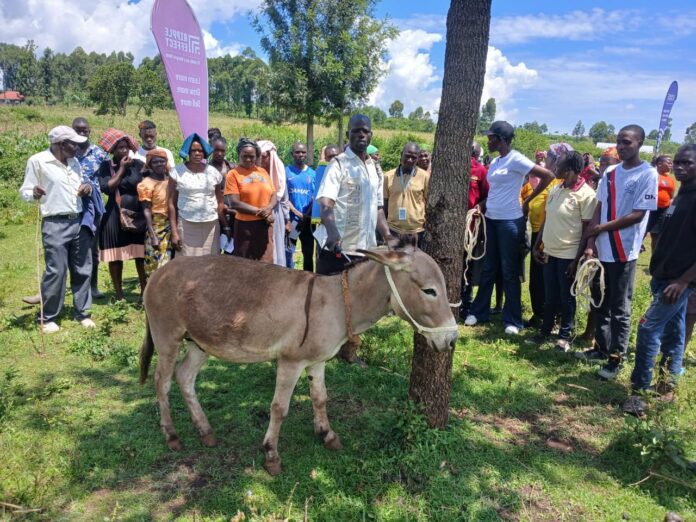
By FLEVIAN GEOFFREY: Migori County Ripple Effect Kenya in partnership with The Donkey Sanctuary, has launched a comprehensive two-year educational initiative titled “Happy Donkeys for Resilient Families.”
This initiative is meant to reverse the rapid decline in donkeys population in the county.
The project, which kicked off this month, targets 600 households and aims to safeguard the welfare of over 4,000 donkeys across Uriri, Nyatike, and Kuria East sub-counties.
Speaking to Kondele News, Simiyu Wechabe, the project coordinator, highlighted a grim reality: while donkeys are staples in Kenyan households, they are often the most mistreated.
Owners frequently subject them to overworking, underfeeding, and a total lack of medical care or adequate shelter.
“Many users have forgotten that the donkey is a living being,” Mr Wechabe noted.
“Lack of sensitization has led to a sharp reduction in donkey numbers, not just in Migori, but across the entire nation.”
He urged owners to “put themselves in the donkey’s shoes” before mistreating them, emphasizing that the animal’s health is directly tied to the family’s economic resilience.
The initiative comes at a critical time. National data reflects a worrying trend for the species.
According to the Kenya Agricultural and Livestock Research Organization (KALRO) and recent livestock reports, the donkey population in Kenya stood at approximately 1.9 million in 2016 and due to the now-banned commercial slaughter and ongoing illegal skin trade, experts estimate the population has dwindled significantly, with stakeholders raising alarms that the numbers could fall below 1 million if conservation efforts like those in Migori are not scaled.
Mr Simiyu also noted that a working donkey is estimated to contribute up to 15 times more income to a household throughout its life than the one-time fee gained from selling it for slaughter.
The program has already begun to shift local perspectives. Beneficiaries admitted that they previously viewed the animals as mere “tools” rather than partners in production.
“Earlier, we viewed donkeys as useless animals. Since Ripple Effect Kenya stepped in, we have started to treat them like our other livestock,” said one local beneficiary.
Another resident added, “From now hence forth, we view the donkey as an animal of importance. It is not just a tool; it is a source of income.”
Mr Wechabe also strongly castigated the slaughter of donkeys for meat or skins a practice recently cracked down upon by the Kenyan government.
He further appealed to the community’s values, noting that the consumption of donkey meat is not supported biblically and serves only to deplete a vital resource for rural logistics.
Nutrition and Food Security by ensuring donkeys and owners of the donkeys plus the users have proper fodder,veterinary care which involves training owners on basic health checks and wound management and better shelter by encouraging the construction of proper stalls to protect animals from the elements.
As the government continues to advocate against donkey meat consumption, this grassroots initiative aims to ensure that “The Beast of Burden” finally receives the dignity and care it deserves.