
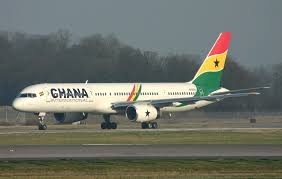
BBC: A government-chartered flight carrying nearly 300 Ghanaian citizens has landed safely at Accra’s Kotoka International Airport, marking the first phase of an urgent mass repatriation effort triggered by escalating anti-immigrant hostility in South Africa.
The evacuation flight, which departed from Johannesburg on Wednesday morning, comes after weeks of intense, citizen-led protests targeting foreign nationals.
Fearing a deadly resurgence of historic xenophobic violence, roughly 800 Ghanaians have already registered for emergency extraction, and further departures are expected in the coming days.
The atmosphere at the tarmac in Accra was one of immense relief mixed with unresolved tension as the country’s foreign minister, Samuel Okudzeto Ablakwa, joined other state officials to welcome the first set of 297 arrivals.
However, the evacuation was also marked by bureaucratic heartbreak.
Ghana’s High Commissioner to South Africa, Benjamin Quashie, noted that a mother and her two children were blocked from boarding by border authorities at the eleventh hour because she lacked the children’s official birth certificates.
While the majority of departing passengers avoided speaking to journalists out of security concerns, a few shared harrowing reasons for abandoning their livelihoods.
Rudolph, a salon owner who has lived and worked in South Africa for a decade, explained that the rapidly deteriorating security situation forced his hand.
He noted that the protests initially started in Durban before escalating to other provinces, warning that the current environment makes it far too dangerous for foreign nationals to remain.
Deeply shaken by the ordeal, Rudolph stated that he would never return to South Africa.
The spark behind this sudden mass exodus is a series of rolling demonstrations organized by “March and March,” a citizen-led movement pushing for aggressive immigration reform.
Organizers claim that illegal immigrants are placing unsustainable pressure on public services and local job markets, a sentiment that has gained traction in a country battling severe economic strains.
Crucially, the group has issued a strict June 30 deadline demanding that all undocumented foreigners leave the country, an ultimatum that migrant rights groups warn could easily ignite vigilantism and widespread violence if left unchecked.
South African diplomatic and border officials have noted that the repatriation process has exposed deep immigration challenges on both sides.
Because many fleeing nationals lacked valid passports, the Ghanaian embassy had to issue temporary, single-page emergency travel certificates to allow them to board.
Furthermore, South African Home Affairs officials reported that a vast majority of the evacuees had overstayed their visitor or work visas by months, and in some cases, years, resulting in them being legally declared “undesirable” under South Africa’s Immigration Act upon departure.
The initial flight also included 26 individuals who had been actively held at the Lindela Repatriation Centre.
To prevent the returnees from falling into immediate economic distress upon their arrival in Accra, the Ghanaian government has announced a comprehensive reintegration strategy.
The program aims to help returning citizens re-establish the small businesses, trade lines, and artisanal shops they were forced to leave behind.
High Commissioner Quashie emphasized that this proactive evacuation is an effort by the Ghanaian government to preserve its strong bilateral ties with Pretoria while ensuring the absolute safety of its people.
Nevertheless, with hundreds more citizens still waiting in Johannesburg for subsequent flights, the image of crowded airport terminals serves as a stark reminder of the fragile state of pan-African migration and economic security.
The story is courtesy of BBC