
Decades after independence in 1963, Kenya and Singapore stood at virtually the same economic starting line.
Both nations shared comparable incomes per capita, health indicators, and levels of development, yet today, Singapore’s per-capita income sits a staggering 40 times higher than Kenya’s.
It is a striking economic divergence that ODM party leader and Siaya Senator Oburu Oginga is urging Kenyans to confront head-on.
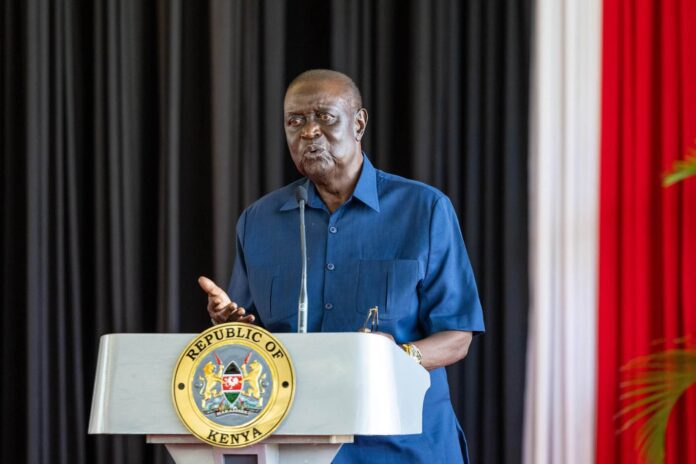
Speaking on Wednesday during the launch of the national conversation on Kenya Vision 2060, Oburu reflected on how his late brother, former Prime Minister Raila Odinga, used to frequently raise the Singapore question while drafting political manifestos.
“My late brother used to worry the President and used to worry us in the party when we were drafting our own manifestos: how can we, if at independence in 1963-64, Singapore was exactly at the same level of development as Kenya?” Oburu remarked.
Challenging the public to deeply examine where the two nations parted ways, Oburu laid out a blueprint for structural reform that he believes can put Kenya back on a competitive trajectory.
Slaying the dragon of corruption
At the top of Oburu’s reform agenda is systemic graft. While acknowledging that eliminating corruption entirely is a monumental challenge, he argued that Kenya must deliberately cultivate a society that is fiercely intolerant of the vice. Without institutional accountability and a clean-up of public resources, long-term economic aspirations will remain out of reach.
Reduce the government wastage
Fiscal discipline is another immediate necessity. Oburu called on state actors to cut down on unnecessary expenditure and exercise greater prudence in handling public funds.
“We need to tighten our belts. Those who are in government, let us tighten our belts for the people, for the sake of the people of Kenya,” he urged.
Elevating education
Emphasizing that education remains the ultimate socio-economic equalizer, Oburu stressed that Kenya must equip its young population with the technical and professional skills demanded by modern industries.
He warned against the absurdity of importing foreign labor while millions of local youth remain unemployed, noting that domestic talent must be nurtured to drive the economy.
Furthermore, he advocated for robust partnerships between universities and industries, pushing for increased investment in research and innovation so that Kenyan enterprises can compete effectively on the global stage.
Allowing the private sector to lead
Redefining the government’s core economic role, Oburu argued that the state should stick to building infrastructure and establishing an enabling environment, leaving actual economic development to the private sector.
“Government can only do infrastructure. Government cannot do development. Development is for the private sector,” he said.
The Siaya County lawmaker also reminded citizens to safeguard and fully utilize the democratic space secured through decades of intense political struggle and sacrifice. By participating in platforms like the Kenya Vision 2060 conversation, Kenyans have a unique opportunity to candidly debate their future and shape a prosperous path forward.