
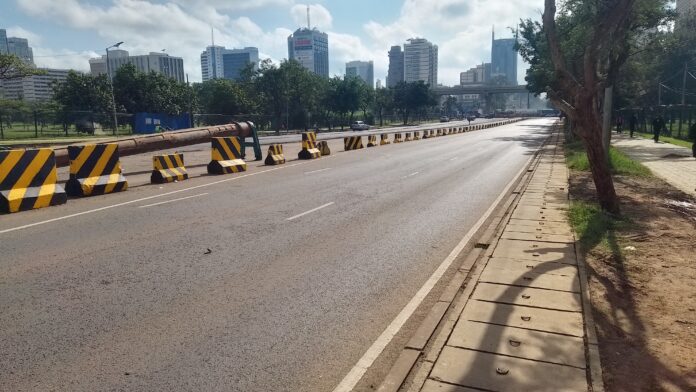
Nairobi residents using Mombasa Road, Ngong Road, and the Thika Superhighway enjoyed a seamless commute today, as the usual heavy traffic was notably absent.
For those using Mombasa Road, a route notorious for gridlock, the journey into the Central Business District (CBD) took significantly less time than usual.
A commute that typically lasts at least an hour during peak times was reduced to a maximum of 30 minutes.
Industry players believe the shift is purely economic.
Andrew Kanji, a driver with Super Metro, told Kondele News that many regular commuters have abandoned their steering wheels.
“Many people have either opted to work from home or they have simply parked their vehicles,” Kanji noted.
“In my 15 years of driving in Nairobi, we have never witnessed a scenario like this. Diesel is far more expensive than petrol now. This is abnormal.”
Usually, motorists on the Mombasa Road corridor have the option of using the Nairobi Expressway for a fee to avoid the “old” road’s congestion.
However, today provided a rare phenomenon, “The Expressway and the old Mombasa road are the same,” Kanji added, referring to the lack of traffic on both.
The situation was mirrored on Ngong Road, a vital artery connecting highly populated residential areas to the city.
Winnie Awuor, a Riruta resident who works at the Milimani Law Courts, described the morning drive as “seamless.”
“The ride has been so smooth, one would think there is a curfew or demonstrations keeping people off the road,” she observed.
Similarly, on the Thika Superhighway, there was a visible shift in transport modes.
A majority of residents appeared to have opted for Public Service Vehicles (PSVs) rather than driving their personal cars, leading to a significant reduction in the number of private vehicles on the eight-lane highway.