
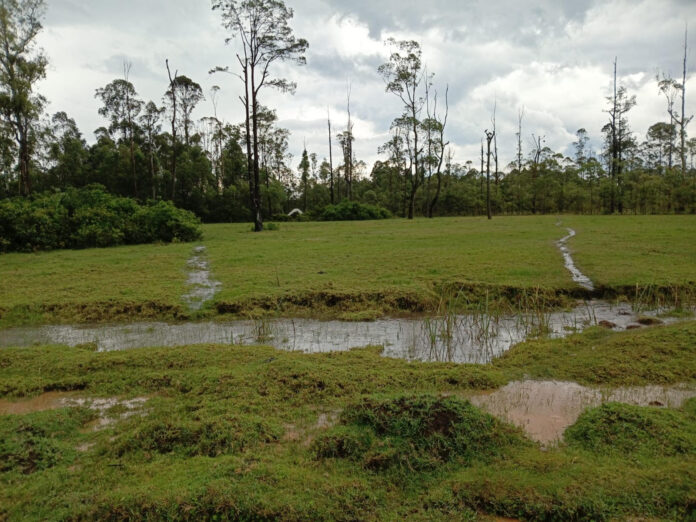
BY MONICA NASHON: Nyanturago Wetland in Kisii County, once a vast and thriving water catchment ecosystem, is now at the center of growing environmental concerns, land conflicts, and questions over the effectiveness of government-led restoration programs.
The level of degradation is beyond superlative comparison, expressing that it is a blurry shadow of former self is an understatement.
Recent environmental reports and testimonies from local residents paint a bleak picture of a fragile wetland slowly disappearing under the pressure of human activity, poor planning, and the alleged mismanagement of conservation projects.
According to a 2021 study by the National Research Fund, Nyanturago Wetland has shrunk drastically over the years.
The study indicates that the wetland reduced from approximately 72.85 hectares in 1984 to only 17.37 hectares, representing a loss of nearly 76 percent due to continued human encroachment and environmental degradation.
Furthermore, an academic study by the University of Nairobi states that the wider Nyanturago water catchment area originally covered about 840 hectares, though a large portion has since been overtaken by settlements, farming, and other activities.
The wetland is considered a critical ecological zone because of its role in water retention, flood control, biodiversity conservation, and environmental sustainability.
The ongoing degradation, however, persists even as the government continues to implement national initiatives under the Presidential Forestry and Rangeland Restoration Programme, popularly known as the “Jaza Miti” campaign.
Presidential initiative
President William Ruto previously directed the protection, rehabilitation, and gazettement of wetlands across the country as part of the broader 15 Billion Tree Growing Programme, which aims to restore degraded landscapes and secure water catchment areas.
“I will shortly be launching the #JazaMiti application, one that every Kenyan or institution will use to document their tree planting. The app will help to monitor, over time, the growth of trees,” said the head of state.
“We would like to monitor the growth of the trees in the journey to reach the 15 billion target in 10 years. I have instructed the Cabinet Secretary for Environment to make the ‘Mission 15B’ #JazaMiti campaign a truly tree-growing campaign.”
Since 2022, several government-led restoration exercises have been conducted at Nyanturago Wetland involving various ministries and state departments.
On June 18, 2024, a high-level tree-planting exercise was led at the wetland by officials from the Ministry of Information, Communications and the Digital Economy.
Later, on September 18, 2024, another large-scale exercise was conducted under the leadership of Hezron Nyamberi from the State Department for Broadcasting and Telecommunications.
Most recent, on April 17, 2025, Ann Wang’ombe, the Principal Secretary for the State Department for Gender and Affirmative Action, also led a tree-planting exercise at the wetland as part of the ongoing restoration efforts.
However, serious concerns are now emerging over the true impact of the restoration program at Nyanturago.
The great irony
A senior government official, who requested anonymity, questioned the vast amounts of public funds allegedly spent on these activities despite little visible success on the ground.
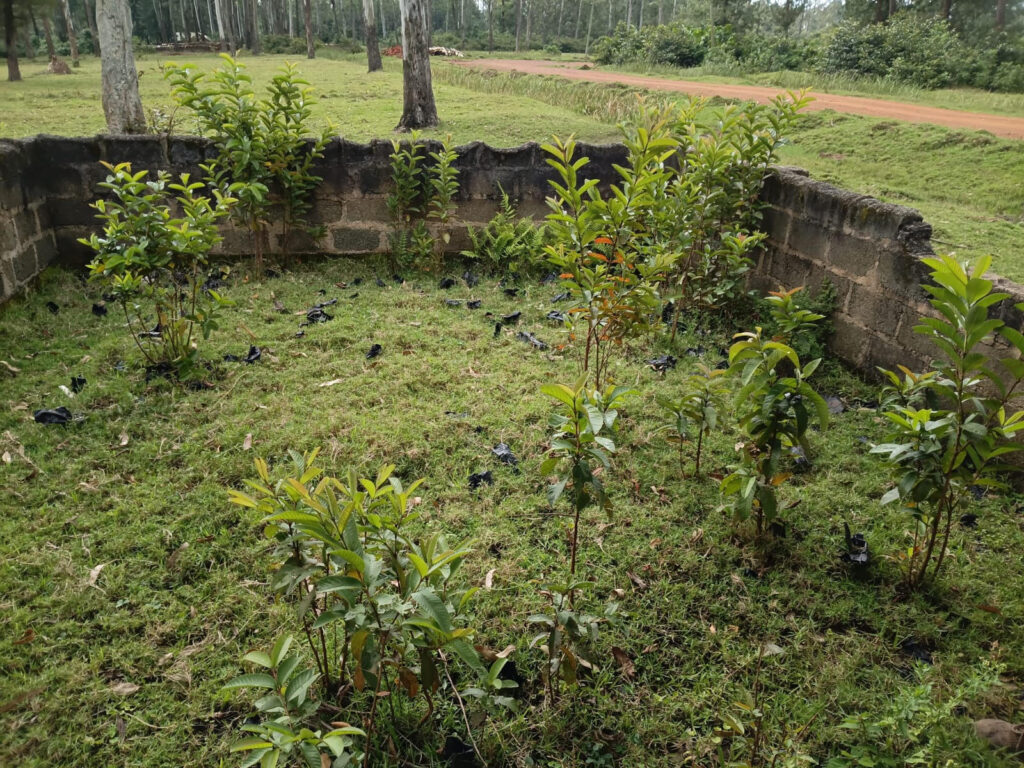
According to the source, more than 7,000 trees have reportedly been planted in the wetland since 2022, but only about 50 are said to have survived.
The official attributed this dismal survival rate to increased human activity, weak protection mechanisms, and continued encroachment.
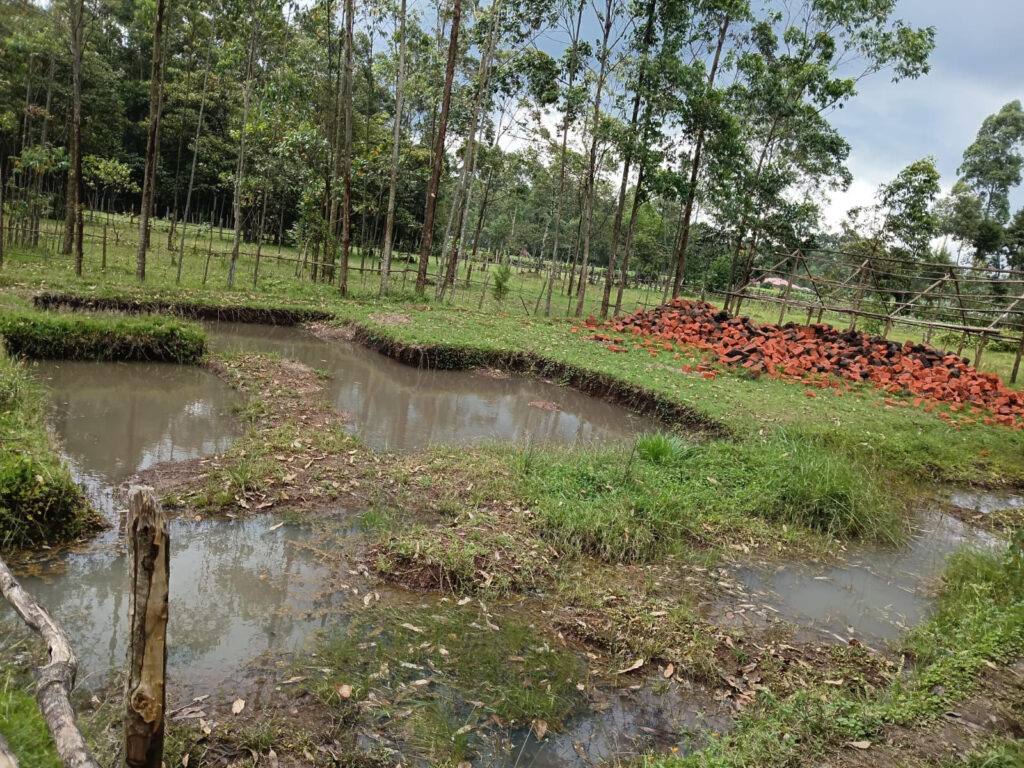
“The wetland is no longer retaining water throughout the year the way it used to,” the source said, warning that continued degradation threatens the ecosystem’s natural functions.
Residents living around the wetland echoed similar concerns, blaming the failed conservation efforts on a lack of planning, inadequate security, and the failure of authorities to involve the local community in decision-making.
Moses Omwenga, a long-time resident, recalled when the area was flush with water.
“When we were young, this place had too much water. If you stepped there, you could easily sink,” he said.
He blamed the destruction on illegal activities, livestock grazing, and the planting of eucalyptus trees (also known as blue gum), which many locals believe dry up water sources.
Omwenga also claimed that youths hired to guard the planted trees worked for six months without pay, adding that after the guards left, some people removed the protective fences at night while others brought livestock into the wetland, destroying the vulnerable young trees.
Paul Abuga, one of the youths who worked as a guard, confirmed that they were repeatedly promised salaries but were never compensated.
“We waited for six months being told the money would come, but nothing happened, so we decided to leave the job,” he said.
Residents also claimed that some of the seedlings dried up because the wrong tree species were selected for a wetland environment.
“The trees they planted here cannot survive in too much water. Most of them dried up,” Jane Nyakerario, a local member of the community explained.
Data from the Kenya Forest Service, however, contradicts the experiences shared by residents, indicating that the species planted were technically capable of surviving in such conditions.
Notably, during one of the restoration exercises, Broadcast and Telecommunications PS Edward Kisiang’ani had urged residents to avoid planting eucalyptus trees in wetlands and water catchment areas.
PS Kisiang’ani warned that eucalyptus trees are high-water consumers, encouraging the community to plant water-friendly, indigenous varieties instead.
Compounding these environmental issues, the wetland is also facing severe land ownership disputes.
Some people living around the area claim they purchased their plots legally and possess valid title deeds, while others insist the wetland is strictly government land.
This lack of clarity has caused friction between conservationists and locals using the land for farming and grazing.
Residents also pointed to the collapse of the old Nyanturago forest office, which was established in the 1980s and once played a vital role in safeguarding the area.
Abandoned office
According to locals, forest officers and watchmen used to live and work at the station while protecting the forest and managing tree nurseries.
When the officers retired, however, they were never replaced, and the office was eventually abandoned.
Residents believe the absence of a permanent security presence has heavily contributed to the lawlessness currently witnessed in the wetland.

William Gichana, a local resident, emphasized that no conservation project can succeed without proper security.
“If you plant something and leave it without anyone protecting it, it will be destroyed,” he said, adding that as soon as the guards left over unpaid salaries, livestock flooded back into the area.
The local community further claim that drainage channels have been dug to direct water out of the wetland and into nearby rivers, severely reducing the area’s natural water-retention capacity.
Amos Mogaka another member of the community recalled that the wetland once boasted natural springs and indigenous trees before they were cleared and replaced with blue gum.
“People cut trees at night and leave with them. If the government plants trees, they should also provide security,” Mogaka said, alleging that some of the government-planted trees were later logged.
Thomas Obare, the Member of County Assembly (MCA) for Bassi Boitangare Ward, which neighbors the wetland, has continued to urge residents to support conservation efforts by planting trees and protecting the ecosystem.
His plea comes even as the national government proposes relocating the Kisii Prison to the wetland area.
The local community is also calling on the government to fully involve them in future projects, employ and pay guards on time, and revive the old forest office to restore proper surveillance.
They are also asking authorities to focus on indigenous tree varieties suitable for wetlands rather than species that easily wither or drain the water table.
To resolve the ongoing tension, the community recommends proper fencing of the wetland, round-the-clock security patrols, and clear boundary marking to mitigate land conflicts and deter illegal activities.
While many residents reiterate their support for restoring the Nyanturago Wetland, they maintain that long-term success is only possible if the government works hand-in-hand with locals and finally resolves the surrounding land disputes.