
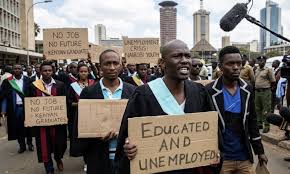
By MOSES MAKORI: Across Kenya, many young people are facing a difficult reality as the rising cost of living continues to collide with limited employment opportunities.
From university graduates searching for jobs to small business owners struggling to keep up with expenses, the economic pressure is becoming increasingly visible in everyday life.
Over the past few months, the prices of fuel, food, transport, and other basic commodities have continued to climb.
These increases have had a direct, heavy impact on households across the country.
For many families, managing monthly expenses has become a daily battle, forcing them to cut costs and drastically adjust their lifestyles.
Recent data indicates that inflation has risen significantly, largely driven by escalating fuel prices, which inevitably drive up the cost of transporting goods and services nationwide.
Unemployment
Young people are among the hardest hit by these economic challenges.
Thousands of graduates leave colleges and universities each year with hopes of securing stable employment, only to encounter a brutally competitive job market.
While educational institutions continue to produce highly skilled graduates, the number of available formal jobs remains vastly insufficient to absorb the growing workforce.
Kenya continues to struggle with severe youth unemployment, forcing many young people to rely on temporary gigs, informal businesses, and side hustles just to survive.
In urban hubs such as Nairobi, Mombasa, and Kisumu, young adults are finding it increasingly difficult to afford basic rent, transport, and food.
Many spend almost their entire income on immediate necessities, leaving absolutely no room for savings, investments, or personal development.
Consequently, the dream of financial independence is slipping further out of reach as living expenses continue to rise much faster than average earnings.
Frustrations and endless tenacity
Social media has become the primary outlet where young Kenyans openly share their frustrations.
Stories of endless job applications, unpaid internships, and chronic underemployment dominate online timelines.
While some young people have successfully pivoted to entrepreneurship and digital content creation, a vast majority still struggle to find sustainable, predictable sources of income.
This constant pressure to maintain a basic standard of living has heavily contributed to rising stress and anxiety levels among the youth.
Despite these immense hurdles, Kenyans continue to demonstrate incredible resilience and creativity.
Small-scale traders, popularly known as hustlers and mama mboga operators, are finding innovative ways to adapt to the shifting economic landscape.
Some are diversifying their products, while others are embracing mobile technology and digital payment systems to reach new customers and slash operational costs.
Their determination reflects the deep-seated entrepreneurial spirit that defines the nation.
Policy Interventions and the Path Forward
The government and various private stakeholders have introduced several initiatives aimed at mitigating the employment gap.
Youth empowerment programs, technical skills training, and entrepreneurship seed funds have been established to bridge the divide between formal education and actual market needs.
Recent youth employability forums have also brought together employers, training institutions, and young job seekers to map out practical pathways toward job creation.
Additionally, the government announced an increase in minimum wages during recent Labour Day celebrations, a move intended to cushion workers against aggressive inflation.
While the wage adjustment was a welcome relief for formal employees, economists argue that long-term relief will only come from structural solutions: creating more sustainable jobs, supporting small-to-medium enterprises (SMEs), and stabilizing inflation.
Addressing youth unemployment requires a collaborative, multi-sectoral approach involving government agencies, the private sector, academic institutions, and the youth themselves.
Strategic investment in technology, modernized agriculture, manufacturing, and the creative economy could unlock millions of opportunities while stimulating national economic growth.
Greatest asset
As Kenya continues to navigate these economic uncertainties, the lived experiences of its youth provide a clear picture of both the challenges and the opportunities ahead.
Their resilience, creativity, and determination remain the country’s most vital assets in building a stronger, more inclusive economy.
However, meaningful progress will depend entirely on policies that go beyond rhetoric.
Kenya needs initiatives that not only generate employment but also ensure that macro-economic growth actually translates into tangible, improved living standards for ordinary citizens.
The future of the nation rests squarely in the hands of its youthful population; by investing heavily in their potential and dismantling the barriers they face, the country can successfully transform today’s challenges into tomorrow’s triumphs.