
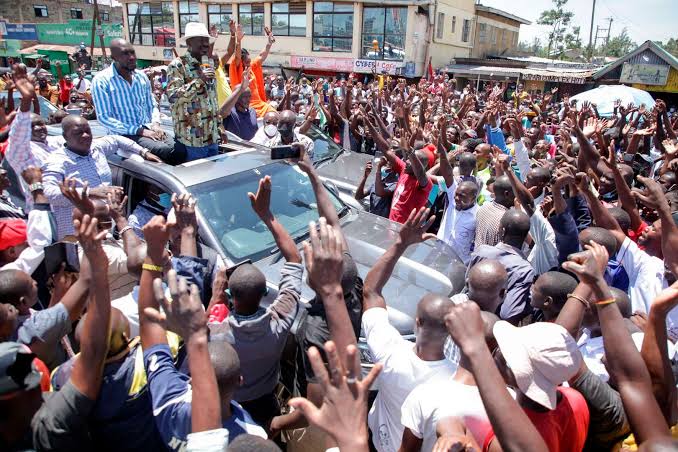
For decades, the name Kondele has been synonymous with political volatility.
The strategic, multi-tiered roundabout in Kisumu has long been framed by international and mainstream media as the “epicenter” of resistance, the inevitable stage where tire fires, stone-throwing battles, and thick clouds of tear gas script the visual narrative of Kenyan dissent.
Whenever national demonstrations loomed, broadcast vans routinely lined the highway, waiting for the first match to be struck.
But today, June 24, 2026, on the eve of the highly anticipated two-year anniversary marking the historic June 25, 2024 Gen Z protests, the youth under the Kondele flyover are talking a different script.
They are choosing to stay at their businesses. They are choosing peace.
“We have buried enough”
The collective decision to shun the planned anniversary demonstrations was not arrived at lightly.
It follows weeks of quiet, intense community dialogues and grassroots youth forums across Kisumu’s informal settlements.
According to organizers, the shift is driven by deep, compounding trauma from generations of state crackdowns and political betrayals.
“Every time there are protests, it is the youth of Kondele who face the bullets, and it is our mothers who bury us,” said Brian “Oti” Omondi, a prominent youth organizer stationed near the flyover.
“We are still mourning our brothers from 2024. We are still carrying the physical and psychological scars of 2017. We are saying enough is enough.”
Throughout the local forums, speakers repeatedly invoked the painful memories of the community’s fallen.
They spoke of Baby Pendo, the six-month-old infant killed during the 2017 post-election violence, alongside the young lives cut short during the height of the anti-finance bill demonstrations two years ago.
The human cost of this legacy is devastatingly personal for those who survive it.
“My younger brother died right here in 2017; he was shot by police during the demonstrations,” shared Vincent Omolo, a resident of the Dona area in Kondele.
“Today, my widowed mother still suffers from the severe trauma his death caused her. For those calling for fresh demonstrations, we are sorry to say ‘WAONGE’ (we shall not take part).”
This newfound consensus has sent a wave of relief through Kisumu’s business community. Local traders, who have historically lost millions of shillings to opportunistic looting, property damage, and forced closures during periods of unrest, are praising the youth for guarding the economy.
“I have operated a wholesale shop here for ten years, and I have been violently looted twice,” said Mama Naomi, a local community elder.
“Today, for the first time, our own children have decided that they will protect our shops. Businesses will run as usual, no looting, no burning. This is the real revolution. We are finally protecting our own livelihoods.”
Navigating the post-Odinga political landscape
The shift in Kondele also reflects an important realignment in the region’s political dynamics following the passing of the late opposition titan, Raila Odinga, in late 2025.
For decades, Odinga’s word was absolute law in the lakeside city. The current youth stance signals a pragmatic embrace of the Broad-Based Government frameworks initiated prior to his demise.
“We listened carefully to Baba,” noted one of the youth leaders during the discussions. “Before he left us, he instructed the community to engage and work with the government to secure development for Nyanza. We shall not disrespect his vision even in death. We are giving the current administration a chance to deliver on its promises to the youth.”
As the rest of the country prepares for a tense anniversary on Thursday, Kondele’s defiant calm stands as a powerful statement.
The strategic roundabout remains clear, businesses remain open, and the youth have collectively decided that the ultimate sacrifice in blood is a price they will no longer pay for national political friction.