
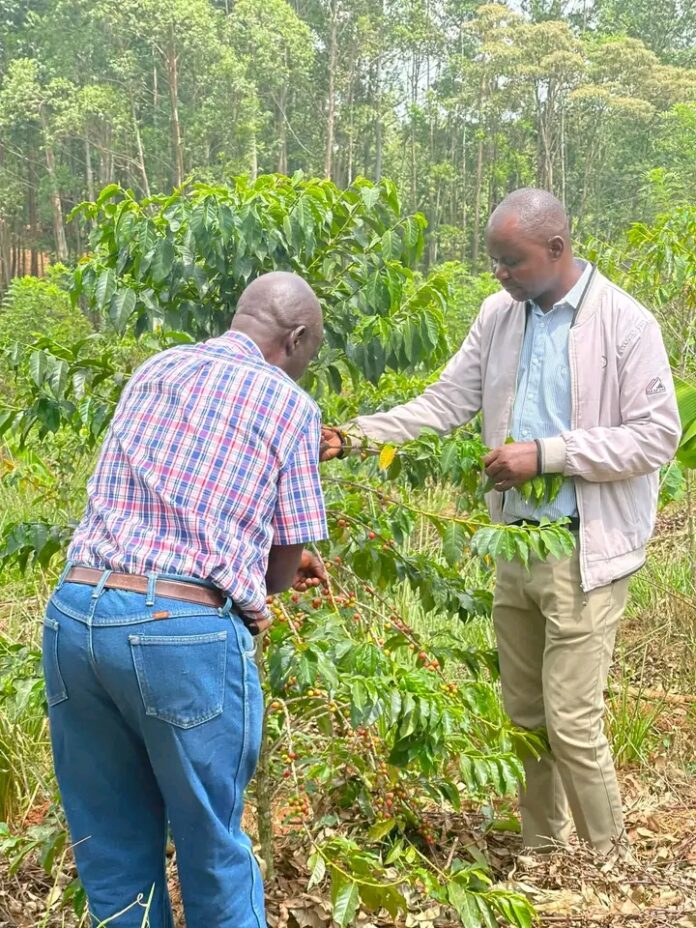
The long-awaited coffee picking season has officially arrived at Caleb Omollo’s farm in Kosodo Village, Rongo Constituency.
The event marks another major milestone for a farming model that is increasingly demonstrating how regenerative agriculture can restore vitality to Kenya’s struggling coffee sector.
Rows of healthy, vibrant coffee bushes heavy with bright red cherries stand as living evidence of months of care, strategic pruning, and ecological land management.
This harvest is far more than just another routine farming season, it represents the culmination of a regenerative journey that has transformed an ordinary farm into a thriving demonstration of syntropic agriculture.
For Omollo, the founder and chairperson of Sustainable Village Resources (SVR), every basket of freshly picked cherries tells a story of patience, resilience, and harmony with nature.
“Months of nurturing, pruning, and caring for these trees have finally borne fruit,” Omollo reflects.
“Every ripe cherry harvested represents the dedication of our farmers and the promise of exceptional coffee.”
Self sustaining process
Unlike conventional coffee holdings that rely heavily on synthetic pesticides and chemical fertilizers, Omollo’s farm operates as a self-sustaining ecosystem.
Coffee bushes grow beneath carefully managed layers of indigenous shade trees, fruit trees, banana plants, nitrogen-fixing species, and ground cover crops.
Known as syntropic farming, this multi-layered approach closely mimics the structure and natural succession of a forest system.
Instead of exhausting the soil over time, the farm continuously rebuilds topsoil through regular additions of organic mulch generated from strategic pruning and plant decomposition.
The immediate results are fertile soils teeming with beneficial microbial life, vastly superior moisture retention, and resilient coffee plants capable of withstanding the erratic weather patterns driven by climate change.
Visitors stepping onto the Kosodo farm immediately notice a striking contrast to traditional monoculture plots.
Beneath a thick blanket of organic cover, the ground remains cool and damp even during dry spells. Birds and beneficial insects thrive throughout the fields, and the coffee bushes exhibit vigorous growth and heavy fruiting despite recent dry periods across parts of Migori County.
Giving nature a chance
According to Omollo, the philosophy is simple: allow nature to become the farmer’s greatest ally.
“Our objective is not simply to grow coffee, but to regenerate the entire ecosystem. Healthy soils produce healthy trees, and healthy trees produce exceptional coffee.”
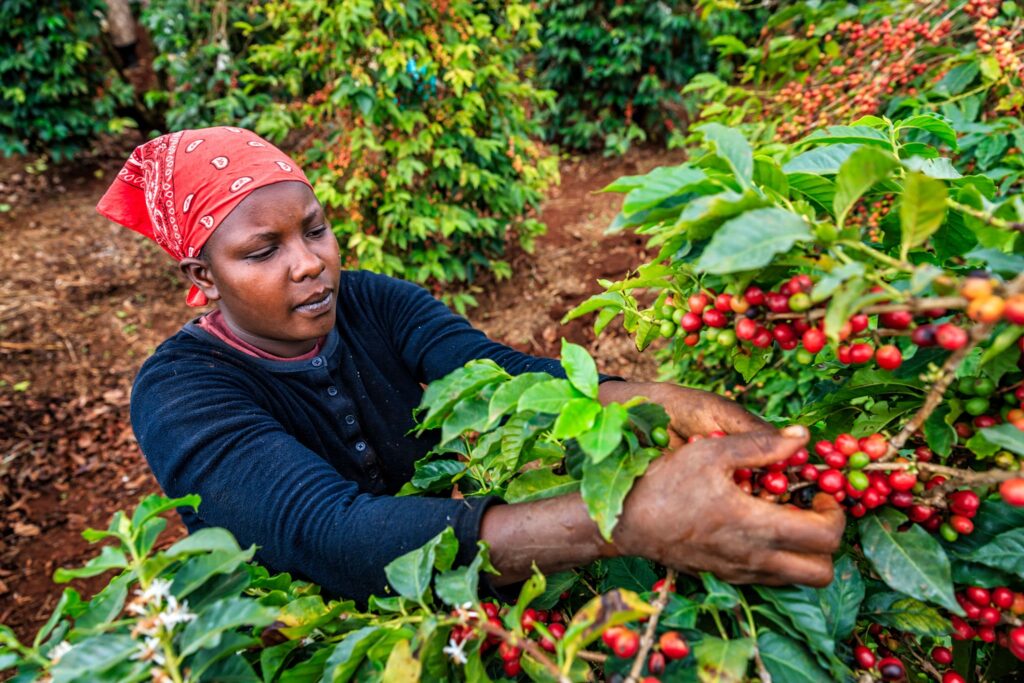
The current bumper harvest fully validates years of investment in practices that local observers initially dismissed as unconventional. Today, the flourishing plantation serves as an open-air classroom where neighboring smallholders, agricultural extension officers, and climate-smart farming advocates gather to learn sustainable techniques.
Through Sustainable Village Resources, Omollo actively champions systems designed to restore degraded landscapes while improving rural livelihoods.
SVR has established local demonstration plots, trained community members, and promoted improved coffee varieties alongside integrated agroforestry.
Crucially, this multi-layered design allows households to harvest bananas, fruits, vegetables, and timber alongside their cash crop, securing year-round food security and diversifying income streams beyond coffee alone.
Endorsed by experts
Agricultural experts increasingly view syntropic agriculture as one of the most promising avenues to address the systemic crises facing Kenya’s coffee industry; namely declining soil fertility, erratic rainfall, and skyrocketing input costs.
While coffee has historically stood as one of Kenya’s top foreign exchange earners, national acreage has dwindled as smallholders face low margins and volatile weather.
Innovative producers like Omollo demonstrate that productivity can be restored naturally without reliance on expensive commercial chemicals.
As pickers move through the rows, carefully selecting only the fully ripe cherries to preserve premium quality, the season signals renewed optimism for regional agriculture.
For Sustainable Village Resources, every cherry in the basket represents far more than its immediate market value; it symbolizes a viable, profitable path forward capable of transforming Kenya’s coffee industry while restoring the land for generations to come.