
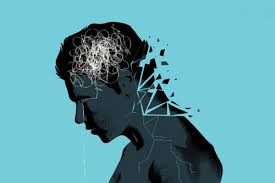
For generations, an unwritten code has governed the lives of men across the globe: be strong, do not complain, and carry your burdens to the grave.
But as the world observes Men’s Mental Health Awareness Month, psychologists, medical practitioners, and advocates are issuing an urgent wake-up call.
The stoicism once praised as a virtue is proving to be a silent killer.
To unpack this deeply entrenched crisis, Kondele News sat down with Millicent Loren Achien’g Ayah, a practicing psychotherapist at the Nairobi Psychological Home (NAPH Clinic).
Through her clinical practice, Ayah views the struggle not as an abstract social issue, but as an everyday battle fought in the quiet chambers of human minds.
What men’s mental health actually means
“When we talk about men’s mental health, we aren’t just talking about the absence of mental illness,” Ayah explains noting that, “We are talking about a holistic state of being that hinges on three critical, interconnected pillars.”
According to clinical frameworks, true mental health is built upon: the capacity to identify, manage, and safely express a full spectrum of feelings rather than bottling them up, the cultivation of internal resilience, self-acceptance, and a distinct sense of purpose in life and the ability to initiate and maintain healthy, reciprocal interpersonal relationships.
Highlighting the necessity of balancing these elements, Ayah notes that overall health must be fundamentally holistic.
A man can be physically robust, but if his social resilience is fractured and his emotional world is neglected, he cannot truly be well.
The four stages of decline
One of the greatest dangers in men’s mental health is the tendency to wait until a total breakdown occurs before seeking help. Mental health disorders rarely strike without warning; they develop in distinct, progressive stages:
The warning signs (Mild)
This initial stage presents as mild symptoms or minor disruptions to an individual’s baseline behavior. It might look like slight mood swings, occasional bouts of anxiety, or a minor, uncharacteristic social withdrawal from friends and family.
The interference stage (Moderate)
Here, symptoms deepen into recognizable conditions like persistent depression, panic episodes, or chronic irritability. New symptoms may emerge, and the individual begins to experience noticeable disruptions in their daily routine, work performance, or household functioning.
Serious consequences (Severe)
At this juncture, the condition begins to severely disable the individual’s ability to function. It is characterized by chronic sadness, pervasive fear, disordered thinking, and a profound loss of focus.
Daily obligations at work or home become nearly impossible to maintain.
The crisis stage/life threatening
The final stage is a medical and psychological emergency. It features life-threatening symptoms, including psychosis (a severe distortion of thinking and perception where a person loses touch with reality), severe self-harm, cross-harm (harm directed at others), and persistent suicidal thoughts.
“As a general gauge,” Ms Ayah advises, “If symptoms like acute stress, disrupted eating, or altered sleep patterns last for more than two weeks, or if severe cognitive disruptions like psychosis persist over months, an immediate mental health check-up is no longer optional, it is mandatory.”
The disorders
Mental health conditions present in varied diagnostic forms. Understanding the depth of what men may be battling in secret requires breaking down the primary categories seen in clinical settings:
The mood Disorders where conditions such as Major Depressive Disorder and Bipolar Mood Disorder profoundly affect emotional well-being and baseline temperament.
Secondly there is anxiety Disorders which is a generalized Anxiety Disorder (GAD), Panic Disorder, and specific phobias manifest as persistent, excessive, and recurrent worries that disrupt daily peace.
Then we have the personality Disorders which is the Borderline Personality Disorder (BPD), Antisocial Personality Disorder, and Narcissistic Personality Disorder introduce rigid, unhealthy patterns of thinking and behaving that strain relationships.
Then there is a psychotic Disorders which has conditions like Schizophrenia and Schizoaffective Disorder cause severe distortions in thinking and perception, including hallucinations or delusions.
The trauma and Stressor-Related Disorders is another advance stage which entails Post-Traumatic Stress Disorder (PTSD) and Acute Stress Disorder bring about severe psychological distress following exposure to a traumatic event.
Early-onset developmental impairments like Attention-Deficit/Hyperactivity Disorder (ADHD) and Autism Spectrum Disorder (ASD) affect personal, social, or academic life.
The Obsessive-Compulsive Disorders involve repetitive, intrusive thoughts coupled with severe urges to perform rituals, seen in OCD or Body Dysmorphic Disorder.
The eating Disorders such as Anorexia Nervosa and Bulimia Nervosa drive extreme, harmful attitudes and behaviors surrounding food, restrictive eating, or binge-and-purge cycles.
Finally, we have the Substance-Related and Behavioral Disorders which involve a maladaptive dependency, misuse, or addiction to external elements, ranging from alcohol and prescription drugs to behavioral addictions like gambling and pornography.
Witchcraft aspect
In many African traditional contexts, including sections of Kenyan society, conversations around mental illness frequently collide with deeply held beliefs in witchcraft, spiritual curses, or demonic possession.
Ayah addresses this intersection with a blend of cultural nuance and clinical firmness.
“The relationship between traditional belief systems like witchcraft and mental health is highly complex,” Ayah notes.
“For some communities, these beliefs form the primary lens through which they understand a sudden shift in behavior, sometimes leading them to seek traditional or spiritual interventions.”
However, she warns of severe clinical dangers, “The primary risk is misdiagnosis. We frequently see individuals with Autism Spectrum Disorder, Schizophrenia, Major Depressive Disorder, or Substance Use Disorders being labeled as bewitched. This creates a massive barrier to evidence-based medical treatment.”
While acknowledging that some traditional practices use somatic principles that try to regulate behavior, Ayah emphasizes a strict boundary:
“If traditional or spiritual beliefs are utilized, they must only serve as a complementary, supportive comfort to the individual; they must never replace professional psychotherapy and psychiatric care.”
Has society neglected the boy child?
“Yes, to a large extent, men have been neglected in the mainstream narrative,” Ayah observes.
“Over the past few decades, domestic and international focus has quite understandably centered on empowering the girl child, focusing on socioeconomic equality and fighting Sexual and Gender-Based Violence (SGBV).
In doing so, the boy child was largely left to drift without a corresponding roadmap for his changing role in society.”
Ayah also notes systemic imbalances within institutional spaces:
“In family law courts, the justice system has historically favored mothers heavily on matters of divorce, child custody, and financial support, often leaving fathers alienated from their primary support systems for their children. Combine this legal friction with a society that actively gags, mocks, or stigmatizes men who show emotional vulnerability, and you create an environment where men feel entirely systematically isolated.”
Mitigation and recovery
What drives a man to the brink of mental collapse is rarely a single event, but rather a complex triad of root causes: genetic factors (biological predisposition), environmental factors (severe adversities, childhood trauma, sudden loss, or economic ruin), and psychological factors (poor coping mechanisms, negative thinking styles, or substance use).
To counter this, a multi-layered path to recovery is required:professional psychotherapy (talk therapy) and deep psychoanalysis to unpack root traumas and reframe harmful thought patterns.
Secondly utilizing evidence-based pharmacological treatments and targeted medication to stabilize brain chemistry when chemical imbalances are present.
The society should then begin rebuilding basic physical health through proper sleep hygiene, structured nutrition, and deliberate relaxation techniques.
Surrounding the individual with safe, non-judgmental spaces, reliable peer groups, and strong institutional support networks.
To truly bridge the gap, society must deploy Psychological First Aid (PFA) across workplaces, schools, and religious institutions, enabling everyday people to identify and support a man in immediate distress.
“Speak out and speak up. Your secrets do not protect you; they isolate you. Seeking professional psychological intervention is an act of profound courage and preservation. Guard your life as jealously as you guard your responsibilities.”
“Understand that men are human beings. They possess the exact same neurological and emotional architecture as anyone else, they have feelings, they experience deep emotional pain, and they shed tears. We must completely shun social stigma, embrace psychoeducation, and provide unwavering psychosocial support. Stop calling men weak for experiencing the vulnerabilities of being human.”