
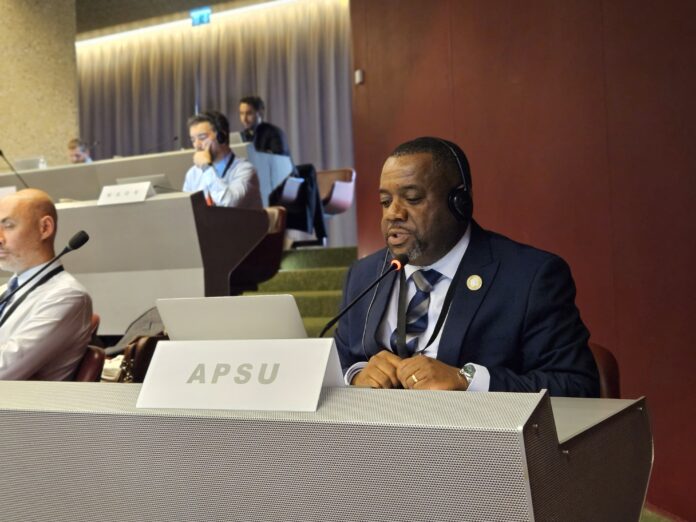
Calls for African Countries to sign, ratify and domesticate the United Nations arms trade treaty was the key message that the chairperson of African Peace and Security Union (APSU) Roll Stephane NGOMAT passed to during the Twelfth Conference of state Parties (CSP12), of the Arms Trade treaty (ATT).
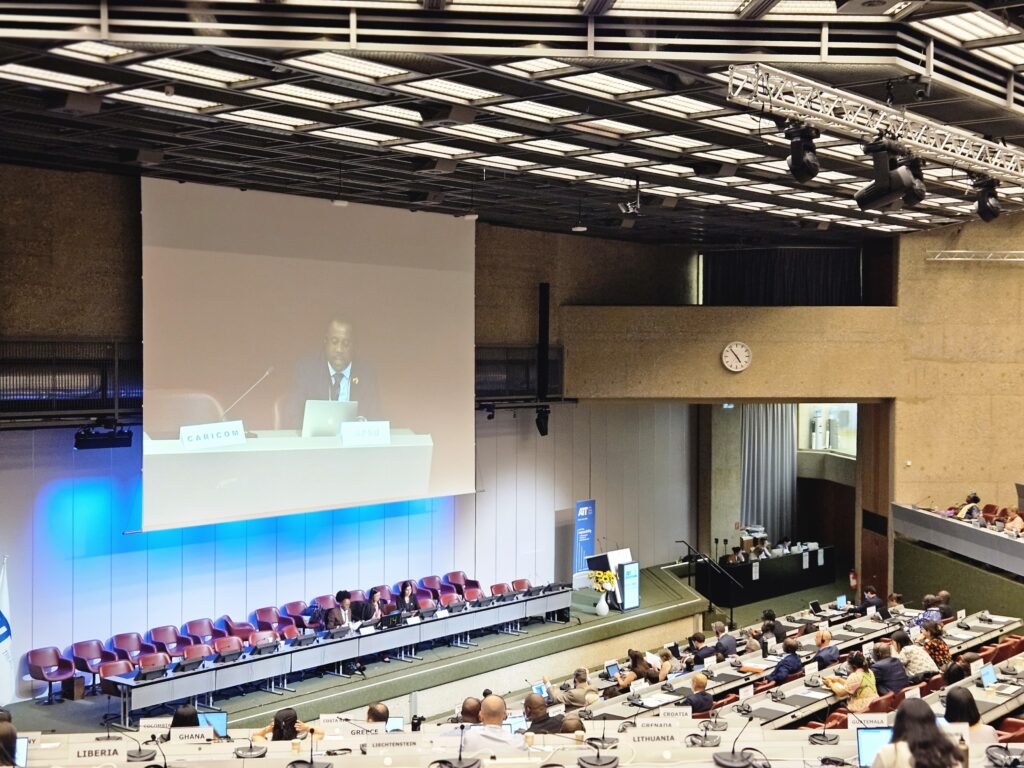
The conference that is taking place in Geneva, Switzerland from 24 to 28 August 2026 is a High-Level international meeting gathering diplomats and states representatives to discuss about conflicts and armed violence fueled by illicit proliferation of small arms and light weapons (SALW) and the unregulated flows of weapons and ammunition that continue raging around the planet.
In his address, the Gabonese Diplomat, urged African States to fully incorporate all provisions of the Arms Trade Treaty into their national legislation.
He also stressed that combating the illicit proliferation of small arms and light weapons requires increased and coordinated participation from state actors, the private sector, and the international community to achieve lasting peace and prosperity.
Time for action not rhetorics
Ngomat stated that; “It is urgent that States Parties fully embrace the Arms Trade Treaty, assume responsibility for it, and dedicate the necessary financial resources for its effective implementation. States Parties without national action plans for the Treaty should adopt them promptly, while those that already have them should implement them without delay and in good faith.”
States Parties, in Ngomat’s view, must take concrete steps to make local ownership and implementation of the Arms Trade Treaty a national priority, integrating it into their national legal frameworks, policies, programs, and budgets.
The Arms Trade Treaty (ATT) is an international treaty that regulates the international trade in conventional arms and seeks to prevent and eradicate illicit trade and diversion of conventional arms by establishing international standards governing arms transfers.
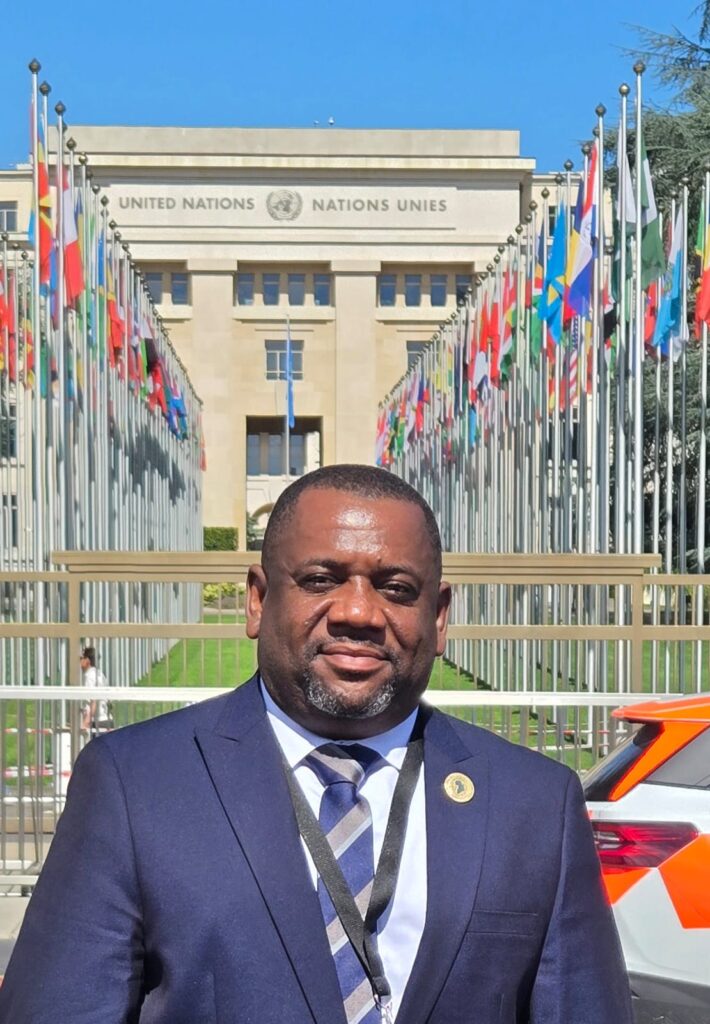
Ngomat has said that armed conflicts are complex, dynamic and multi-faceted phenomena having serious direct and indirect negative impacts on the affected nations.
Ngomat has been at the forefront of advocating for peace in the conflict hit Sudan, Sahel, Chad Lake Bassin, Great Lake Region, Central African Republic and the horn of Africa.
“The major complications of conflicts are seen in the high rate of deaths, injury and population displacement. Armed conflicts affect health: they entail violence, displacement, infrastructure damage, social disruption and heightened risk of disease transmission,” notes Ngomat.
According to Ngomat, the negative effects of armed conflicts have multidimensional impacts that linger beyond war times, therefore, tackling and mitigating these wider effects requires a better understanding of the impacts of such conflicts.
Inclusive involvement
Ngomat believes that there is need for global coordination to stop the illicit flows that are driving conflict, organized crime and displacement, from Haiti to the Sahel.
“The illicit trade and misuse of small arms and light weapons fuels armed violence, terrorism and organized crime therefore sustaining conflict, terrorism and criminal networks across multiple regions,” he said.
He explained that it is weapons diverted from national stockpiles or at any point throughout the supply chain – that mostly end up in the hands of non-State armed groups.
The human toll is stark, in 2024, the UN recorded at least 48,000 conflict-related civilian deaths, with small arms responsible for up to 30 per cent in some contexts.
In 2026, global data on illicit weapons highlights rising challenges with small arms and light weapons (SALW) trafficking, prompting new data initiatives in regions like Nigeria, where a fresh baseline survey was announced to replace outdated 2016 figures, and new EU legislative proposals targeting cross-border trafficking and standardized seizure datasets.
Currently, the European Commission has introduced a comprehensive directive proposal to harmonize criminal definitions, penalties, and mandatory seizure data registry standards across member states.
The treaty
The Arms Trade Treaty (ATT) came into force on 24 December 2014. At this stage the Treaty has a total of 118 States Parties and 25 States that have signed but not yet ratified the Treaty.
Ngomat is a Gabonese diplomat, an expert in international relations, and a staunch advocate for peace, security, and sustainable development in Africa.
Drawing on his leadership experience within the African Union, AU-ECOSOCC, and African Peace and Security Union, he has dedicated his career to fostering regional cooperation, strengthening institutions, and promoting international partnerships.
Through diplomacy, political leadership, and economic engagement, he continues to champion initiatives that advance lasting peace, inclusive development, and prosperity across the African continent.
Throughout his career, Roll Stéphane Ngomat has contributed to initiatives that strengthen governance, promote peace and security, empower young leaders, and encourage sustainable development across Africa.
Working alongside governments, continental institutions, civil society organisations, and international partners, these initiatives reflect a shared commitment to advancing African-led solutions to continental challenges.