
The fight against corruption has received a major shot in the arm as President William Ruto piles pressure on investigating agencies to spare nobody involved in the vice.
Highly placed sources in the Executive revealed that President Ruto has directed the two investigating agencies, the Ethics and Anti-Corruption Commission (EACC) and the Directorate of Criminal Investigations (DCI) to intensify the fight against corruption, saying it was tainting his government’s development record ahead of the next general election.
The presidential decree, delivered after he returned from the United Nations General Assembly in Washington, USA, comes at a time the United Opposition is citing the runaway corruption in the country as proof that the Kenya Kwanza government deserves to be sent packing.
The government’s dismal anti-corruption record has become a major campaign issue by the United Opposition as the country heads to the next general election.
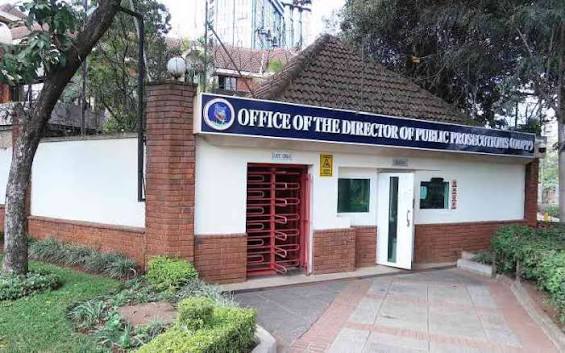
Partly stalling the fight against corruption has been a long running tug of war between the EACC and the Office of the Director of Public Prosecutions (ODPP) over the handling of cases mainly involving high profile suspects.
It has emerged that at least eighteen high-profile graft cases from 15 counties have been withdrawn by the ODPP in the last couple of years, despite EACC submitting what it insists were watertight investigation files.
The EACC now says its lack of prosecutorial powers has severely undermined its ability to hold corrupt officials accountable and recover stolen public funds.
A report submitted to the Senate County Public Accounts Committee (CPAC) reveals how completed graft investigations have repeatedly stalled at the prosecution stage.
“The major withdrawals happened between 2023 and 2024, with five and seven cases dropped respectively. So far in 2025, two cases have already been withdrawn,” said Ahmed Mahmoud, CEO of the EACC.
According to the EACC, the trend not only weakens public confidence in anti-corruption efforts but also wastes significant resources invested in investigations, especially when cases are dropped without proper consultation.
In September last year for instance, the High Court in Nairobi overturned a decision by the ODPP to withdraw corruption charges against Cabinet Secretary for Cooperatives and MSME Development, Wycliffe Oparanya.
Justice Benjamin Musyoki found that the ODPP acted outside the Constitution and its own internal guidelines by dropping the charges without consulting EACC, the body that had investigated the case and recommended prosecution.
The charges stemmed from allegations that Oparanya, during his tenure as Governor of Kakamega County, received over Ksh56.7 million from private companies. Part of these funds was allegedly used to acquire property in Nairobi’s Karen suburb. EACC had recommended several charges, including conflict of interest, abuse of office, conspiracy to commit corruption, and money laundering.
Although the ODPP initially agreed with EACC’s recommendations and sanctioned prosecution, it later reversed this decision following submissions from Oparanya’s legal team. However, the court noted that the EACC was not involved or consulted in evaluating the fresh evidence presented by the defence.
In his judgment, Justice Musyoki criticized the ODPP for “usurping the investigative mandate of EACC by considering new evidence without involving them,” calling the move irregular and unconstitutional.
As a result, the court quashed the withdrawal of charges and ruled that the ODPP had overstepped its constitutional mandate.
However, Justice Musyoki declined to nullify Oparanya’s Cabinet appointment, stating that doing so would be beyond the scope of the current proceedings.
The Directorate of Criminal Investigations (DCI) has also faulted the ODPP for repeatedly frustrating its Investigations relating to various crimes across the country, alleging insufficient evidence.
“We have forwarded dozens of files with water tight evidence to the ODPP but none has seen the light of day. They have repeatedly returned the files to us citing insufficient evidence. This is really demoralising to our teams,” said a highly placed source at the DCI headquarters.
“We are reviewing hundreds of files which we have forwarded to the ODPP over the course of time with water tight evidence yet no prosecution has been undertaken, we want to know how many files have been returned to us with no action taken, we need to know who are the people frustrating investigations at the ODPP’s office, who are the people sitting on these files, very soon, heads will start rolling at the ODPP’s office,” said our sources who sought anonymity due to the sensitive nature of the cases.
Sources at State House separately revealed that President Ruto had made it clear that nobody implicated in corruption will be spared this time round.
“He has directed the two investigating agencies to move with speed and arrest all those implicated in corruption, he has ordered that nobody involved in corruption should be spared, regardless of their position in government or in politics, that there will be no sacred cows in the fight against corruption. Heads are going to roll very soon,” our source revealed.
Under the radar of the two investigating agencies are governors and top officials in various county governments who have been cited in various reports by the Auditor General and the Controller of Budget.
We are soon going for them because the level of corruption in the counties is runaway, you will soon see several governors and their cronnies in the counties being arraigned to answer to corruption charges, nobody will be spared,” said sources at the two investigating agencies.
Senators have repeatedly questioned the rationale behind the ODPP’s decisions, raising concerns about transparency and the lack of collaboration between the ODPP and the two investigating agencies.
“I’m looking at a situation where the ODPP is not just terminating a case but claims to have recovered the stolen funds. How does the ODPP manage to recover money without prosecuting?” asked Samson Cherargei, Nandi senator.
“Even if the DPP has the legal authority, does he understand the resources spent on these investigations? How does he just withdraw a case without engaging the investigating agency?” posed Fatuma Dullo, Isiolo senator.
In response, the EACC is urging lawmakers to consider amending the law to grant the commission prosecutorial powers, arguing that doing so would lead to more consistent and successful outcomes in court.
“It would be better if we were allowed to pursue civil recovery independently. As the CEO mentioned, our success rate in asset recovery through civil cases is impressive,” said David Oginde, chairperson of the EACC.
“The ODPP can do what he wants with a criminal case, as long as the court agrees. But in many cases, if the prosecutor won’t prosecute, there’s little the court can do,” added Mahmoud