
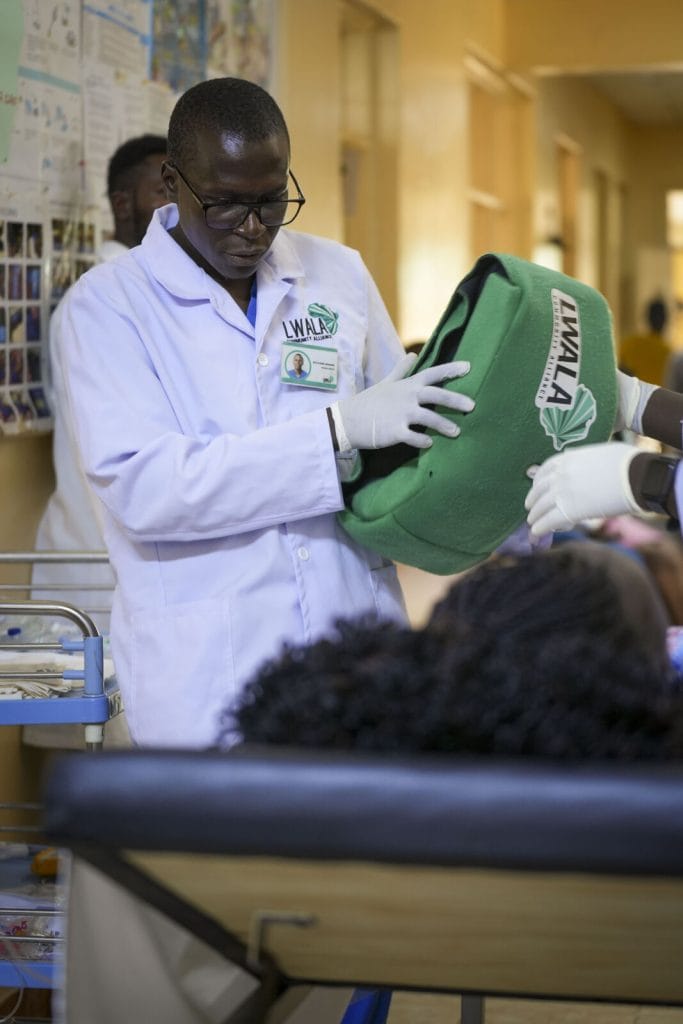
Lwala Community Hospital, in North Kamagambo, Migori County, has secured a major financial boost from the United States-based TramutoPorter Foundation.
The funding establishes a dedicated medical education fund aimed at driving continuous professional development (CPD) for frontline healthcare workers across the region.
The new initiative will power continuous clinical education, structured mentorship, and a training-of-trainers (ToT) program.
By equipping local practitioners with modern clinical skills, the project enables them to train and mentor their colleagues, creating a ripple effect across Kenya’s rural health network.
Training gap in rural Kenya
The investment arrives at a critical juncture for Kenya’s health sector.
Rural healthcare workers must constantly adapt to a rapidly shifting medical landscape, one marked by the nationwide rollout of electronic medical record (EMR) systems, updated clinical guidelines, and the expanding reach of telemedicine.
At the same time, practitioners are on the front lines of managing complex emerging infectious diseases and countering the global rise of antimicrobial resistance.
Despite these escalating technical demands, health professionals in rural areas frequently face steep barriers to routine skills development, including limited training budgets, high travel costs, and heavy daily patient workloads.
Speaking in a press statement released by the facility, Lwala Community Hospital Medical Officer-in-Charge, Chadwink Omondi, emphasized that sustainable healthcare reform depends directly on human resource investment.
“I’ve always believed that people drive systems. When we invest in people, we strengthen healthcare,” Dr Omondi noted.
Dr Omondi explained that the hospital has integrated continuous learning into its day-to-day operations.
This work-integrated approach allows junior clinicians, medical students, and veteran practitioners to acquire new skills while actively treating patients.
Transformation
The strategy has transformed Lwala into a regional Centre of Excellence. In 2025 alone, the facility supported the clinical training of over 130 students and healthcare professionals.
Furthermore, the Clinical Officers Council officially accredited Lwala as an authorized clinical training site for Kenya’s clinical officers.
For Lwala’s clinical leadership, technical expertise must go hand-in-hand with compassionate care.
“When our hospital staff train and mentor other health workers, we carry not only our clinical skills but our commitment to treating patients with dignity. This is what we are known for,” said Ms. Karen Lisa Boyi, Clinician-in-Charge at Lwala.
Echoing these sentiments, Donato J. Tramuto, Co-founder of the TramutoPorter Foundation, stated that the grant reflects their dedication to building resilient health systems through education and empathetic leadership.
“Compassion is not a soft ideal. It is a force that changes lives, strengthens communities, and shapes a more just world,” Tramuto said.
Effect on Kenya’s health system
While county governments across Kenya continue to allocate capital toward physical infrastructure building modern maternity wings, procuring diagnostic equipment, and expanding ambulance fleets, experts note that the performance of these facilities hinges on practitioner competence.
Regulatory authorities, including the Clinical Officers Council and the Nursing Council of Kenya, now mandate ongoing skills development to maintain professional licenses.
By deploying a train-the-trainer framework, Lwala Community Hospital ensures that every clinician trained becomes an educator in their own right extending the grant’s benefits well beyond Migori County and setting a benchmark for community-led health development in Kenya.