
The World Meteorological Organization (WMO) has issued an urgent global warning stating that El Niño conditions are rapidly developing in the tropical Pacific Ocean.
This shifting climate pattern is projected to significantly increase the risk of extreme weather events, intense heatwaves, and severely disrupted rainfall patterns across the globe over the coming months.
According to the United Nations weather agency’s latest update, there is an 80 percent likelihood that El Niño conditions will fully emerge between June and August of this year, with the probability of the phenomenon persisting through November exceeding 90 percent.
United Nations Secretary-General António Guterres urged governments worldwide to treat the development as an immediate humanitarian and environmental priority. He emphasized that the science is clear and that El Niño is arriving on the global doorstep with near certainty.
Mr Guterres warned that these conditions will pour fuel on the fire of an already warming world, causing impacts to hit harder, travel farther, and cross international borders with devastating speed.
In light of the threat, he called for accelerated global climate action, including a faster transition to renewable energy, targeted protection for vulnerable populations, and the immediate expansion of regional early warning systems.
The rapid shift toward El Niño is being driven by severe thermal anomalies across both the surface and subsurface of the Pacific Ocean.
El-Nino threshold
Meteorological observations taken between late April and mid-May indicate that sea-surface temperatures in the central-eastern equatorial Pacific are already fast approaching official El Niño thresholds.
Beneath the surface, scientists have observed unusually warm waters with temperatures exceeding 6 degrees Celsius above average. This provides a massive, substantial reservoir of heat that continues to drive surface warming.
Meanwhile, the Southern Oscillation Index, the atmospheric component that pairs with ocean changes—is also showing signs consistent with a developing El Niño state, indicating that the ocean and the atmosphere are actively aligning.
World Meteorological Organization Secretary-General Celeste Saulo noted that the global community must prepare for a moderate to potentially strong event that will inevitably exacerbate both severe droughts and heavy rainfalls.
She recalled that the recent 2023–2024 El Niño cycle was among the five strongest ever recorded, heavily contributing to the record-breaking global temperatures witnessed in 2024.
Saulo assured that the international meteorological community will carefully monitor conditions in the coming months to inform critical decision-making by governments, humanitarian agencies, and climate-sensitive sectors.
High risk areas
While each El Niño event evolves differently, the UN agency outlined stark regional variations expected to solidify as the system strengthens through the northern hemisphere’s summer and autumn.
The phenomenon is historically associated with increased rainfall and enhanced precipitation in parts of southern South America, the southern United States, the Horn of Africa, and central Asia.
Conversely, drier-than-normal conditions and intensified drought risks are often experienced in Central America, northern South America, the Caribbean, Australia, Indonesia, and parts of southern Asia.
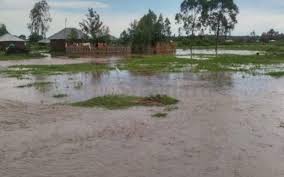
For Kenya and the wider Horn of Africa, the onset of El Niño is a particularly high-stakes development, as it is most commonly linked to enhanced rainfall and severe flood risks during the short rains season later in the year.
The World Meteorological Organization concluded that advance seasonal forecasts and early warning systems will be absolutely critical in helping countries reduce economic losses and protect lives.
The agency is now advising governments, humanitarian networks, and vital sectors such as agriculture, health, energy, and water resource management to trigger their emergency preparation protocols immediately to mitigate the impending impacts.