
Before a family can build a stable future, it must lay a strong foundation at home.
Across local communities in Kenya, that foundation increasingly begins with family planning, a clinical and social practice that restores health, brings economic peace, and fosters resilient community growth.
At the center of this grass-roots movement are frontline health workers like Evelyn Odhiambo, a dedicated Community Health Promoter (CHP).
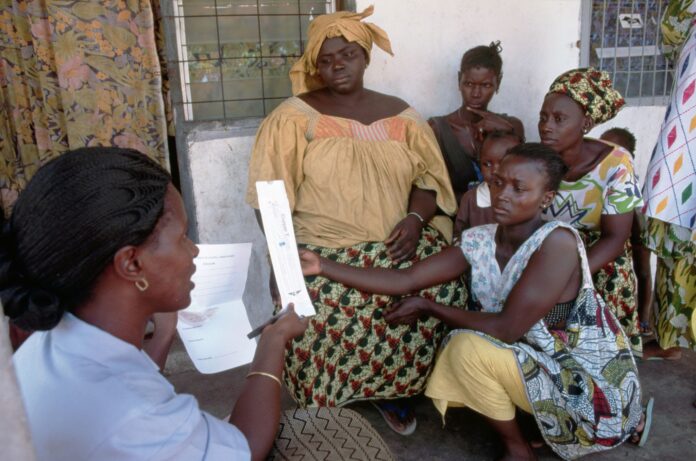
Every day, Ms Odhiambo works directly on the front lines of public health, educating families on what birth spacing truly entails, helping clients navigate a complex array of contraceptive options, and passionately advocating for male involvement.
Family planning is simply about spacing births and choosing when to bring new life into the world.
It creates a critical, healthy gap between pregnancies so a mother can regain her physical strength and parents can adequately care for, feed, and educate each child according to their household resources.
“Spacing births gives a mother her strength back and gives a family room to breathe, plan, and build a secure tomorrow,” she says during an engagement forum.
Far from restricting families, structured birth spacing brings financial and emotional stability, enabling parents to budget effectively and give each child the best possible start without straining household capacity.
“Family planning isn’t about saying ‘no’ to children, it’s about saying ‘yes’ to giving every child the health, love, and resources they truly deserve.”
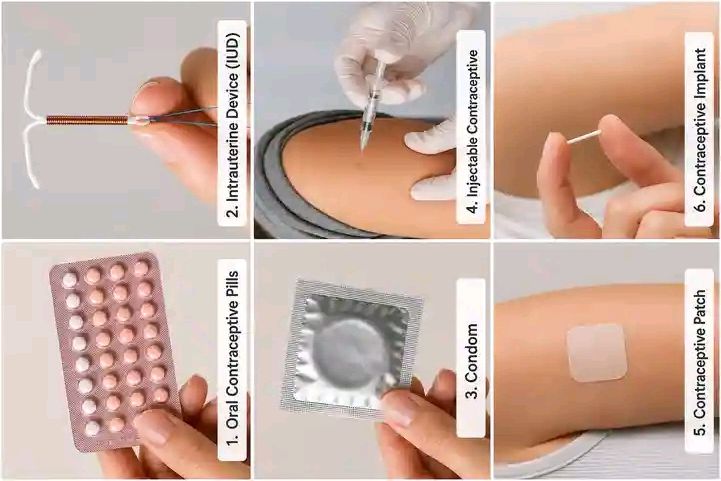
One of the largest hurdles families face is selecting a contraceptive method that aligns with their lifestyle, personal preferences, and clinical health profile. Evelyn breaks the available choices down into three primary clinical categories.
Categories of Family Planning
First there is the hormonal options which include three-month injections like Depo-Provera, multi-year upper-arm implants like Jadelle, daily oral birth control pills, and emergency contraceptives (P2).
The second category is the non-hormonal and barrier methods which comprise of long-term intrauterine devices (IUD/Coil), male and female condoms (the only method offering dual protection against both pregnancy and STIs), and natural approaches like menstrual calendar tracking or Lactational Amenorrhea (LAM) through exclusive breastfeeding.
The final category is the permanent methods which include surgical options such as tubal ligation for women and vasectomy for men, offering lasting solutions for individuals who have completed their desired family size.
For women choosing natural family planning, understanding cycle physiology is essential.
In a typical 28-day menstrual cycle counted from the first day of menses, days 1 through 9 form the post-menstrual safe window where conception is unlikely.
Days 10 through 19 mark the fertile window surrounding ovulation, where the likelihood of pregnancy peaks.
From day 20 until the next cycle begins, the safe window reopens; Ms Odhiambo notes that even if a woman’s cycle fluctuates slightly, consistently tracking the start date helps identify the fertile window accurately.
Misinformation and myths
Despite proven health benefits, misinformation remains a primary barrier to access, particularly among young women who fear that contraceptives lead to permanent infertility.
Ms Odhiambo emphasizes that this is a complete myth, having worked with many young women who used contraceptives while in school and went on to have healthy, happy babies later in life when they were ready.
However, she strongly cautions against self-medicating or purchasing unregulated contraceptives over the counter without a proper prescription.
“Your friend’s body is not your body,” Ms Odhiambo cautions adding that, “Before starting any method, visit a certified clinic so we can check your health history, blood pressure, and lifestyle to find what is right for you.“
When stories emerge of women becoming pregnant while on family planning, these incidents rarely stem from medical flaws in the products themselves.
Instead, contraceptive failures usually trace back to user error or unverified sources.
“Contraceptive failures rarely come from the medicine itself—they come from skipped days, delayed shots, or unverified counter purchases. Consistency and professional care make all the difference.”
Missing daily oral pills causes hormone levels to drop and triggers unexpected ovulation, while delaying a scheduled three-month Depo-Provera appointment reduces protective hormone thresholds.
Furthermore, sourcing contraceptives from unqualified vendors carries high risks of receiving expired or counterfeit medication. When administered on schedule by qualified medical personnel, modern family planning methods maintain extremely high success rates.
Warning signs
While modern contraceptives are safe for the vast majority of users, clear clinical guidance exists regarding side effects, daily adherence, and medical contraindications.
For daily oral pills, building consistent habits, such as setting phone alarms or placing pill packs next to daily items like toothbrushes, is crucial.
Low-maintenance options like IUDs or implants suit busier lifestyles.
Mild initial side effects like spotting, breast tenderness, nausea, or headaches usually subside within two to three months and should not cause a patient to stop treatment without switching directly to another method under clinical guidance.
Certain pre-existing conditions dictate which contraceptives are safe to use.
Combination oral contraceptives (COCs containing estrogen and progestin) are strictly contraindicated for women over 35 who smoke 15 or more cigarettes a day due to severe cardiovascular risks, as well as anyone with a history of blood clots, breast cancer, severe heart disease, stroke, uncontrolled hypertension, severe diabetes, liver disease, or migraine headaches with aura.
For these individuals, progestin-only pills (POPs), implants, shots, or IUDs provide safe alternatives.
Patients on combination methods must watch for critical warning signs requiring immediate emergency medical attention, including severe chest or leg pain, sudden shortness of breath, severe abdominal pain, unusually intense headaches, visual auras, or jaundice.
Need for male involvement
Historically, family planning was mistakenly treated as exclusively a woman’s responsibility, but health promoters like Ms Odhiambo are actively changing that narrative.
She emphasizes that family planning requires direct male involvement.
“When a couple plans together, the mother stays healthy, children receive the care and education they deserve, and household finances remain manageable.”
Evelyn continually encourages men across the community to accompany their partners to health clinics, consult with providers, and take an active role in shared reproductive health decisions.
Inadequate funding
At a national level, Kenya has made substantial progress in reproductive health over recent decades.
Modern contraceptive prevalence (mCPR) among married women has risen from 32 percent in 2003 to 57–58 percent today, covering over 6.6 million active users and helping reduce the national average fertility rate from 6.7 children per woman in 1989 down to 3.4.
Under the Family Planning 2030 commitments, the national government aims to reach a 64 percent mCPR and lower unmet family planning needs from 14 percent down to 10percent, addressing severe regional disparities where unmet needs spike as high as 37 percent in Tana River and 38 percent in Marsabit.
Systemic financial challenges, however, continue to threaten these gains.
Public health facilities across the country face critical stockouts of essential supplies, including Depo-Provera injectables, oral pills, and implants, at the Kenya Medical Supplies Authority (KEMSA) level.
This ongoing commodity shortage is driven by reductions and withdrawals of international donor support alongside delayed domestic counterpart funding.
Budget allocation
For the 2026/2027 financial year, the national government allocated Sh500 million for family planning procurement through KEMSA, a flat allocation compared to 2025/2026 and a significant drop from historical highs of Sh1 billion.
With public health experts and the National Council for Population and Development (NCPD) estimating an annual need of KSh 2.88 billion to fully meet national demand, a multi-billion shilling shortfall remains.
To maintain clinical quality despite these resource constraints, the global healthcare network relies on standardized frameworks established by the World Health Organization (WHO) and partner institutions like Johns Hopkins.
Frontline clinics track indicators like mCPR and satisfied contraceptive demand via the WHO Global Health Observatory and SRHR Policy Portal.
Meanwhile, clinical decisions are anchored in evidence-based guidance like the Medical Eligibility Criteria (MEC), Selected Practice Recommendations (SPR), and the Global Handbook for Providers.
Through the combined efforts of dedicated promoters like Ms Odhiambo, evidence-based global standards, and increased male involvement, community-level family planning continues to transform homes, securing health, stability, and growth for future generations.