
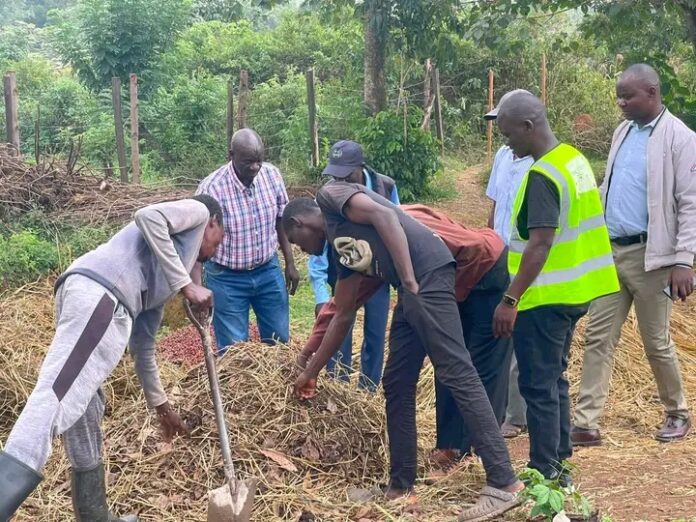
Smallholder farmers from Migori County, benefitted from a transformative hands-on workshop hosted by the TUNZA Farmer Field School, where local growers gathered to learn how syntropic agriculture can revive depleted soils while boosting crop yields.
For years, smallholders across the region have wrestled with a punishing cycle of rising fertilizer costs, exhausted soil, and unpredictable weather patterns driven by climate change.
Conventional monoculture, long reliant on heavy chemical inputs, has left many plots struggling to stay productive.
However, a quiet agricultural revolution is taking root.
Practical demonstrations
Smallholder farmers benefitted from practical tools and ecological insights designed to shift their focus away from short-term chemical fixes toward syntropic agriculture, a regenerative model that mimics the natural structure, density, and succession of healthy forests.
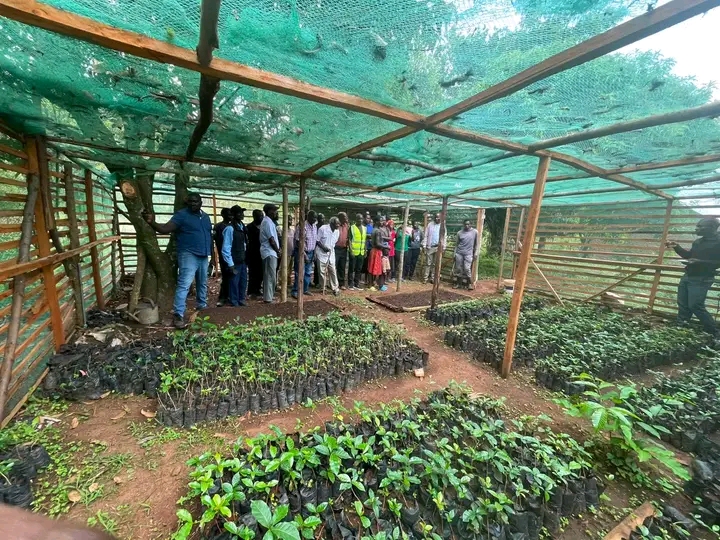
The intensive training opened with an interactive classroom session centered on soil health and long-term land resilience.
Lead facilitator Caleb Odondi urged participants to rethink their traditional approach to land management, emphasizing that long-term survival depends on working alongside nature rather than against it.
He noted that modern farming must move beyond simply maximizing short-term yields, shifting its primary focus toward rebuilding degraded landscapes, enhancing natural biodiversity, and creating farming systems capable of withstanding climate shocks.
By integrating trees, shrubs, cash crops, and ground cover into a single cohesive ecosystem, syntropic farming naturally restores soil fertility, enhances water retention, and eliminates the need for expensive synthetic fertilizers.
The instruction quickly moved from theory to practice across several interactive field stations.
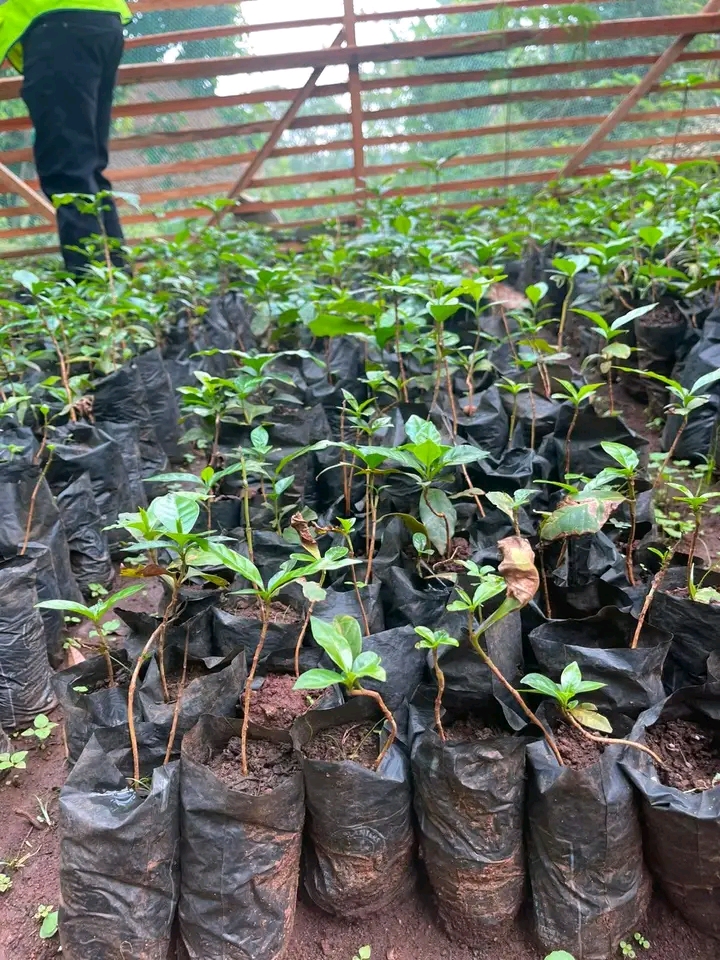
At the coffee nursery, farmers learned seedling selection, propagation, and nursery care, observing how intercropping coffee with shade trees and companion crops diversifies income while protecting young plants.
Cheap valuable manure
Nearby, participants gathered for a step-by-step demonstration on creating bio-complete compost, a nutrient-rich, biologically active soil amendment made from locally sourced organic materials that offers an affordable alternative to commercial fertilizers.
The day culminated in a tour of the school’s regenerative demonstration farm, where farmers saw syntropic agriculture functioning as a complete, self-sustaining ecosystem.
Through peer-to-peer discussions, growers exchanged practical ideas on adapting these techniques to their own fields.