

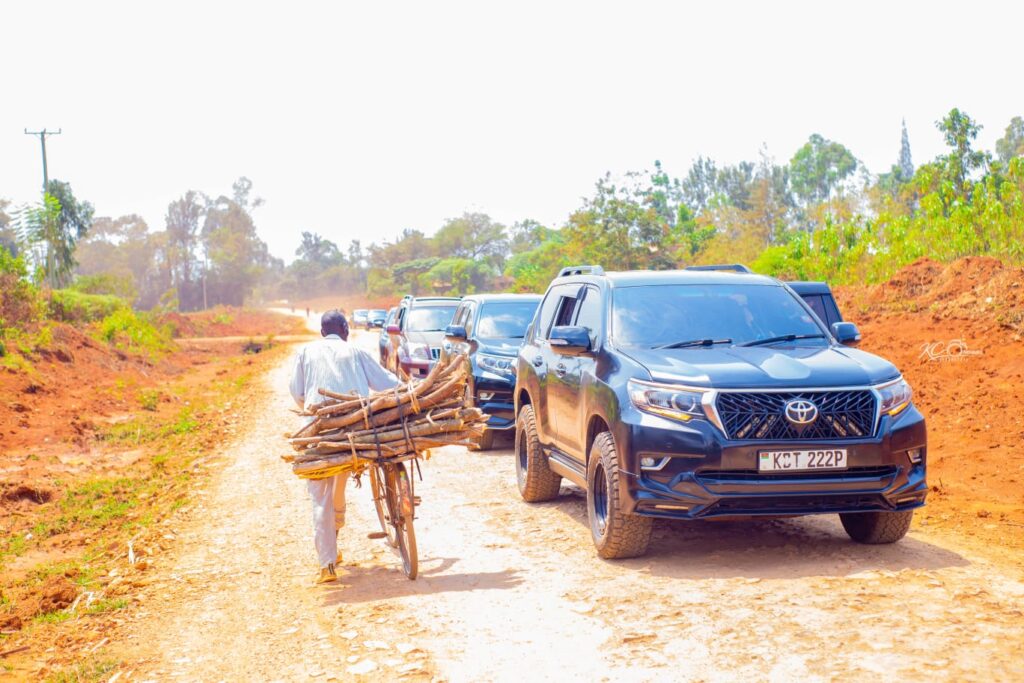
When members of the public saw high-end cars sneaking through the dusty Siaya-Kadenge road, they immediately thought it was another son of the land announcing his political bid.
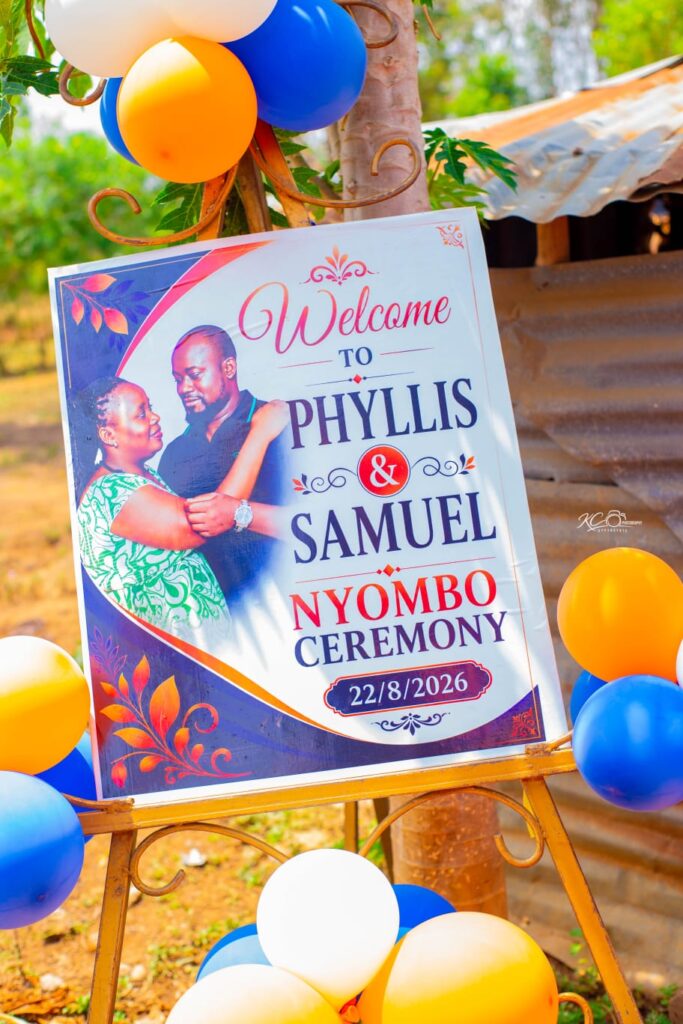
The vehicles, however, were destined for Bar-Olengo, where Siaya-based journalist Samuel Onyiego was officially going to marry his wife, Phyllis, traditionally known as Nyombo.
For lovers of Luo Benga music, the name Kadenge invokes a masterpiece by Luo Benga maestro Osito Kale, Angeline Achieng.
In one particular stanza, Osito sings:
“Usenge anindo ang’wen e wi yien kionge buta, aidho gari ero abiro kapod ideko.” “I have spent four nights on top of a tree in Usenge trying to see if you are coming to me, I will soon board a matatu because you are delaying.”
“Hera nyar Otieno romna koro aol akalo Siaya ero abiro ka alando hera,” “My love, Otieno’s daughter, please come meet me on the way, am passed Siaya coming to Kadenge professing my undying love for you.”
These words resonated as the convoy navigated the dusty roads to Bar-Olengo in Kadenge.
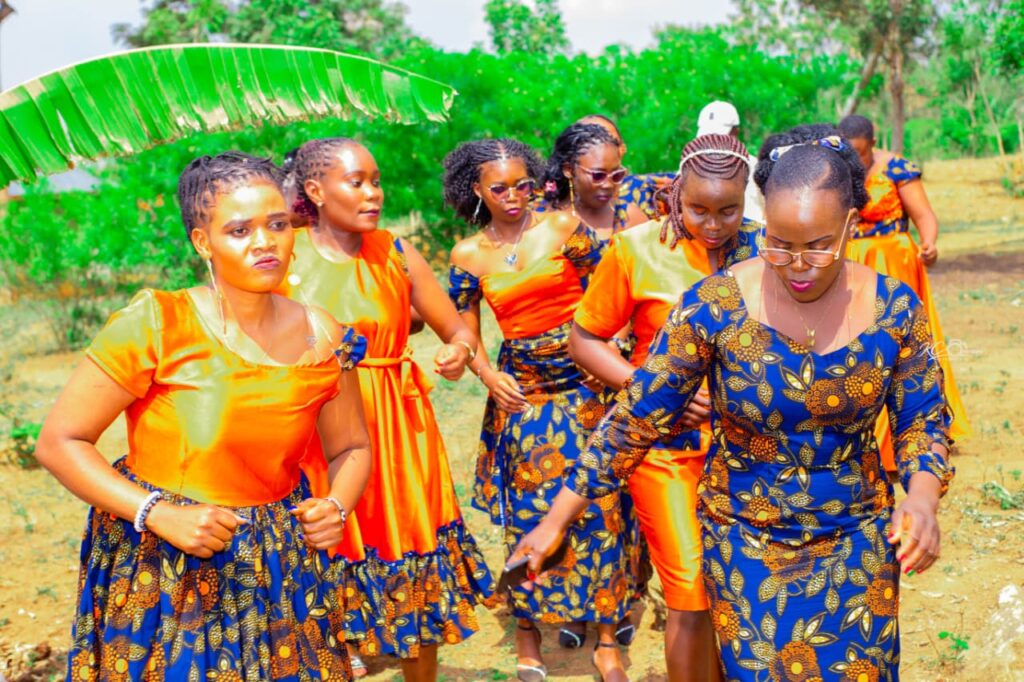
When Onyiego and his entourage finally arrived, the scene was spectacular. Bridesmaids dressed in African regalia danced to the booming sounds of Rapudo Baby by Prince Inda, making the venue a sight to behold.

As Luo customs and traditions demand, Onyiego and his groomsmen handed over the cows to the family before he was ushered into the homestead.
Waiting just meters away from where the animals were handed over was the beautiful bride, ready to officially receive her husband.
Music and ululations saturated the air.
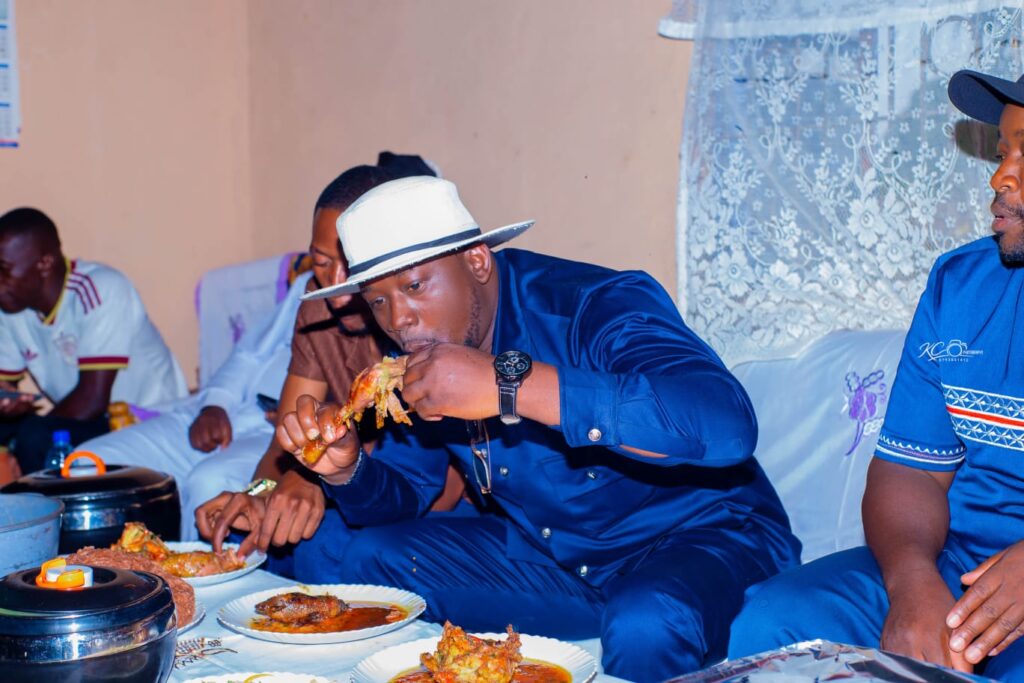
The groom then entered the home, where his entire team was treated to their first meal, a symbol that the bride’s family had officially welcomed their new in-law.
This was followed by a brief exchange of conversation between the groom’s entourage and the bride’s family.
Next, the groom, his family, and his friends were taken on a brief tour of the village, a moment used to plan how the rest of the events would unfold.
Upon their return, the entire team was ushered in for a second meal.
This is usually the main feast where chicken is served, a tradition famously known as ‘chamo gweno’.
After ‘chamo gweno’, the celebration moved to a beautifully decorated tent erected outside, specially reserved for the bride and groom.
It was at this point that the dowry money was paid, and tokens of appreciation for close family relations were sorted out.
The ceremony then culminated with the two families sharing a glass of the traditional brew, “chang’aa”.