
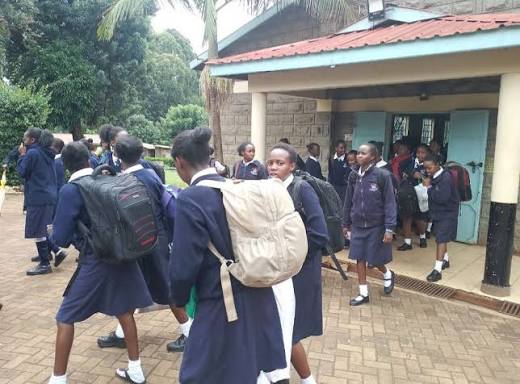
Learners across the country are set to return to school this week for the third and final term of the 2026 academic calendar, but uncertainty over government capitation funding continues to raise concern among education stakeholders.
The dispute comes despite President William Ruto’s announcement that the government has released Sh18 billion to schools to support capitation for the third term.
However, the Kenya Union of Post Primary Education Teachers (KUPPET) and a section of school heads have disputed the claim, saying many institutions are yet to receive the funds and are struggling with mounting debts and pending bills.
KUPPET Deputy Secretary General Moses Nthurima says schools are poorly prepared for the reopening because of delays and fragmented disbursement of capitation.
“Schools are least prepared because there are pending bills in the release of school capitation. The government is supposed to have released Sh22,244 for every learner and of course the schools are suffering debt right now,” said Nthurima.
The funding concerns are particularly significant during the third term, which is the shortest term of the school year, with schools expected to meet operational costs while also clearing outstanding debts.
President Ruto, however, maintains that the funds have already been sent to schools and dismissed claims that institutions are facing funding challenges.
“Children are returning to school. Previously, the money was delayed. We sent Sh18 billion for the third term to schools. Those claiming there are debts in schools are behind schedule. The money is in the schools,” said the President.
The President also accused those disputing the disbursement of having politically motivated agendas.
But KUPPET has rejected the government’s position, warning that parents could be forced to shoulder additional financial burdens as schools struggle to meet their obligations.
“We treat that as a rumour from the Ministry of Education. Our course of action is to ask parents to prepare to pay for the education of learners because the government has no intention to finance education,” Nthurima said.
The Kenya Secondary School Heads Association (KESSHA) has also raised concerns over the funding gap, saying schools have so far received Sh16,456.60 per learner this year against the expected allocation of Sh22,244.
This translates to a cumulative shortfall of Sh5,787.40 per learner, equivalent to about 26 per cent of the expected allocation.
The funding gap has left schools facing difficulties in meeting expenses, with education stakeholders warning that continued delays could affect learning and school operations.