
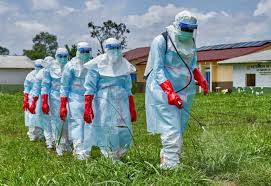
By MITCHELL MAINGI: The regional outbreak of the rare Bundibugyo strain of Ebola has triggered a fierce national sovereignty debate in Kenya.
First identified in 1976 near the Ebola River in the Democratic Republic of the Congo (DRC), Ebola remains one of the world’s deadliest viral pathogens.
The current crisis, which emerged in eastern Congo and crossed into Uganda, prompted the World Health Organization (WHO) to declare a Public Health Emergency of International Concern.
As hundreds of suspected cases and deaths mount regionally, WHO Director-General Tedros Adhanom Ghebreyesus expressed deep concern over the “scale and speed of the epidemic,” though he maintained it can be stopped through rigorous international cooperation.
However, a controversial diplomatic agreement between the administration of U.S. President Donald Trump and the Kenyan government has shifted the spotlight from pandemic containment to national biosecurity.
High Court stops establishment of Ebola Center
The Trump administration announced plans to establish a 50-bed isolation and quarantine facility at Laikipia Air Base, situated roughly 124 miles from Nairobi.
The facility is intended to isolate and monitor American citizens, such as aid workers, diplomats, or military personnel, exposed to Ebola in Central Africa, rather than immediately evacuating them to the United States.
U.S. Secretary of State Marco Rubio defended the strategy, noting it reduces the transmission risks associated with long-distance travel, and pledged $13.5 million to bolster Kenya’s overall Ebola preparedness.
The response in Kenya was swift and fiercely critical. In a major blow to the plan, the Kenyan High Court issued a conservatory order temporarily blocking the establishment of the facility, following an urgent petition by the Katiba Institute.
Medical unions, legal organizations, and local leaders have heavily condemned the proposal.
“We will not sit back and watch Kenya be treated as a containment colony for a lethal pathogen that we did not generate. If it is too dangerous for America, it is too dangerous for Kenya,” Davji Atellah, Secretary of Kenya Medical Practitioners, Pharmacists and Dentists Union (KMPDU)
The Law Society of Kenya (LSK) and the main doctors’ union argue that hosting potentially exposed foreign citizens introduces an unacceptable risk of importing the virus into a country that currently boasts zero confirmed cases.
The announcement also sparked public protests, with local youth and leaders in Nanyuki rallying against the facility due to fears of accidental community transmission.
Facing intense scrutiny, including being summoned before the National Assembly Departmental Health Committee, Health Cabinet Secretary Aden Duale has vigorously defended the facility.
Speaking on Citizen TV, Duale dismissed claims that Kenya is being used as a dumping ground, emphasizing that the Laikipia installation is a military facility meant to serve both Kenyans and Americans.
Duale noted that hundreds of Kenya Defence Forces (KDF) soldiers are currently deployed on UN peacekeeping missions in the DRC, alongside thousands of Kenyan civilians working across East and Central Africa.
The facility, he argued, will provide critical, isolated care for Kenyan personnel if exposed. He further emphasized that Kenya’s Ministry of Health is focusing on enhanced border screening and surveillance rather than blanket travel bans, keeping national safety the topmost priority.
What is Bundibugyo? How is it spread?
Amid soaring public anxiety and viral social media rumors, health experts stress that understanding the nature of the pathogen is crucial for an informed public debate.
Unlike influenza or COVID-19, Ebola does not travel through the air.
Transmission only occurs through direct contact with infected bodily fluids (blood, saliva, vomit, sweat) or surfaces contaminated by them.
While vaccines exist for the common Zaire strain of Ebola, the rarer Bundibugyo strain currently has no approved vaccine or specific therapeutic treatment, making rigorous isolation protocols vital.
For citizens following the unfolding situation, public health authorities advise staying informed through verified government updates, participating in public discourse transparently, and avoiding the spread of unverified rumors.