
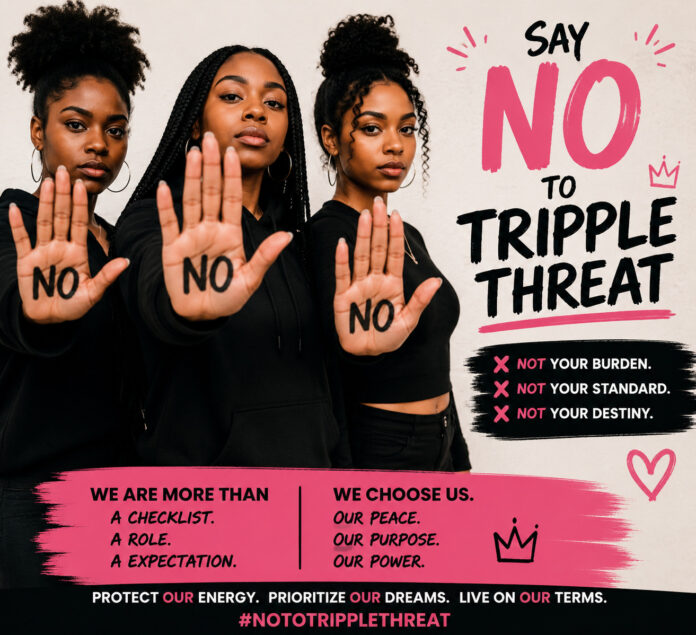
The air inside the quiet homes of Migori County carries a heavy silence, but outside, the sound of construction has just begun.
For hundreds of victims of the “triple threat” across the county, that noise represents the first real brick-and-mortar defense against a triad of crises holding their youth hostage: Gender-Based Violence (GBV), Female Genital Mutilation (FGM), and skyrocketing adolescent pregnancy rates.
The groundbreaking of a new Sh20 million safe house, a collaborative lifeline funded by the Migori County Government and the non-profit organization Shining Hope for Communities (SHOFCO), marks a critical structural milestone.
Slated for completion by December this year, the facility will serve survivors from all 40 wards of Migori. It will uniquely integrate temporary shelter and psychosocial support directly alongside a healthcare facility, a police desk, and a law court to streamline justice and healing.
Professor Rose Ogwang, the County Chief Officer for Gender and Social Services, noted that finding adequate accommodation for survivors has always been a major bottleneck.
“We have always had a problem with where to host survivors,” Prof. Odhiambo said. “However, with this facility, there will be light at the end of the tunnel before the year ends.”
While institutions lay foundations for the future, the structural wreckage of the triple threat is already visible in the shattered dreams of Migori’s young women.
Nowhere is this more quietly devastating than on local sports fields, where the promise of athletic talent is frequently weaponized into a trap of exploitation.
To understand the weight of the crises troubling Migori, one must listen to Rose*, a talented young footballer with a bright academic future whose name has been changed for her protection.
She was lifted out of poverty when a local coach sponsored her secondary education and helped her join a female football club. But the price of that assistance proved to be extortionate.
“I was impregnated by the coach, the very one who sponsored my education,” Rose says, her voice flat with lingering sorrow.
“Life became so hard. I could no longer continue playing because I was three months pregnant.”
When Rose returned home seeking comfort from the one person she trusted, her isolation only deepened; her mother failed to understand the situation and chased her away. Homeless, Rose was taken in by a teammate.
At six months, her pregnancy became a medical emergency, forcing doctors to perform a high-risk surgical delivery to save both mother and child.
Though she fought tenaciously to return to the pitch a month later to secure a college sports scholarship, the double burden of survival eventually broke her academic trajectory. She was forced to drop out of college because she could not balance rigorous studying with the demands of motherhood and finding casual jobs to provide for her child.
Her teammate, Agnes*, tells a terrifyingly parallel story of village-level impunity.
She watched a friend get lured into a predatory relationship by the same coach for as little as Sh500, an ordeal that ended in a forced abortion and her friend quitting football entirely.
“My friend got pregnant and was forced to undergo an abortion by the coach. That’s when she decided to quit football,” Agnes says.
Agnes herself narrowly escaped a similar fate. “When I was in Class 6, the coach tried to sleep with me, but I refused. I sought help from the club management, but they silenced me.”
The Weight of the Numbers
The exploitation of young athletes like Rose and Agnes highlights a broader systemic crisis documented by the Department of Gender and Children Services, which estimates the local prevalence rate for GBV, FGM, and child marriage at a staggering 70%.
Despite national progress, where Kenya as a whole has chipped away at teenage pregnancy rates from 18% in 2014 to 15% today, Migori remains stuck in a regional time warp. In the county, 22% of girls aged 15 to 19 have ever been pregnant—significantly outstripping the national baseline.
Local health data reveals an even tighter grip on the community: adolescent pregnancies now account for nearly a fifth (19% to 20%) of all pregnancies recorded across Migori’s health facilities, with Nyatike Constituency flagged as one of the hardest-hit zones.
The common denominator driving these numbers is a predatory mix of economic hardship and deeply entrenched cultural traditions, leaving young girls with few choices and even less information.
Data from the Kenya Demographic and Health Survey (KDHS) 2024, highlights a glaring truth: education remains the strongest shield. Nearly 40percent of girls aged 15 to 19 with no formal education have heavy pregnancy rates, compared to a mere 5 percent among those who progress beyond secondary school.
In areas like Kuria, teenage pregnancy is frequently the direct sequel to FGM and early forced marriage. Local health experts note this is a story of extreme vulnerability and a severe lack of adolescent-friendly reproductive health services, rather than reckless youth behavior.
County MP Fatuma Mohamed’s interventions
For Migori County Woman Representative Fatuma Mohamed, these realities have forced a shift from political rhetoric to aggressive, multi-pronged structural interventions through her office’s Department of Gender and Education.
To disrupt the cycle of the triple threat, her office has brokered a major collaborative framework alongside UNICEF Kenya to build specialized, adolescent-friendly maternal and newborn health units in Level 4 hospitals across the county, tailored to handle the unique medical vulnerabilities of teenage mothers.
Recognizing poverty as the ultimate driver of transactional sex and school dropouts, Mohamed’s office has also aggressively re-prioritized National Government Affirmative Action Fund (NGAAF) bursaries. These funds now specifically track and fully cover school fees for vulnerable teenage mothers trying to re-enter the classroom under the Ministry of Education’s school re-entry policy.
Furthermore, her office has established active grassroots rescue networks and safe spaces ahead of school holiday seasons, the peak risk period for FGM and subsequent early marriages, to physically remove at-risk minors from hostile environments.
This strategy is rounded out by the “Boy-Child Shift,” an initiative that incorporates targeted male mentorship programs into school outreach to actively train boys and young men to dismantle GBV and toxic cultural milestones that equate premature sexual acts or FGM with manhood.
Redefining the solution
As the concrete cures at the new safe house being built at the Macalder Sub-County Hospital, a distinct consensus is forming among leaders and survivors alike: physical infrastructure is only half the battle.
To truly clear the shadow hanging over Migori’s daughters, local leaders and experts recommend that localized efforts must consistently blend aggressive law enforcement with long-term community transformation, ensuring the strict and unyielding prosecution of defilement to end the culture of village-level impunity.
Despite the deep physical and emotional scars left by their experiences, survivors like Rose and Agnes refuse to let the perpetrators have the final word.
From the margins of the pitch, Rose still looks at the game not as a source of trauma, but as a vehicle for freedom that must be reclaimed.
“We ask our fellow girls to focus on improving their talents,” Rose urges, her voice firming up.
“Football is paying, and not all coaches have good intentions. Some are there to destroy your life. Don’t give up on your dreams.”