
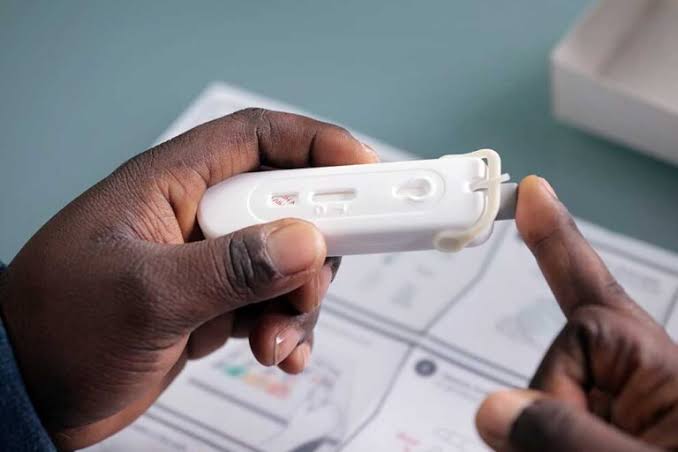
Kenya’s battle against HIV is navigating a complex paradox; according to the newly released Kenya HIV Estimates 2026 report, the country has achieved remarkable success in driving down both annual new infections and AIDS-related deaths.
Yet, beneath these macro-level victories lies a troubling counter-trend: the national HIV prevalence among adults aged 15 to 49 crept upward to 3.22 percent in 2026, compared to 3.03 percent the previous year.
Today, more than 1.41 million adults and 69,330 children under the age of 14 are living with HIV across the country.
The primary driver behind this resurgence is a persistent diagnostic gap.
While 93 percent of HIV-positive Kenyans have been formally diagnosed, approximately 100,000 individuals remain completely unaware of their status.
Researchers identified this undiagnosed population as the single strongest catalyst for new transmissions, noting that counties with lower testing rates consistently register the highest numbers of fresh cases.
The report cuts straight to the clinical reality of the gap, stating that a person who does not know they have HIV cannot start treatment, suppress their viral load, or protect their sexual partners.
Transition nightmare
When patients do test positive, a second barrier emerges: the failure to transition from diagnosis to care.
Driven by persistent social stigma, fear, transport costs, and partner opposition, many individuals opt out of the healthcare system entirely.
The report issues a stark warning regarding this group, noting that their viral loads remain entirely unsuppressed, making them just as infectious as someone who has never been tested in the first place.
This treatment gap is extracting a devastating toll on Kenya’s youngest populations. Children remain severely left behind in the rollout of life-saving Antiretroviral Therapy (ART).
For instance, out of more than 12,900 children under the age of four living with HIV, a mere 46 percent are receiving treatment, meaning more than half of this vulnerable age bracket is unprotected.
Coverage improves slightly to 64 percent for children aged five to nine, and drops back to 62 percent for those aged 10 to 14.
Healthcare experts attribute the slump in the eldest bracket to a difficult structural transition, where adolescents are expected to shift from caregiver-managed treatment to independent self-management, a delicate phase where many young people slip through the cracks.
In contrast, treatment coverage skyrockets to 95 percent among adults aged 50 and older, primarily because older demographics interact far more frequently with health facilities for other chronic, long-term illnesses.
Geographic distribution
Geographically, the diagnostic deficit is concentrated in nine specific counties. In arid and semi-arid regions like Marsabit, Wajir, Mandera, Garissa, and Samburu, overall HIV prevalence is statistically low, but the number of undiagnosed individuals remains dangerously high.
This is driven by systemic hurdles, including vast travel distances to regional clinics, low facility density, and deep cultural resistance.
Meanwhile, in counties like Kilifi, Kericho, Nandi, Laikipia, and Busia, late-stage testing and low treatment initiation are heavily skewing local infection trends.
Kenya’s data reveals a striking gender divide, with men bearing the brunt of late-stage complications.
One out of every ten men who tests positive never actually begins treatment.
This reluctance is perfectly captured by the national “care cascade” metrics: women track at an impressive 96–96–92 (representing the percentages of those diagnosed, those on treatment, and those virally suppressed), while men lag far behind at 90–88–80.
This hesitation is fatal; men die from AIDS-related illnesses at an estimated rate of over 18 per 1,000, compared to less than 10.6 per 1,000 among women.
Because over the last decade only three percent of men have utilized routine testing via antenatal clinic settings alongside their pregnant partners, healthcare systems are left searching for new ways to bring Kenyan men out of the shadows and into life-saving care.