
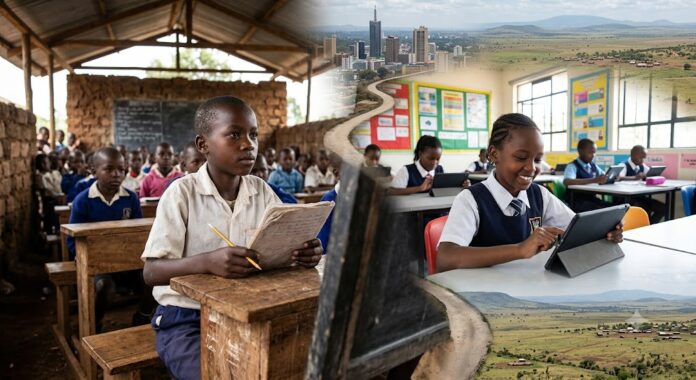
BY ANNAH KIMEU: For generations, Kenyans have been taught to believe that education is the ultimate pathway out of poverty; parents sell livestock, take on high-interest loans, and make painful sacrifices to keep their children in school, fueled by the conviction that a classroom guarantees a better future.
But as the nation celebrates rising enrollment and expanding access to classrooms, a painful question remains: ‘Are we actually preparing our children for success, or are we simply moving them through a production line that does not serve them equally?’
This year, Kenya reached a historic milestone with more than one million candidates registering for the KCSE examinations, a clear sign of progress in expanding access.
Yet, behind this impressive statistic lies a deeper, systemic crisis: access does not always translate to quality.
The introduction of the Competency-Based Curriculum (CBC) promised a revolutionary shift from rote memorization to practical skills, creativity, and talent development.
In theory, it is the reform Kenya desperately needs. In practice, its implementation has exposed and widened the nation’s deep socioeconomic inequalities.
Well-resourced and private urban schools transition seamlessly, outfitted with modern learning materials, digital tools, and specialized facilities.
Hundreds of public and rural schools still struggle with overcrowded classrooms, nonexistent resources, and teachers who have not received the adequate, hands-on training required to deliver the new curriculum effectively.
Reforms that look spectacular on paper mean very little if a child in a remote village is structurally barred from accessing the same opportunities as a child in a wealthy urban estate.
Degrees without destiny
The structural breakdown does not end at the school gate. Every year, thousands of eager graduates leave universities and colleges armed with certificates, degrees, and high hopes, only to crash into a labor market with shrinking opportunities.
This harsh reality has forced an entire generation of young Kenyans to ask a devastating question: Does education still guarantee the better life we were promised?
Furthermore, our system remains obsessively focused on traditional academic achievement, routinely overlooking learners with different talents and abilities.
A child gifted in sports, the arts, or technical craftsmanship should never be made to feel inferior to one who excels in standard examinations.
This exclusion is even more severe for children with disabilities, who continue to face immense structural barriers, from completely inaccessible school infrastructure to a severe lack of specialized learning materials and institutional support.
Redefining the true measure of success
Kenya does not need to abandon its education reforms. The CBC still holds the vital potential to nurture a generation of innovators, problem-solvers, and creators.
For it to succeed, however, equity must move from a talking point to a policy priority.
The true measure of a successful education system cannot be found in how many children sit for national examinations, nor in the number of certificates printed each year.
The real metric is whether every single learner, regardless of their background or where they were born, leaves the system equipped with the skills, confidence, and genuine opportunity to build a dignified future.


