

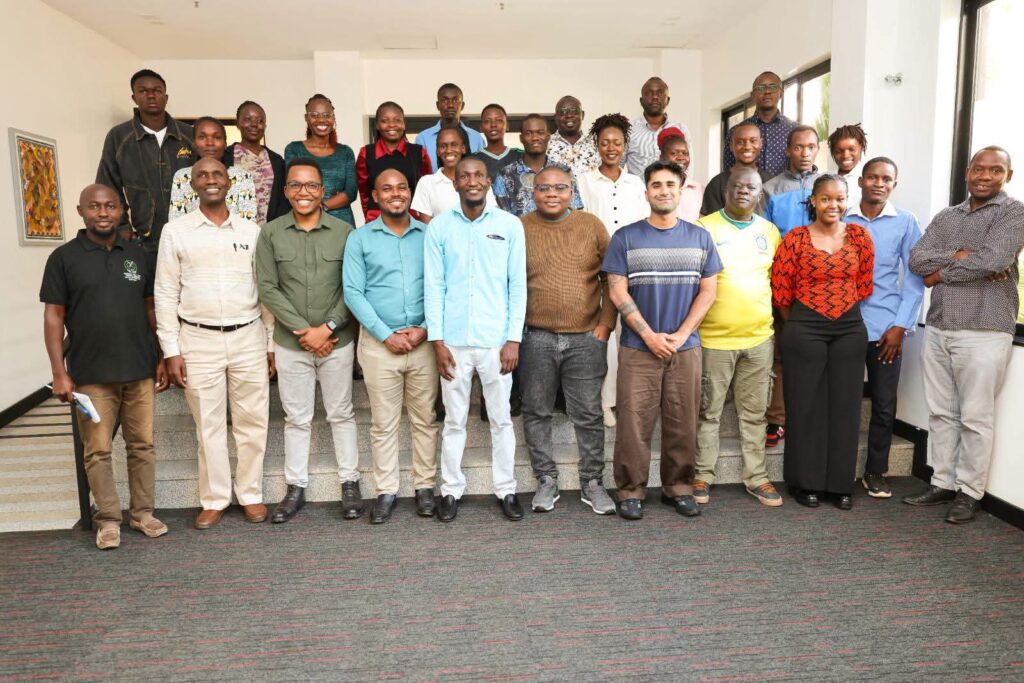
In a bid to enhance energy planning and accelerate sustainable development, the County Government of Kisumu, in partnership with the World Resources Institute (WRI) and the United Nations Environment Programme (UNEP), is currently hosting a three-day capacity-building workshop aimed at revolutionizing regional energy access through cutting-edge geospatial technology.
The training, which commenced on June 24th and runs through June 26th, 2026, at the Sarova Imperial Hotel, brings together technical staff from various county departments and stakeholders from across the energy ecosystem.
The workshop focuses directly on the back-end system of the Energy Access Explorer (EAE), a sophisticated, open-source geospatial platform.
By equipping local technical teams with the skills to configure, upload, and update complex datasets, the initiative ensures the county can identify high-priority areas for energy interventions on demand.
“Using spatial data to link energy supply with growing or unmet demand is essential to gaining a better picture of energy access and expanding energy services to those who need it the most,” noted WRI representatives during the session.
Led by Douglas Ronoh, a GIS Associate and EAE Kenya Lead at WRI, the training features practical, hands-on exercises covering a diverse mix of energy sources, including electricity, biomass, bio-ethanol, solar, wind, and biogas.
These geospatial tools are designed to directly support future infrastructure planning for schools, healthcare facilities, and private developments.
The collaboration is spearheaded locally by the Kisumu County Department of Energy, Transport, Roads, and Public Works, represented by Felix Odhiambo Akello, the county’s lead for Energy Planning, Resource Mobilization, M&E, and Chief Heat Officer.
Beyond the EAE tool, the workshop serves as a launchpad for several other innovative climate initiatives.
This includes the introduction of the “Cool Cities Lab” and a cutting-edge, AI-driven model developed in partnership with IBM that utilizes high-resolution satellite imagery to map existing solar photovoltaic (PV) installations across the region.
This session builds upon a successful foundational training held in December 2025. It marks a critical milestone in the County Government of Kisumu’s ambitious commitment to achieve a 100% renewable energy transition by 2050, with immediate strategic focuses on green mobility, clean cooking, and climate-resilient buildings.