
What happens to a family when a loved one disappears into thin air, and the State charged with protecting them has no answers?
For thousands of Kenyan families, the agony is not marked by a single day of loss, but by an agonizing, open-ended timeline where every unanswering ring of a mobile phone, every sharp knock on the front door, and every heavy, unexplained silence keeps alive the same haunting question: Where are they, and will justice ever come?
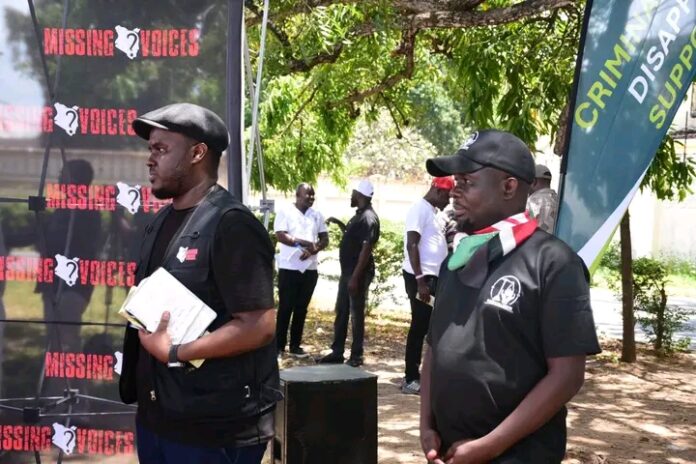
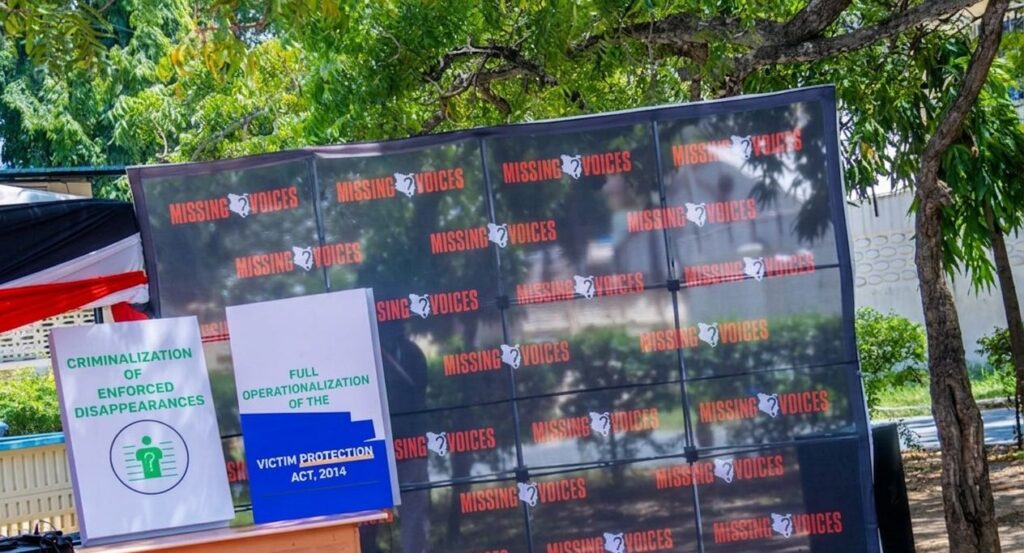
That excruciating reality took center stage in Mombasa, as survivors and families of victims of police abuse and enforced disappearances joined human rights defenders to launch the Haki Kwa Wote Justice For All campaign, demanding immediate protections for victims and unyielding accountability for perpetrators.
The launch follows the International Day of the Victims of Enforced Disappearances, observed globally on August 30.
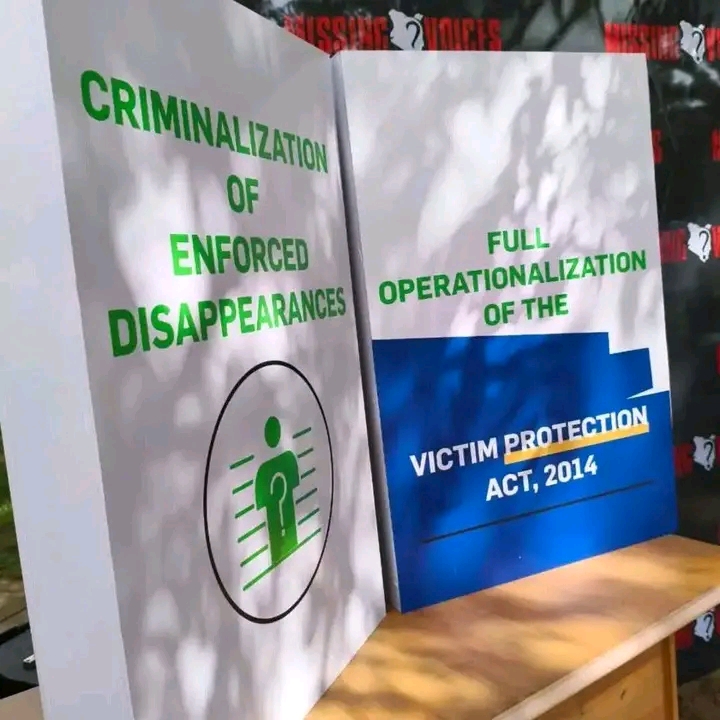
The campaign aims to force a long-overdue reckoning, pushing Kenya toward legal, policy, and institutional reforms that explicitly criminalize enforced disappearances and overhaul how the nation responds to those left behind.
Brutal emotional torture
Yet for mothers, spouses, and children who spend their mornings searching morgues and their nights praying for news, the movement is about far more than legislative text or institutional policy.
It is about answers,unearthing the truth of what happened in the shadowed hours when their loved ones vanished.
And for those whose missing relatives will never walk through the door again, it is a test of whether the State will acknowledge its failures, strip away the wall of impunity, and bring perpetrators to justice.
International Justice Mission (IJM) Country Director Vincent Chahale emphasized that a functional justice system cannot stop at courtroom prosecutions.
“Justice must extend beyond prosecuting offenders,” Chahale stated, emphasizing that true accountability demands robust protection, transparent information, long-term psychosocial support, and accessible legal remedies for victims and their relatives.
The campaign launches against a grim backdrop of persistent human rights violations across the country.
Missing Voices, a coalition of non-governmental organizations tracking extrajudicial killings and enforced disappearances in Kenya, documented 19 distinct cases of enforced disappearances between January and August 2026 alone.
Behind each statistic is a household shattered by ambiguity, parents left wondering if their child is sleeping on a cold cell floor, being held in a secret facility, or buried in an unmarked grave.
Organizers stress that these continuous disappearances expose the terrifying vulnerability of ordinary citizens and highlight the urgent need to overhaul Kenya’s victim protection mechanisms.
Although Kenya signed the International Convention for the Protection of All Persons from Enforced Disappearance in 2007, the nation has spent nearly two decades failing to ratify the treaty or enact domestic legislation that specifically defines and criminalizes enforced disappearance.
Gen Z uprising
This legal void resurfaced with intense urgency during the Gen Z anti-tax demonstrations against the Finance Bill in 2024 and their subsequent anniversary protests in 2025.
Reports of state-led abductions, unmarked cars snatching activists off the streets, and prolonged unlawful detentions sparked national outrage.
President William Ruto has since conceded that state agencies made grave errors during the demonstrations, ordering formal investigations into fatal shootings, alleged abductions, and police brutality. His statement represented a stark pivot from his initial framing of the youth protests as treasonous.
He further publicly declared that no Kenyan should ever lose their life, liberty, or basic dignity for exercising their constitutional right to protest, voicing dissenting opinions, or criticizing the government.
However, for families carrying the weight of an empty home, presidential statements offer little comfort. They demand to know if political speeches will translate into actual court indictments and recovered bodies.
As a core element of the Haki Kwa Wote campaign, advocates unveiled a national petition demanding that the government fully enforce the Victim Protection Act of 2014, adequately fund the long-neglected Victim Protection Board, and fully operationalize the Victim Protection Trust Fund.
While legal frameworks exist on paper, survivors consistently report being abandoned by the state.
They face immense hurdles attempting to access official information, legal assistance, mental health support, rehabilitation, financial compensation, or even a seat at the table during judicial proceedings.
Compensation
The government highlighted its progress through a Sh2 billion national reparations framework created for verified victims of human rights abuses and public protest violence.
To date, official records show that Sh674.1 million has been disbursed to 505 verified individuals including a first tranche of Sh448.7 million to 348 beneficiaries, followed by Sh225.4 million to 157 claimants who suffered permanent injuries or lost family breadwinners.
Yet civil society groups point out that financial payouts do not resolve structural injustice. Countless families remain completely excluded from the compensation framework due to bureaucratic hurdles, and for the families of the disappeared, money cannot resolve their primary trauma.
“No amount of financial restitution can replace the answer to a family’s simplest, most heartbreaking question: Where is my child?”
The Mombasa convening provided a raw platform for survivors to share their stories publicly, while activists pressed state officials on reforms meant to guarantee that no other family suffers the same fate.
High-level representatives were summoned directly into the spotlight, including officials from the Office of the Director of Public Prosecutions (ODPP), the National Police Service (NPS), the Independent Policing Oversight Authority (IPOA), the Directorate of Criminal Investigations (DCI), the National Police Service Commission (NPSC), the Law Society of Kenya (LSK), and the Witness Protection Agency.
For the families who have spent months or years trapped in limbo, the issue is no longer whether Kenya possesses the statutory language to protect its citizens,the issue is whether the state has the moral and political will to enforce its own laws,or whether police oversight bodies will complete investigations instead of filing them away.
Whether officers who abuse their power will face criminal trials.,whether missing citizens will finally be accounted for and whether a desperate community will be granted the truth required to finally grieve.
The Haki Kwa Wote campaign poses a direct challenge to the Kenyan government: prove that justice is a living right guaranteed to every citizen, rather than a broken promise written on paper. For the families pacing their homes in silence, answers cannot come a day too soon.