
For more than two decades, the theft of matrimonial property has been an agonizing reality for hundreds of widows across the Nyanza region.
Stripped of their acreage, evicted from their homes, and systematically locked out of their late husbands’ investments, many have historically suffered in the shadows.
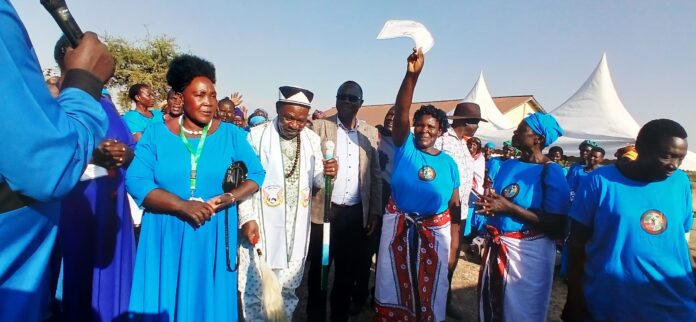
Widows from four Nyanza counties have formed the N4C Widows Community-Based Organisation (CBO), a collective front designed to aggressively defend their land and inheritance rights while lifting one another out of poverty.
Beyond the immediate threat of property grabbing by aggressive in-laws, these women must navigate a treacherous web of interconnected hurdles that begin the moment mourning starts.
Culturally, widows are frequently subjected to deeply entrenched traditions such as forced inheritance or ritual cleansing.
Those who bravely refuse to comply are often branded as outcasts, facing a severe social isolation that completely cuts them off from vital communal support networks.
This cultural exile is compounded by the sudden, overwhelming burden of solo caregiving.
Overnight, these women become the sole breadwinners of their households, tasked with navigating skyrocketing school fees and medical expenses on a single income and often doing so without the very agricultural land that previously kept their families fed.
Compounding their economic misery is a system of financial exclusion that keeps them trapped in a cycle of poverty.
Absence of financial security
Because they lack formal title deeds or collateral in their own names, local banks and microfinance institutions routinely view widows as high-risk borrowers, leaving them unable to secure the seed capital needed to launch small businesses or invest in modern farming.
The cumulative toll of these challenges extends far beyond their pocketbooks; the constant stress of ongoing family disputes, paired with the looming threat of physical eviction, takes a massive toll on their mental and physical well-being.
Many women report high rates of depression, anxiety and chronic, stress-induced illnesses, yet they are left to cope entirely on their own without any formal counseling services.
For the members of the N4C group, some of whom have endured this reality for more than 25 years, these compounding crises are not theoretical statistics, they are deeply painful, lived experiences.
Togetherness
Faced with these compounding crises, the N4C Widows CBO has built its own self-sustaining ecosystem. The organization serves as both a legal shield and a financial lifeline through two distinct pillars
To bypass the rigid requirements of formal banking institutions, the women run a highly structured table banking system where members meet regularly to pool their savings into a central fund.
This capital is immediately used to issue low-interest, short-term loans, providing a vital cash flow that allows members to independently finance their children’s education and cover sudden medical emergencies without being forced to sell off precious personal belongings.
Recognizing that legal rights mean very little if a household is starving, the CBO couples this financial strategy with a focus on sustainable livelihoods.
They actively train members in modern, climate-resilient farming techniques and alternative income-generating projects.
By successfully transitioning from manual subsistence digging to commercial agribusiness, these widows are not only securing their immediate household food supply but are also creating reliable, long-term daily income streams.
According to N4C Assistant Chairlady Beatrice Dock, who hails from Nyatike, the greatest weapon used against grieving women has historically been a lack of information.
“Many widows are completely unaware of the legal procedures required to formally claim their late husbands’ property,” Dock explained adding that, “This knowledge gap leaves them incredibly vulnerable. In-laws often take advantage of their grief and their lack of legal literacy to forge documents or simply push them off their land by force.”
To counter this, the CBO has rolled out targeted empowerment programs by combining legal awareness training with financial literacy, the organization is guiding its members toward total financial independence, transforming them from victims of custom into fierce advocates for their constitutional rights.
The grassroots movement is drawing vital external backing. Robley Ngoje, a leader from Nyatike, has stepped forward with a pledge to bridge the steep legal aid gap that keeps many poor women from seeking justice.
Ngoje announced an initiative to assemble a coalition of legal minds, including prominent women lawyers and members of the Federation of Women Lawyers (FIDA-Kenya).
This legal team will be tasked with educating the widows on the complexities of the Law of Succession Act and walking them step-by-step through the formal, often intimidating court processes.
“This initiative is about securing what is rightfully theirs, reducing protracted family conflicts over property, and ensuring that Kenya’s existing laws protecting widows are actually implemented on the ground, not just left on paper,” Ngoje stated.
Crucially, Ngoje emphasized that all legal services, consultations, and awareness workshops under this partnership will be provided entirely free of charge, removing the steep financial barriers that typically block rural women from the corridors of justice.
For the members of the N4C Widows CBO, the partnership represents a major milestone. By replacing isolation with community and pairing local farming with high-level legal aid, these women are rewriting the narrative of widowhood in Nyanza proving that while a woman may lose her husband, she does not have to lose her dignity, her livelihood, or her home.